Bella Giornata Tours
  • Home
  • About Us
  • Contact Us
  • BLOG
  • Tours Booking Now!
    • Booking NOW! Rome and Tuscany!
    • Booking NOW-Amalfi Coast!
    • Girlfriends on the Go!
    • Rome, Lower Tuscany and Umbria
    • Build Your Own Tour!
  • Client Buzz
  • Irene's wine rack...
    • Italian Wines
    • Pacific Northwest Wines
    • South American Wines
    • French Wines

Pasta with Fresh Peas, Mushrooms and Pancetta

11/16/2012

2 Comments

 
Picture
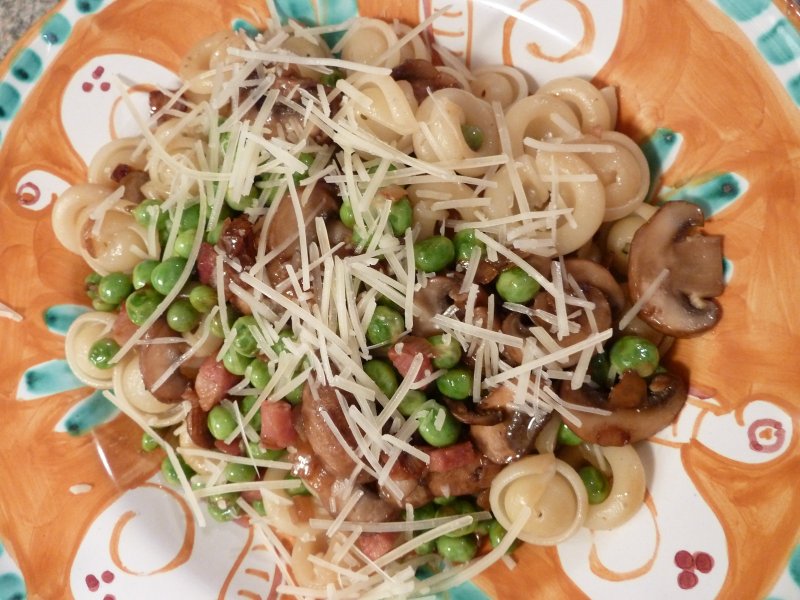
I know it’s not spring, and I really shouldn’t be cooking out of season, but I saw a lovely package of freshly shelled peas at the market, and I couldn’t stop myself.  I knew I already had some mushrooms at home, and I always have pancetta in the fridge….so, this is what I came up with for dinner.  It came together so quickly!  Honestly, by the time the pasta was done cooking, the rest of the dish was ready and waiting in the skillet.

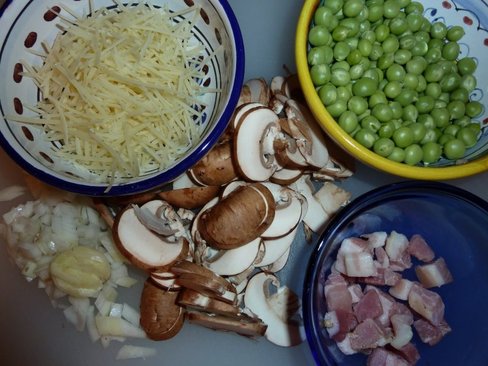
Here’s your list of ingredients:
a little olive oil
Pancetta, diced
Onions, diced
A smashed garlic clove
Mushrooms, sliced
Freshly shucked peas
A slosh of white wine
Pasta of your choice ( I used “dischi”), cooked al dente
Parmesan, grated to garnish

Let’s get started!

Put your pasta water on to boil.

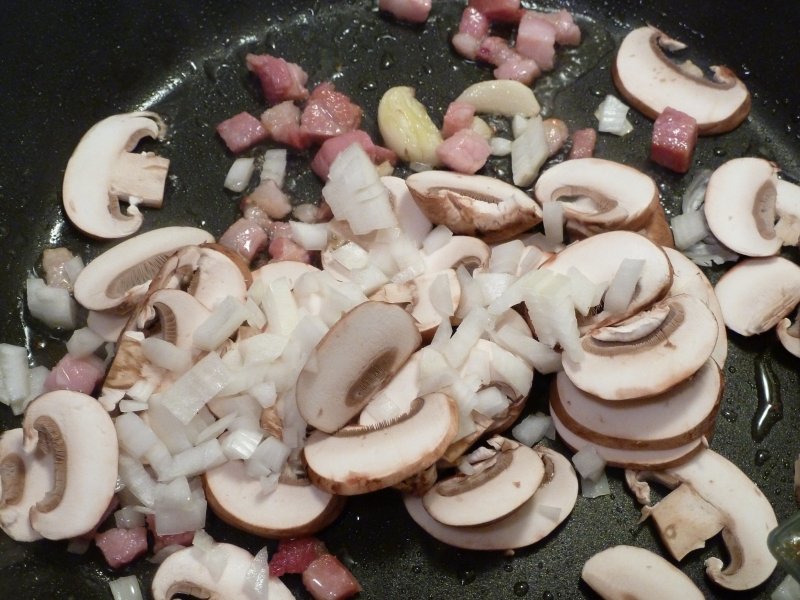
Meanwhile, dice your onions, and slice your mushrooms. 
I buy my pancetta already diced, so nothing to do there.
Smash your garlic clove, remove and discard the papery skin.
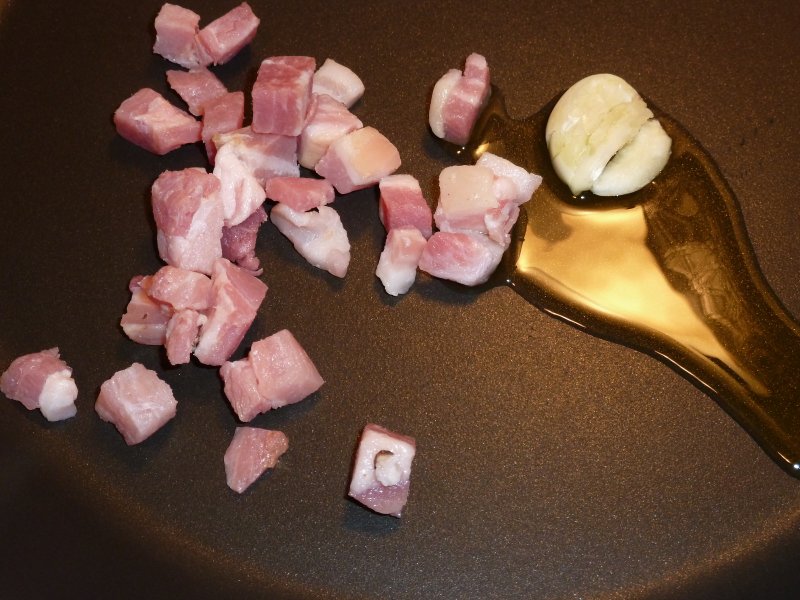
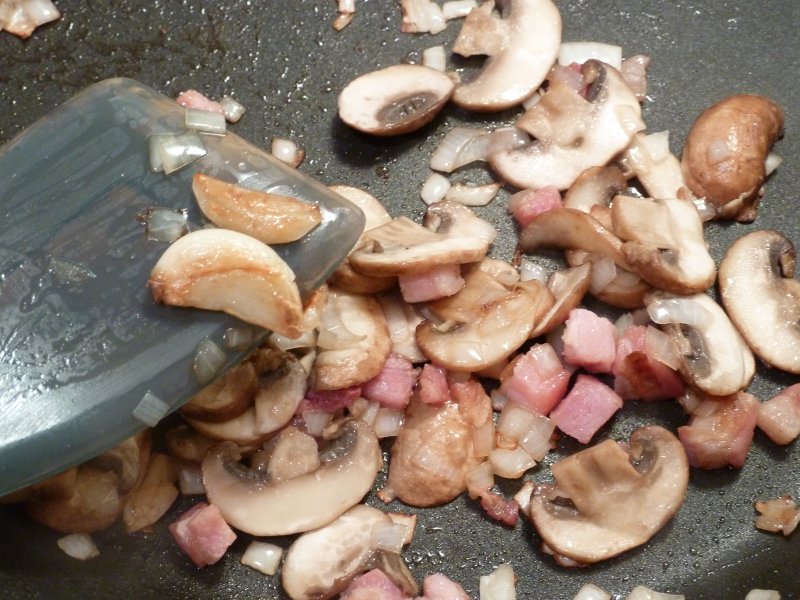
Heat just a wee bit of olive oil in a skillet.  You won’t need much as the pancetta will release a little fat as well.  Add the smashed garlic clove and pancetta, and sauté to add garlic flavor to the oil, and render the fat from the pancetta.  

Now add the diced onions and sliced mushrooms.  Saute to wilt the onions and to get the mushrooms to release their liquid.  Toss out the garlic clove.
*Is your pasta water boiling yet?  If so, toss in a goodly amount of coarse salt, let it melt away and add your pasta of choice.  I would choose a short pasta for this dish like orchiette, dischi, penne or rigatoni.

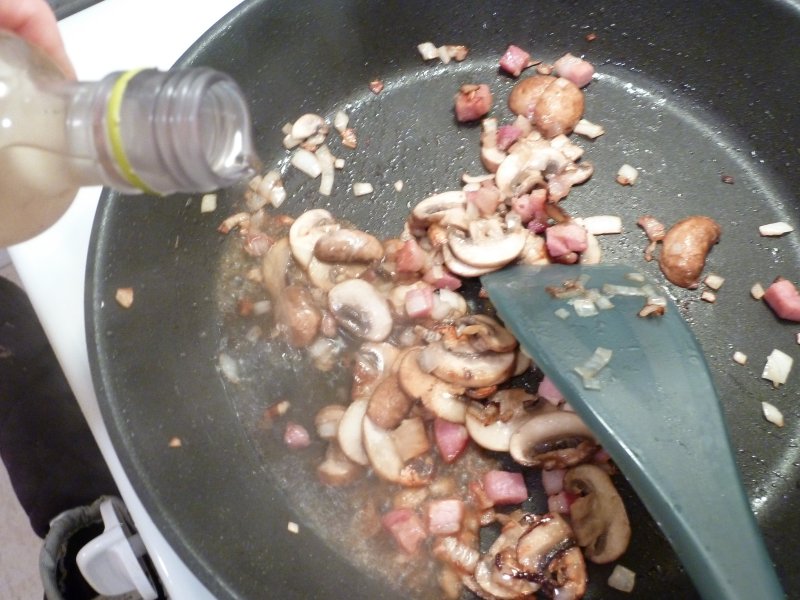
Back to your skillet:   As it’s about to run dry, add a nice slosh of white wine, and let the alcohol cook away.
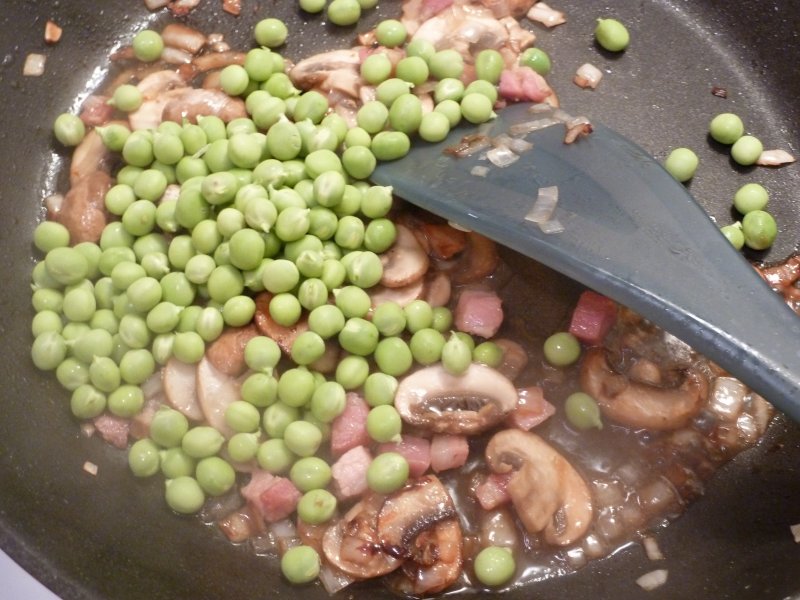
Time to roll in your peas.  Give them a good swish about in the pan to cover them with the skillet juices and wine.
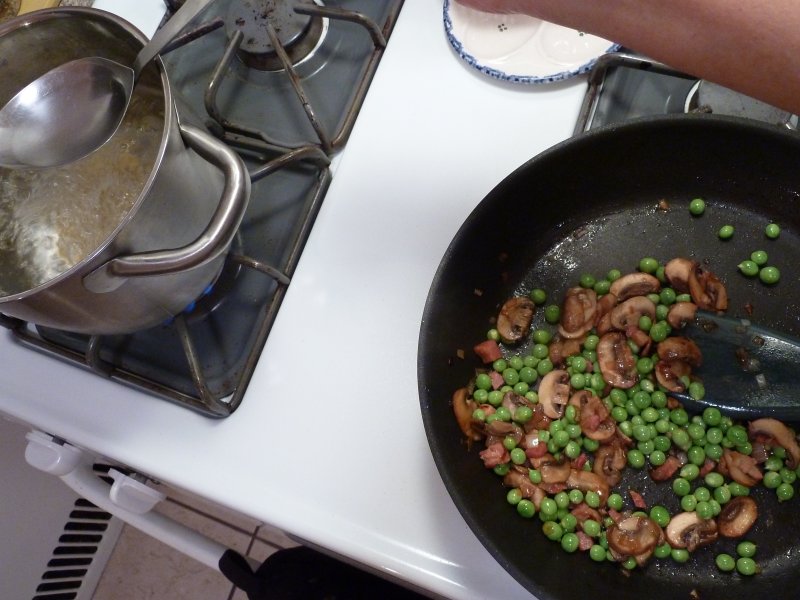
Add a cooking spoonful of starchy water from the pasta pot.  This starchy water will not only help steam the peas, but will also serve to loosen the yummy bits that have stuck themselves to the bottom of the skillet.
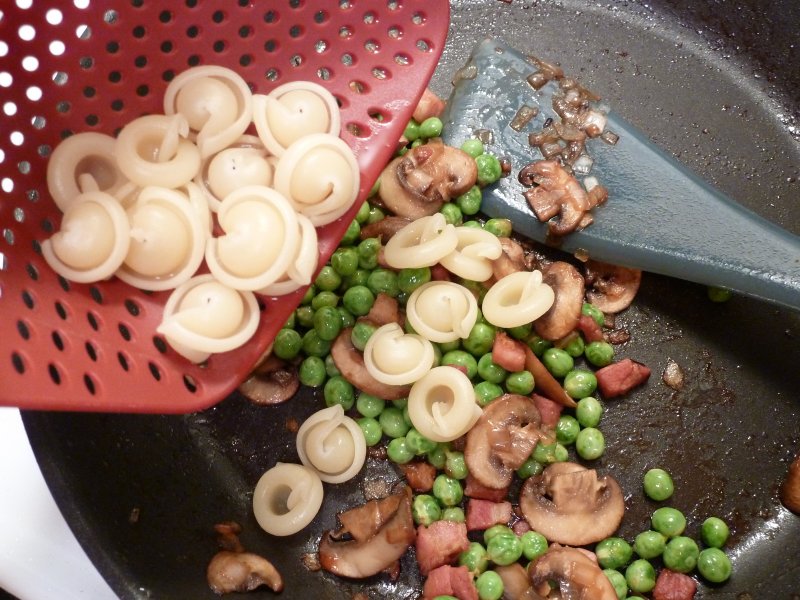
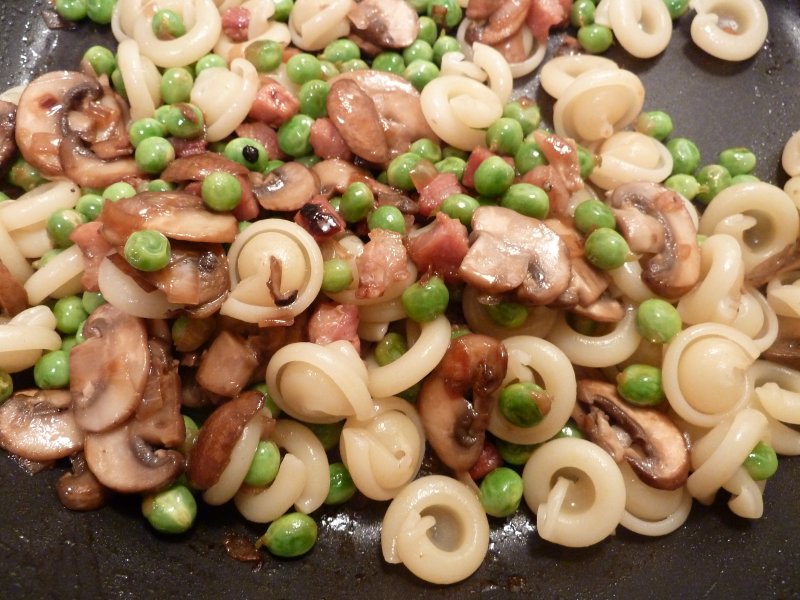
By this time, your pasta should be close to done.  Taste a pea to be sure they’re cooked to your liking, and then add the drained pasta to the skillet.  Again, give it a good tossing to be sure the pasta gets coated with all the goodness that's in the skillet.
Slide it all into a pasta bowl, and top with grated cheese.  Delizioso!  (And so quick!)
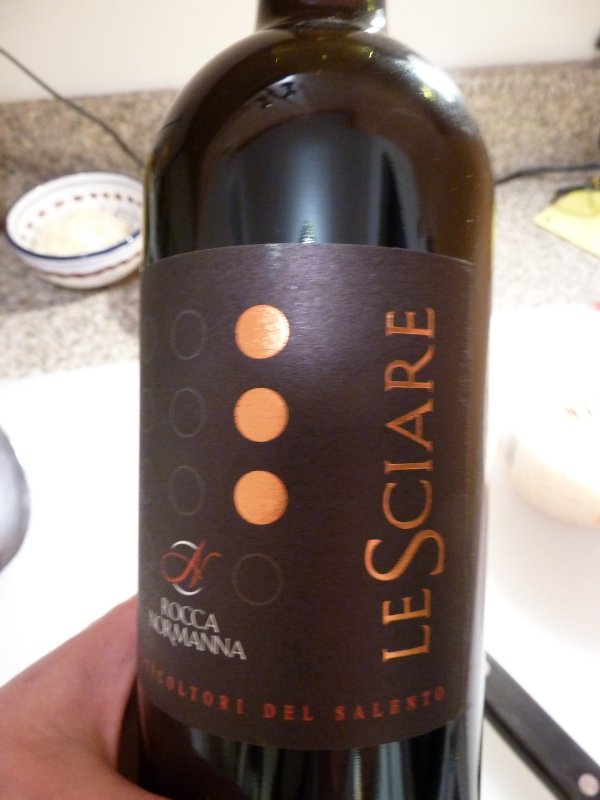
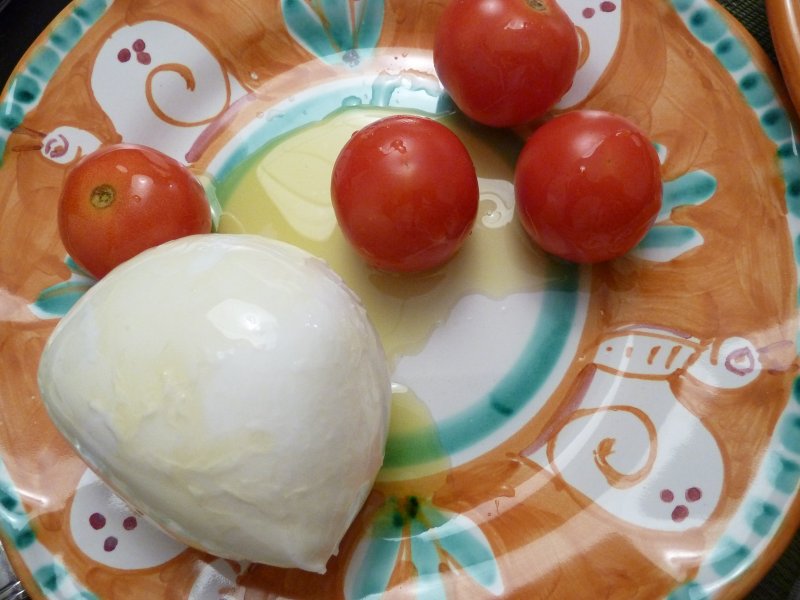
This pasta dish would have been nice with a cool glass of pinot grigio.  But, since all I had on hand was red, I chose a primitivo that I'm loving called LeSciare.  At a mere $10 a bottle, it has a lot of flavor, but it's not too heavy.  And can you believe my "caprese"?  I was so hungry, I couldn't be bothered to make a real salad!  That's a lovely ball of buffalo milk mozarella, a few tomatoes, a nice drizzle of Ersilia's olive oil and a sprinkle of sea salt.  Dinner was SO good!
2 Comments

Ersilia’s Olive Oil Cake

11/12/2012

4 Comments

 
I meet the most wonderful people.

I met Ersilia just a couple of months ago at my local Farmer’s Market.  She was there in a booth, selling olive oil.  Olive oil always attracts my attention, so I wandered over to take a peek and upon perusing the bottles, realized that several of them were from Umbria!  Well, that started a conversation and as it turns out, Ersilia, an American of Italian descent, went to college in Perugia, speaks fluent Italian and is the owner of her own small business importing olive oil from around the world.  It was through Ersilia that my recent tour group to Umbria had the pleasure of visiting frantoio Trampolini and sampling their wonderful olive oil firsthand.
Picture
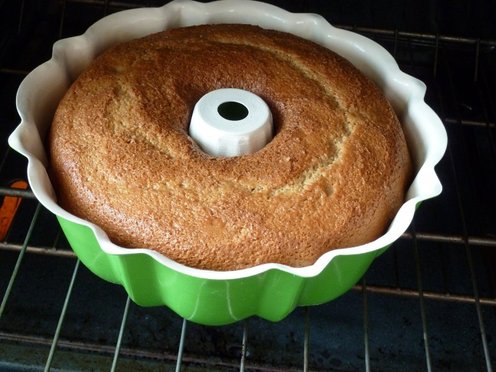
It’s also thanks to Ersilia that you are getting this lovely recipe for Olive Oil cake.  This is a moist and delicious bundt cake.  It keeps well, is a great everyday cake (yes, in Irene’s world, it is okay to eat cake every day), and would work great at a potluck.  I baked it not long ago for my husband’s office and they enjoyed it immensely.  What I love best about this cake is the amount of citrus zest in it, giving it a bright and lively flavor.


Here’s your list of ingredients:
1 c. all purpose flour
1 c. whole wheat flour
1 ¼ tsp. baking powder
½ tsp. baking soda
Pinch of salt
4 eggs
1 ¾ c. light brown sugar, firmly packed
1 c. olive oil (Ersilia uses her Oro Verde Lucano, a light and buttery choice)
1 ½ c. milk
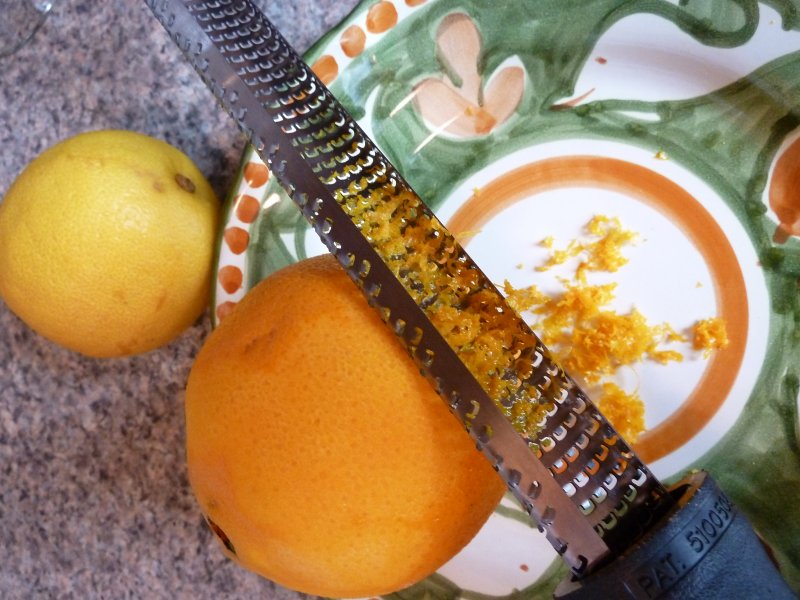
Grated zest from one large orange and a lemon
Confectioner’s sugar for dusting

Grease and flour your bundt pan and set aside.  Preheat the oven to 350 and let’s get started:

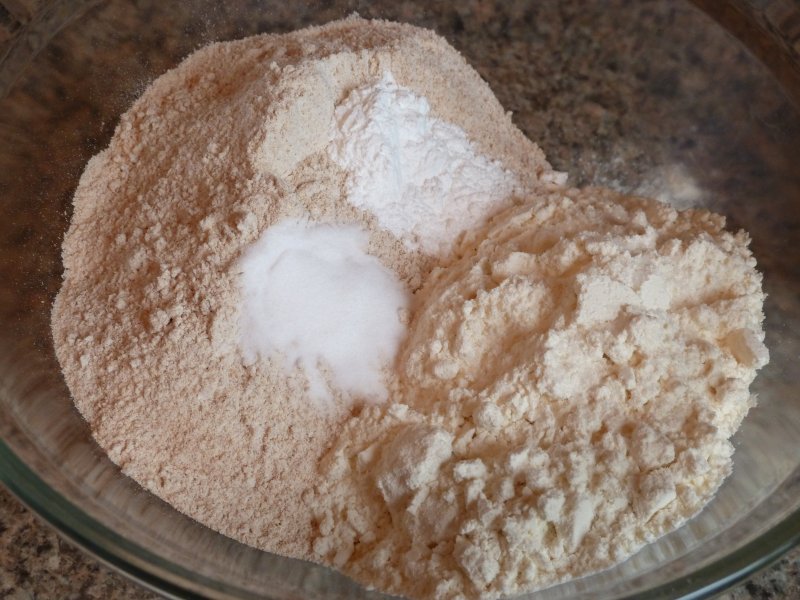
Combine the two types of flour, the baking powder, baking soda and salt in a bowl and set aside.
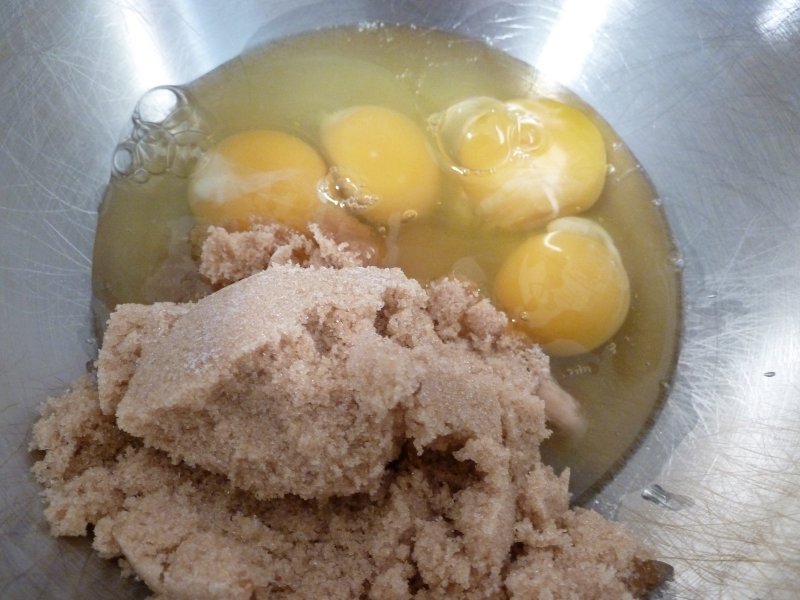
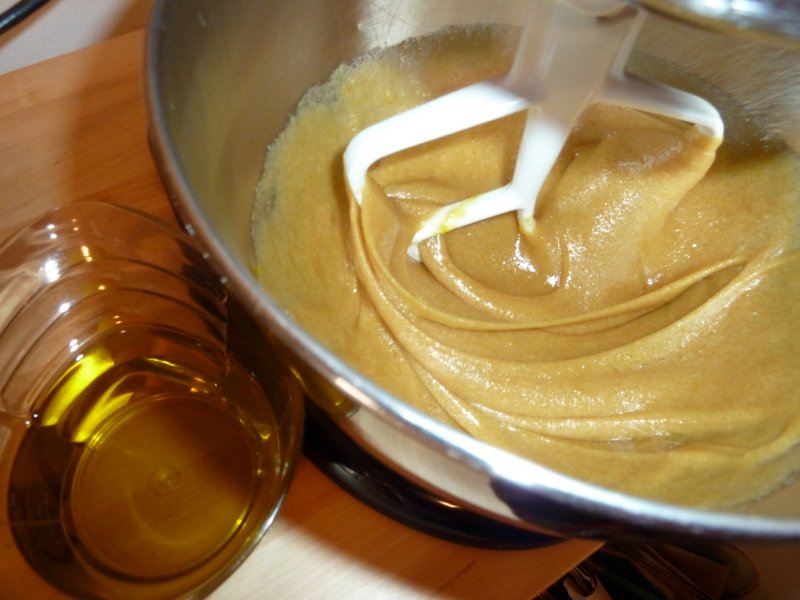
Beat together the eggs and brown sugar until thick and frothy.  
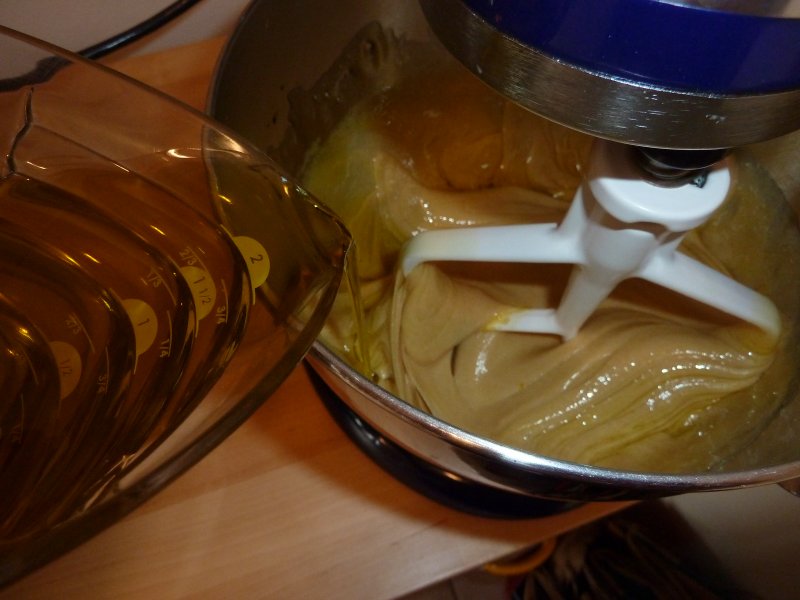
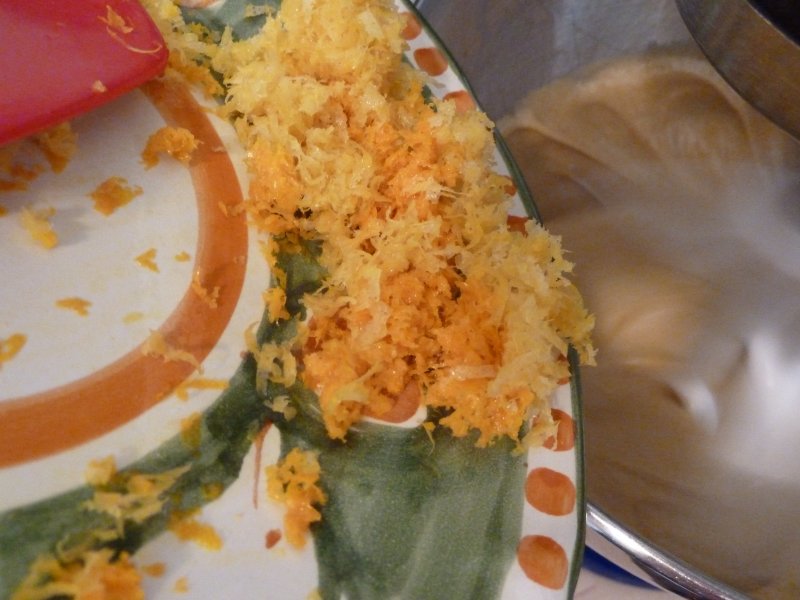
Slowly add the olive oil.  Then add the orange and lemon zests and continue to mix well.
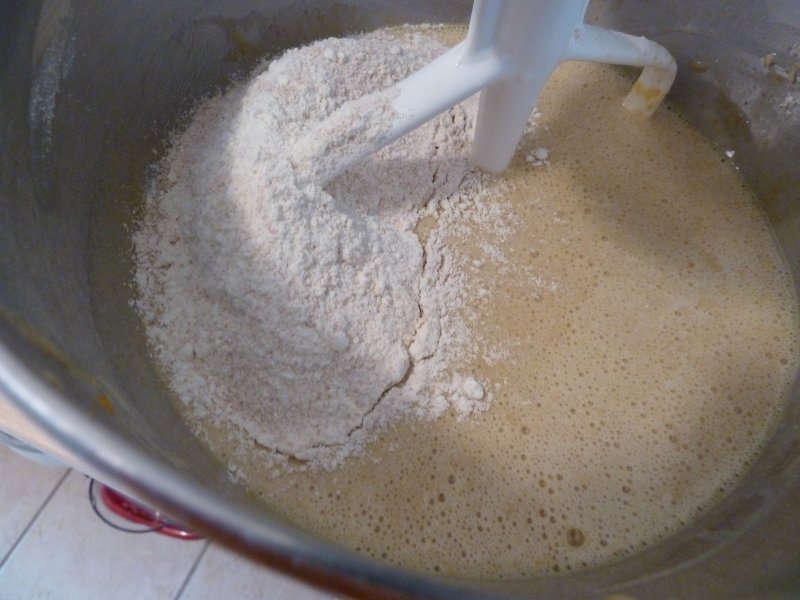
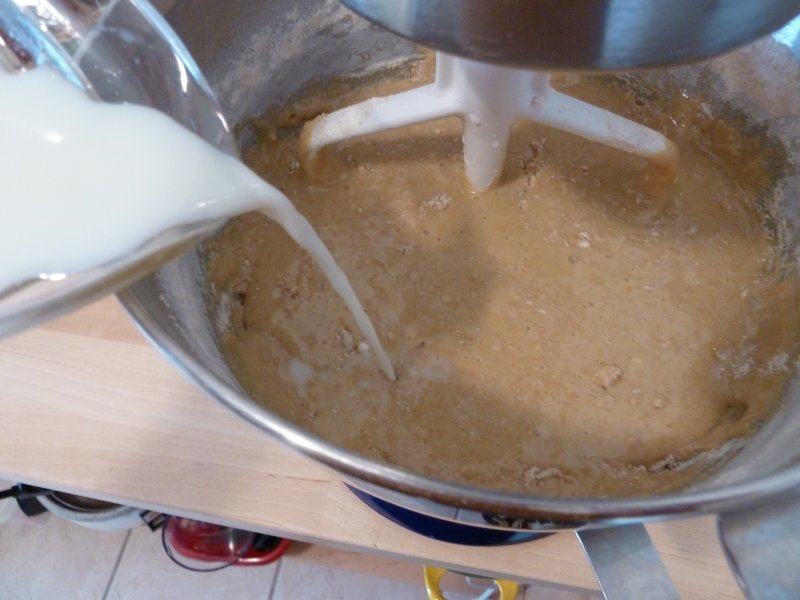
Alternating in 2 batches, add ½ of the flour mixture to the egg mixture.  
Then add ½ of the milk, mixing until just blended with no lumps.  
Repeat with the remaining flour mixture and remaining milk.  Do not over mix.  
Pour the batter into the prepared pan.
Picture
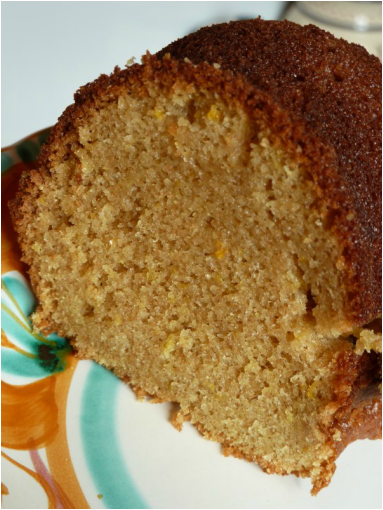
Bake until a toothpick inserted into the center comes out clean, about one hour.  Remove to a wire rack to cool completely.  Loosen the sides with a knife and invert onto a serving plate.  Dust the cake with confectioner’s sugar.  (You’ll notice my pictures don’t show the cake dusted with confectioner’s sugar.  That’s because sometimes, I can be a very impatient baker.  Forget the decorating; I can barely wait for things to cool before I eat them.)

This was today's breakfast along with a lovely cappuccino.  Buon appetito and thanks Ersilia!

If you too are interested in Ersilia's olive oils, visit her website:
www.oliveoiloftheworld.com

OR......
Sign up for one of my tours to visit an olive oil mill!


4 Comments

Cooking with Giovanna-Zucchini Lasagne with Ricotta and Pesto

10/29/2012

4 Comments

 
Picture
Meet Giovanna Caprara; my new-found friend, terrific wife, mom and the family cook.  In other words, she’s just like us, only Italian!  At the end of my last tour to Italy, I had the opportunity to spend the whole day in her kitchen, cooking by her side.  I am so lucky!

The first thing Giovanna and I cooked together was zucchini lasagna.  This was an entirely new idea for me as I had neither eaten nor cooked it before.  But let me tell you; it’s really delicious, simple to make and the taste of the fresh zucchini really shines through.  I’d really only thought of lasagna as a meaty, red sauce kind of dish.  But now, I have all kinds of lasagna ideas rolling around in my head; pumpkin, mushroom, eggplant.  Giovanna and I also made a sausage and mushroom lasagna (among other things)…..that was out of this world which will all have to wait for another blog.  In the meantime, here’s the recipe and photos for her zucchini lasagna, printed with her permission.  (You might notice an inconsistency with the photos.  I photographed Giovanna and I making the lasagna in Italy, then when I returned to NY, I made the lasagna and photographed it again.  I’ll be using a compilation of both sets of photos to give you the best visual directions.)

Here’s your list of ingredients:
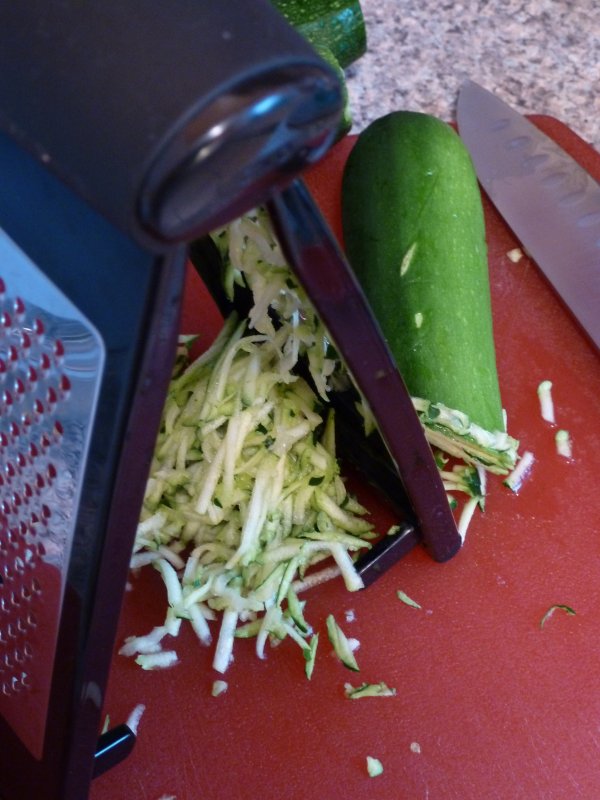
3 medium zucchini, grated, seasoned with salt
No-boil lasagna noodle sheets
16 oz. ricotta cheese
¼ c. pesto
Mozzarella, shredded
Parmesan, shredded
Breadcrumbs
butter
For the béchamel sauce:
50 grams of butter
6 T. flour
2 c. milk
Salt and pepper

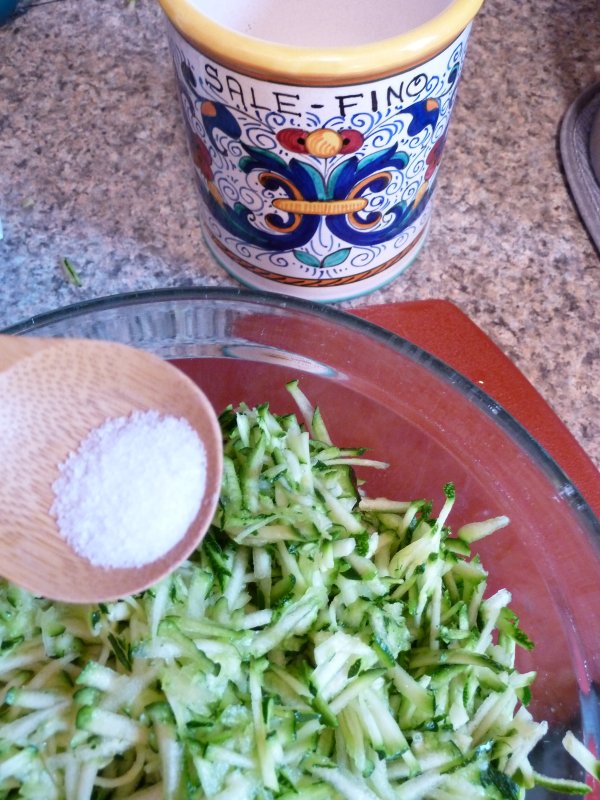
The beauty of this lasagna is you don’t have to cook either the lasagna noodles or the zucchini ahead of time, making it a fairly simple and quick dish to put together.  Preheat your oven to 350.  Grate the zucchini, season with a little salt, and set aside in a bowl.

Let’s make the béchamel sauce:
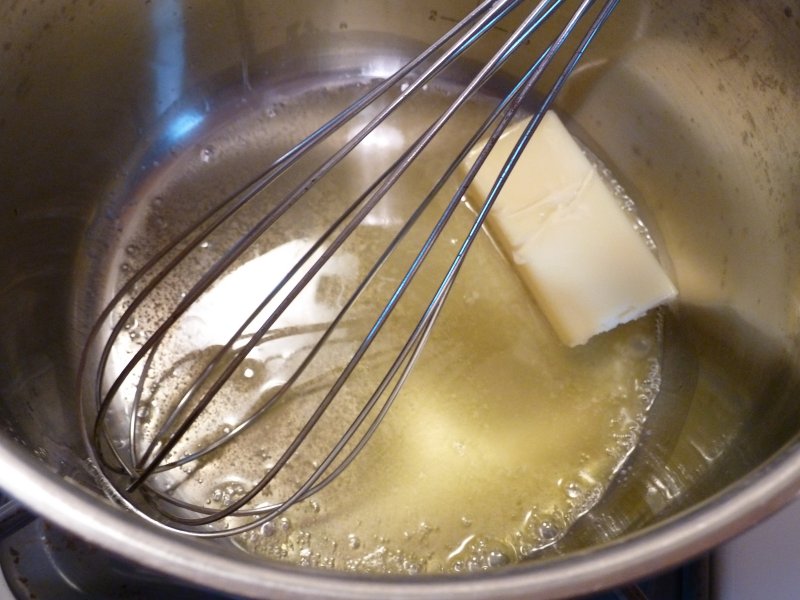
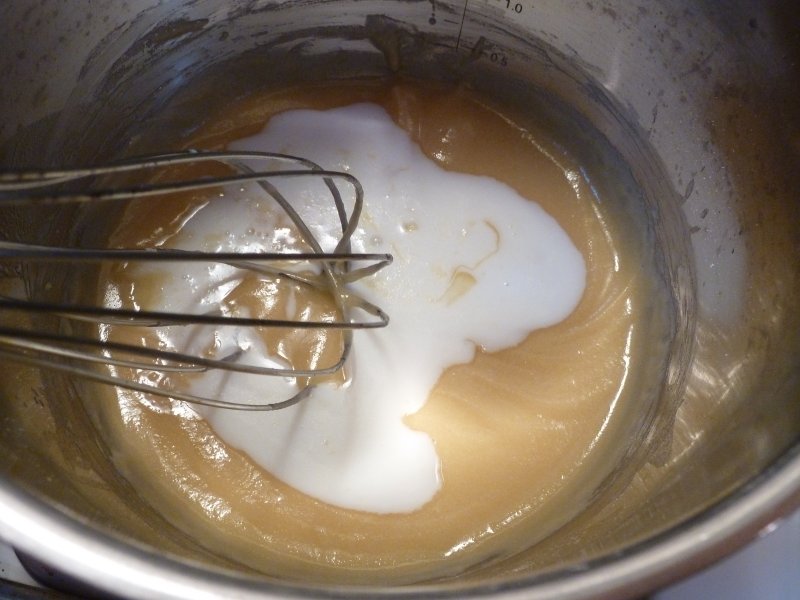
In a saucepan, melt the butter. 
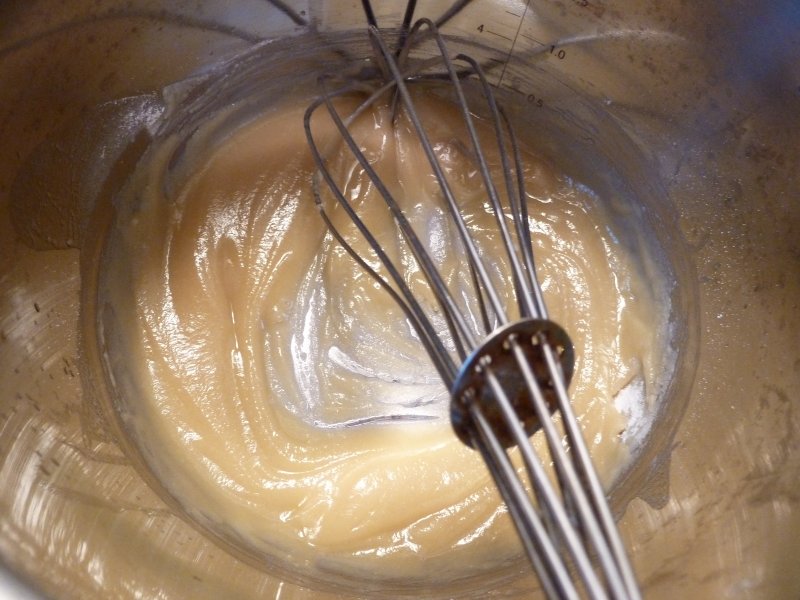
Take the pan off the heat, and quickly whisk in all the flour to form a paste. 
Put it back on the heat and whisk for one minute to “cook” the flour. 
Whisk in about a ¼ cup of milk to loosen the paste and continue adding the milk a little at a time.  Soon the sauce will begin to form. 
As I was whisking, Giovanna warned me to whisk “non impazzisce”.  In other words, “without craziness”….because I’d been whisking kind of willy-nilly.  Giovanna says we must whisk always in the same direction to make a smooth sauce.  I would listen to her if I were you. 

Soon the sauce will thicken up and coat the spoon.  At this point, remove from the heat and season with salt and pepper to taste.  Set aside.

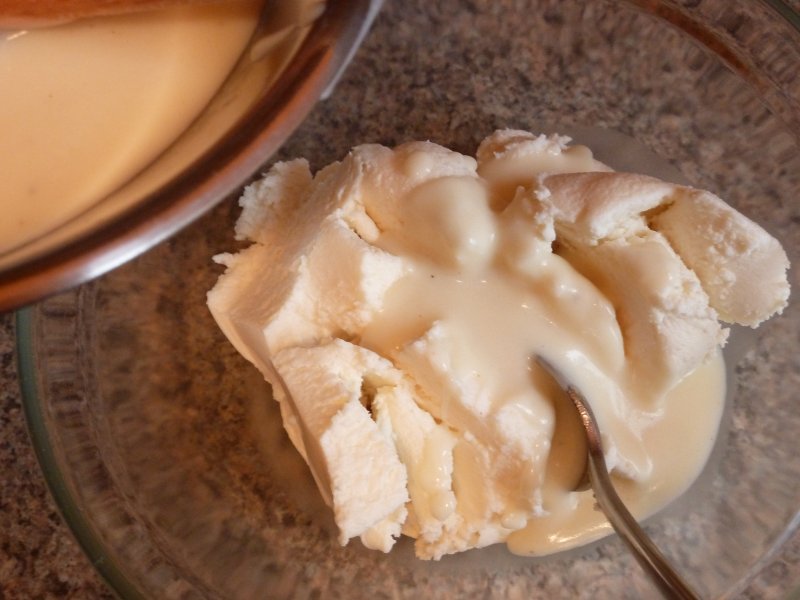
Place the ricotta in a bowl. 
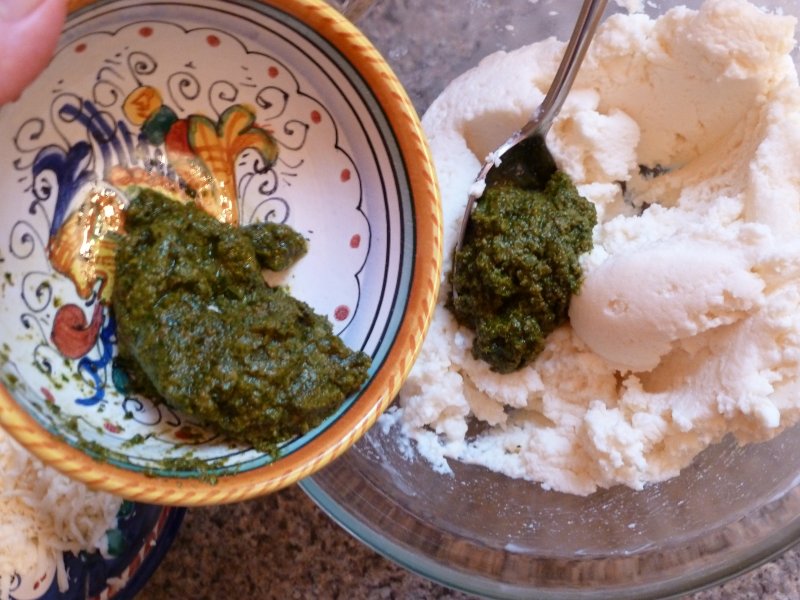
Add a little béchamel sauce just to loosen the ricotta, and then add the pesto. 
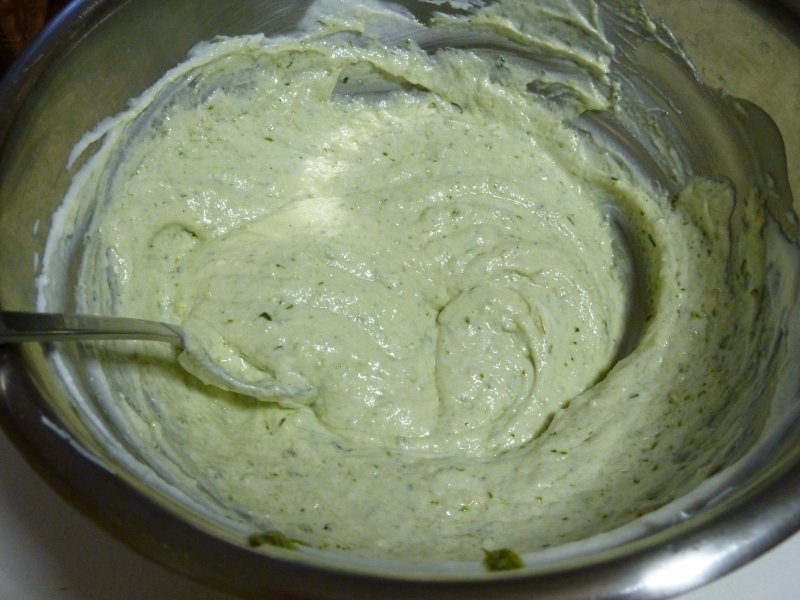
Stir together to blend. 
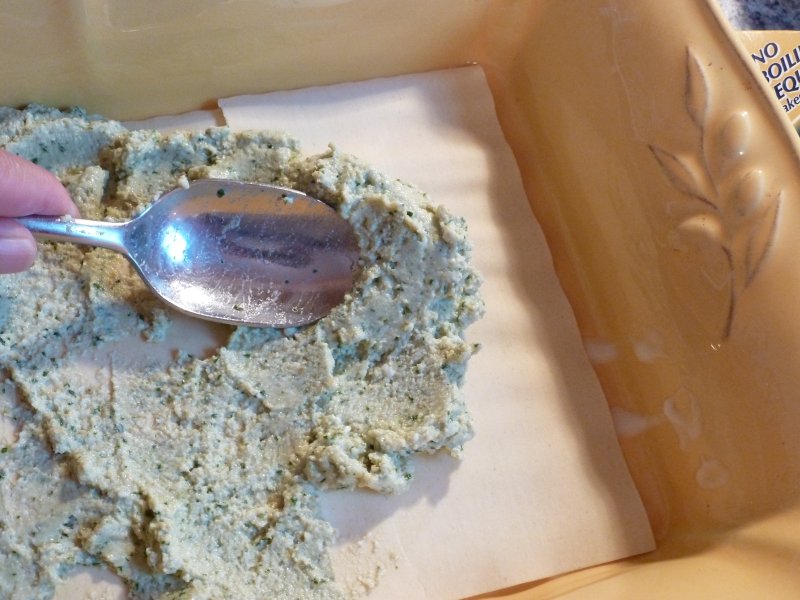
The ricotta should now be a lovely shade of green and be spreadable. 
If it’s still too thick to spread, you can always add a little milk.
Picture
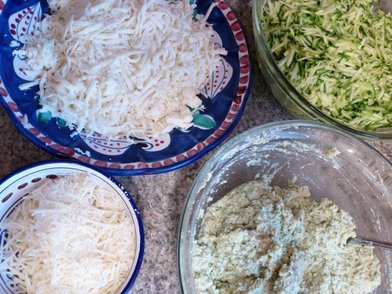
Now your components should all be ready.  Starting on the top left, I have my mozzarella shredded, the zucchini shredded, my ricotta/bechamel/pesto mixture and a small bowl of grated parmesan.  My pot of remaining bechamel sauce is not pictured.

Time to start layering!

Giovanna lines her dish with parchment paper.  I simply greased my 13 x 9 pan.


I put a couple of tablespoons of béchamel sauce to coat the bottom of my pan. 
Then place a single layer of no-bake lasagna noodles on top. 
Spread a layer of the ricotta mixture over the noodles. 
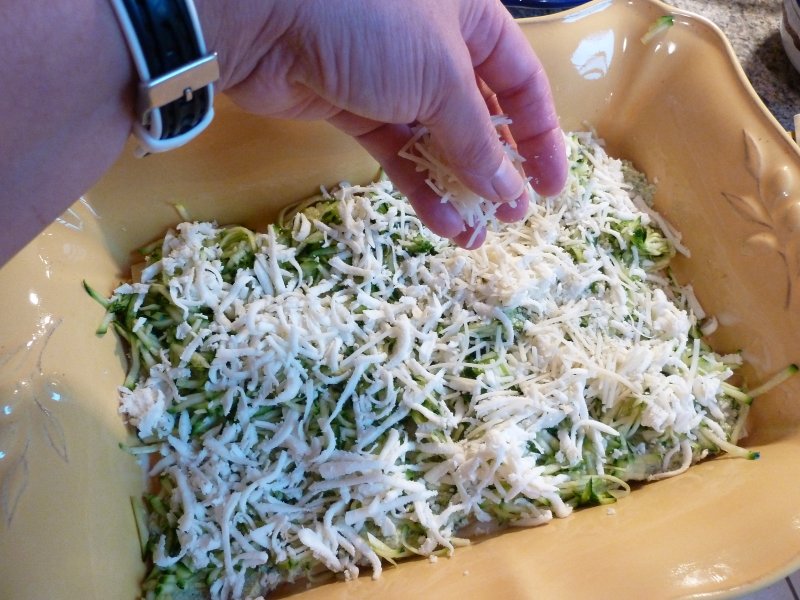
Layer grated zucchini on top of that. 
Next comes a layer of grated mozzarella followed by a sprinkling of grated parmesan.
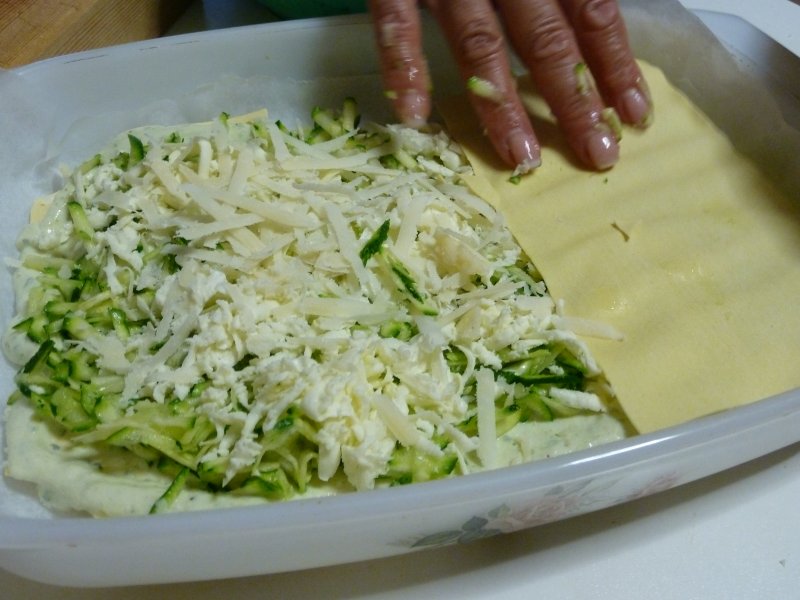
Time to start over:  Add another layer each of béchamel sauce, noodles, ricotta, zucchini, mozzarella, and parmesan.  And…….do it a third time.  When you have three complete layers of ingredients, sprinkle the top with bread crumbs, dot with butter, and pop it into the hot oven.  There it bakes for about 30 minutes.  
Picture
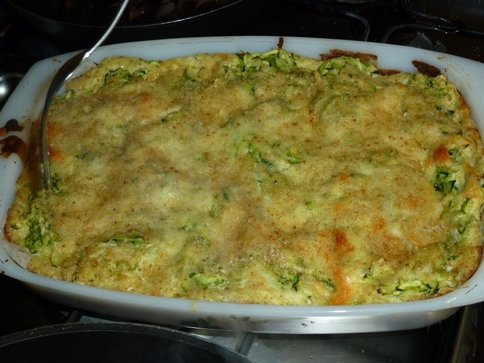
When you pull it out, it should be browned and bubbly.  Let it rest for 10-15 minutes before cutting into it.

You’re going to love this…..creamy, cheesy, yet fresh tasting because of all that zucchini and the pesto flavor in the background.  Serve with a simple salad and maybe a nice pinot grigio.  Delizioso!  Thanks Giovanna!


4 Comments

Coda alla Vaccinara:  Layers of Flavor

9/17/2012

0 Comments

 
But what is it exactly?  Why oxtail of course!  I remember as a child, I loved oxtail soup.  So when I was living in Rome and saw Coda alla Vaccinara or braised oxtail on the menu, I thought I should give it a try.  And good thing too….it was delicious!  It is a very ancient and very Roman dish historically prepared by the poor who couldn’t afford the good cuts of meat, and so were left with inexpensive bits like the tail, organs, etc.  I know, it all sounds a little….not so appetizing, but believe me, it’s SO delicious your eyes will roll back in your head.  (This is always my gold standard for the deliciousness of a recipe :)

It’s not difficult to prepare, but it is time-consuming, in that it needs to simmer on the stove for a minimum of two hours so the meat will be tender and fall off the bone.  As you can imagine, there really isn’t a lot of meat on an oxtail, but what meat there is needs to cook thoroughly so it’s really tender.

Here’s your list of ingredients:
Olive oil
The usual Holy Trinity of:
Diced carrots, onions and celery (I was out of celery….oh, well.  I made do without.)
Minced garlic clove
Oxtail pieces
Red wine
Beef broth
15 oz. can of tomatoes (preferably imported from Italy)
Salt and pepper

You see... there really aren't a lot of ingredients.  The trick is layering the flavors; letting each one simmer its way into the oxtail meat and making its presence known before adding the next layer.  Let's get started!
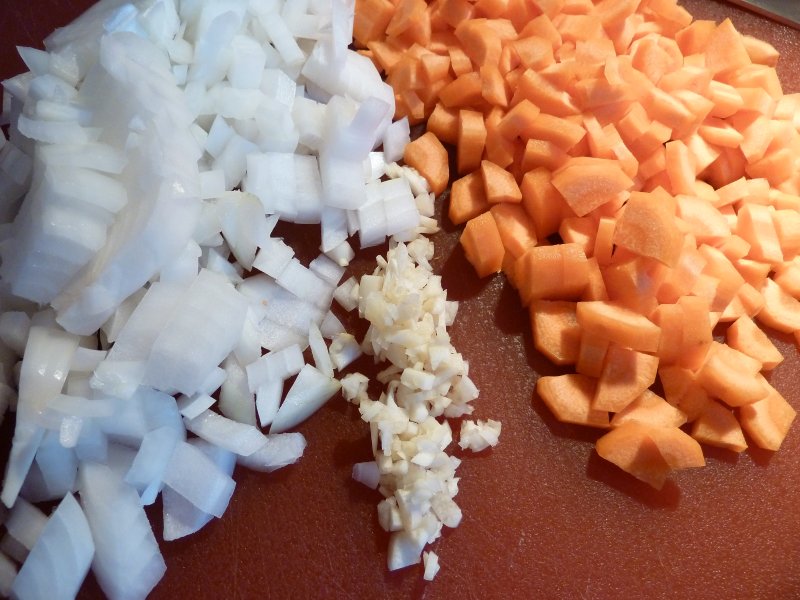
Dice your onions, carrots and celery.  Mince your garlic.  Obviously, I was out of celery....oh well, I made it work.  But if I had celery on hand, I would definitely use it.  Here's a photo of what oxtail looks like.  It looks meaty, but those meaty bits really like to stick to that center bone (or is it cartilage?)  
Drizzle some olive oil into a big heavy pot and set the flame to med/high.  This is when I pull out the big guns; my favorite bright yellow Le Creuset braising pot.  Toss in all your diced veggies along with the garlic.  Add a little salt and pepper and stir often until onions are translucent and everything’s beginning to brown up.

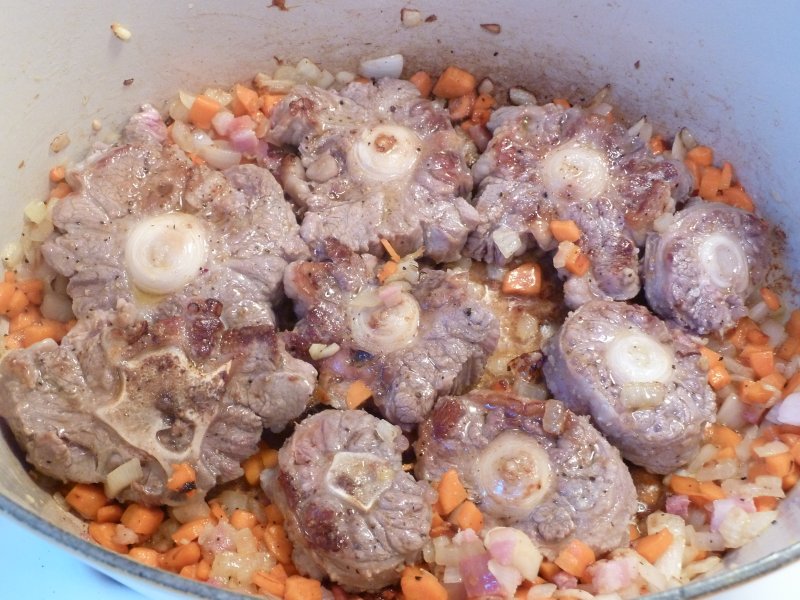
Push the veggies aside, and nestle your pieces of oxtail into the pan.  The heat should still be on medium high.  Drizzle in some more olive oil if you need to.  Season the meat with salt and pepper as well.  It's important to season each element.  You won't have to make much adjustment to the seasonings in the end this way.

When one side is brown, go ahead and turn them over to do the same to the other side.

Once everything is brown and the kitchen is really beginning to smell good, the fun begins.  

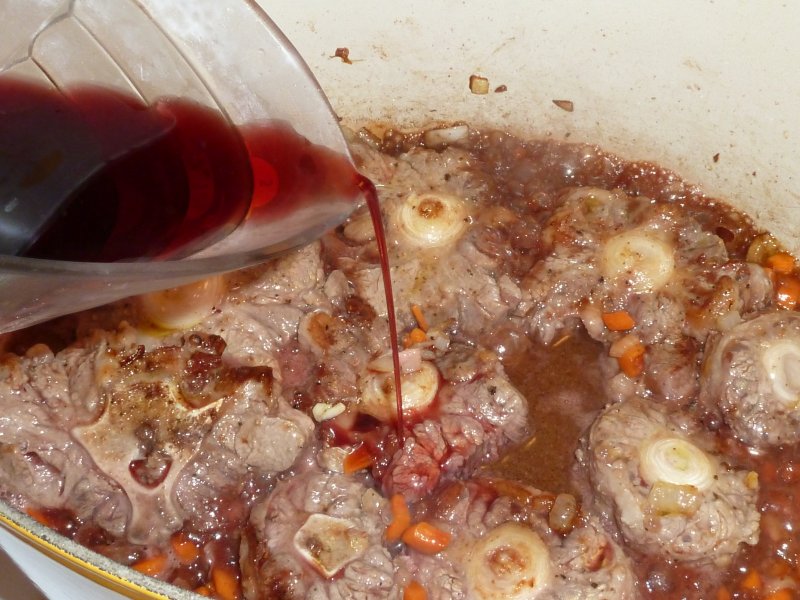
Pour yourself a nice glass of red wine, and add another cup of the red wine to the braising pot.  The heat should still be fairly high so the wine comes to a boil quickly.  Lower the temp a bit and let it simmer until at least half of it is gone.  You see how the color of the broth is really becoming quite rich looking at the end of the wine portion, just before I add the beef broth in the third photo above.

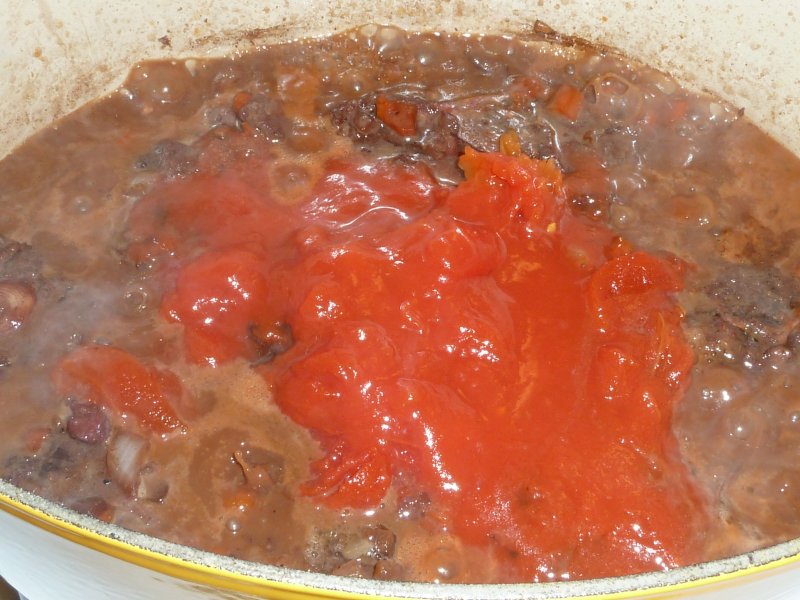
Now comes the next layer of flavor; beef broth.  Add at least a cup of that and once again, let it simmer away until it’s been reduced by at least half.

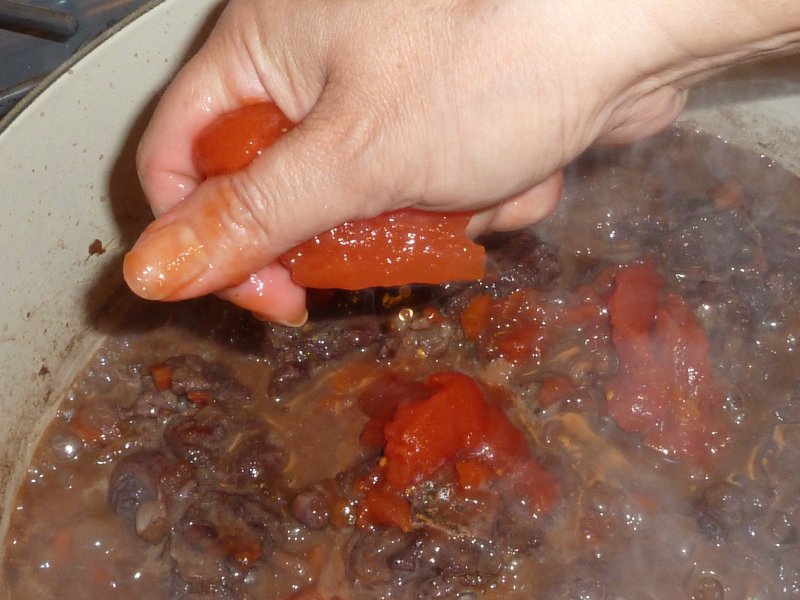
And finally, the last layer of flavor; the tomatoes.  I admit to a little snottiness here.  I must say, I always spend a little more for good, imported Italian tomatoes.  Look at these beautiful San Marzano tomatoes that came out of my can.  I usually buy them whole like this and if I need them to be in pieces, I just squish them through my fingers.  It’s very satisfying to squeeze them.  I think it must release aggression of some sort :)  Anyhoo…

Picture
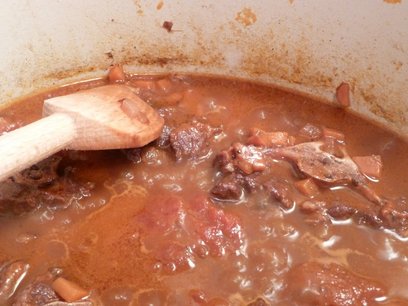
Now that you’ve got all the main players in the pot, you just need some patience.  Cover the pot and keep it going at a nice steady simmer.  From beginning to end, it needs to simmer at least two to three hours.  If too much liquid begins to simmer away, I just add a little more beef broth or ¼ cup of water at a time.  What you’re aiming for is meat that falls off the bone.  As I said before, oxtails don’t actually have a lot of meat, and what is there clings like mad.  So you really want to be able to get every bit of it off the bone. 


Picture
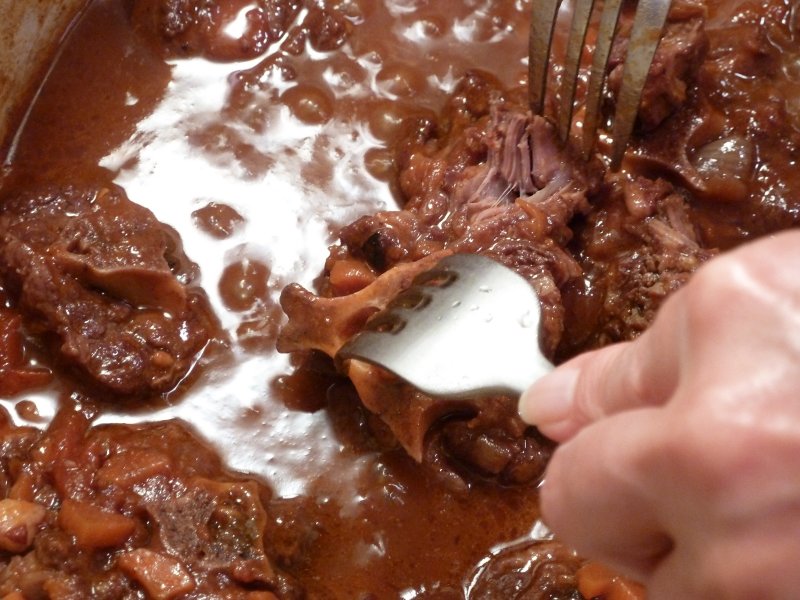
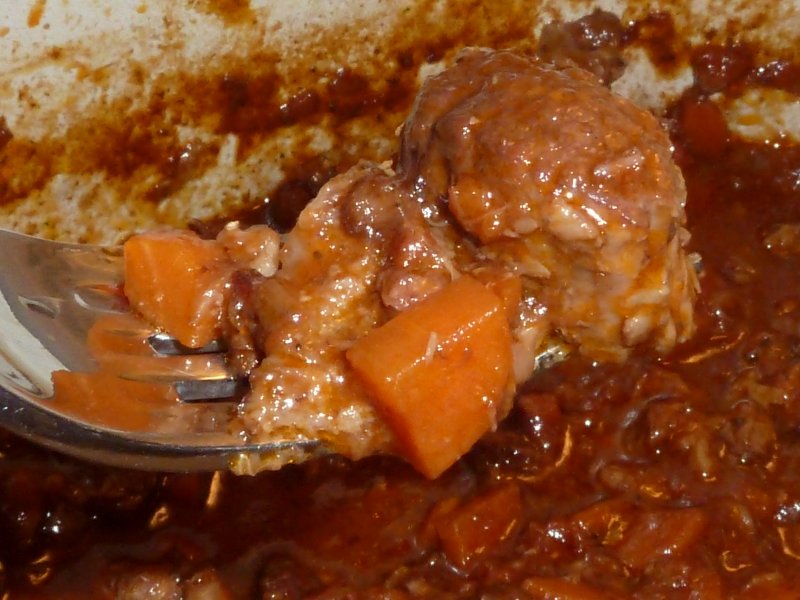
Okay, now we're getting somewhere!  About 2 1/2 hours have gone by, so this is where I get out two forks and use them to see if the meat is tender enough yet.  If you can use one fork to hold the bone and the other to pull the meat away easily, it’s done!  If not, just let it simmer some more.  Mine's looking pretty darn good!
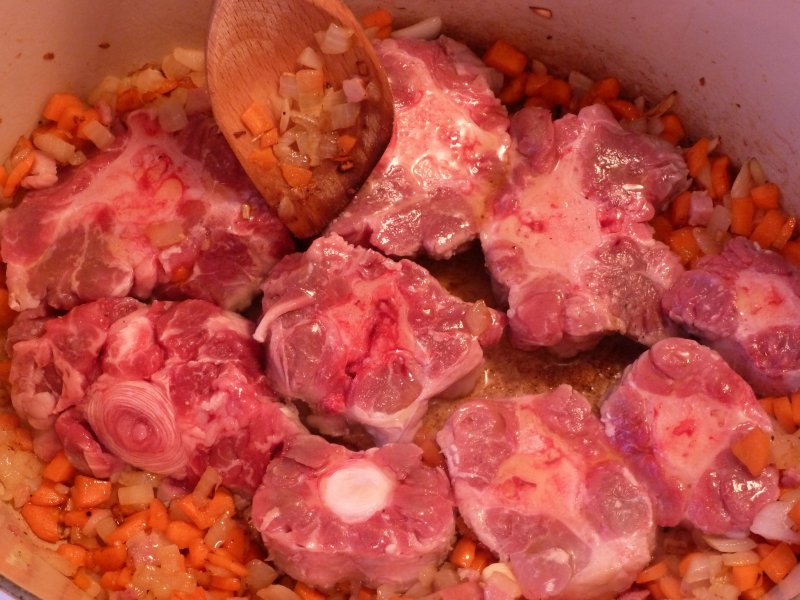
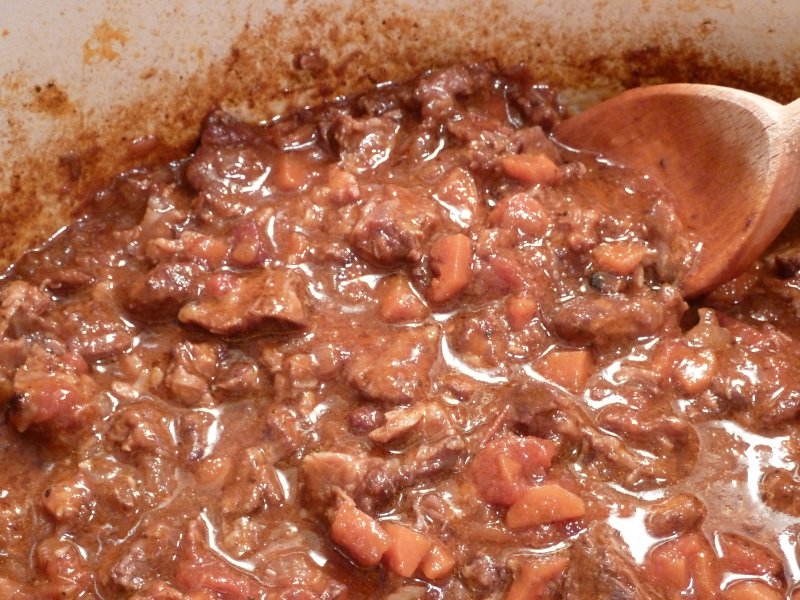
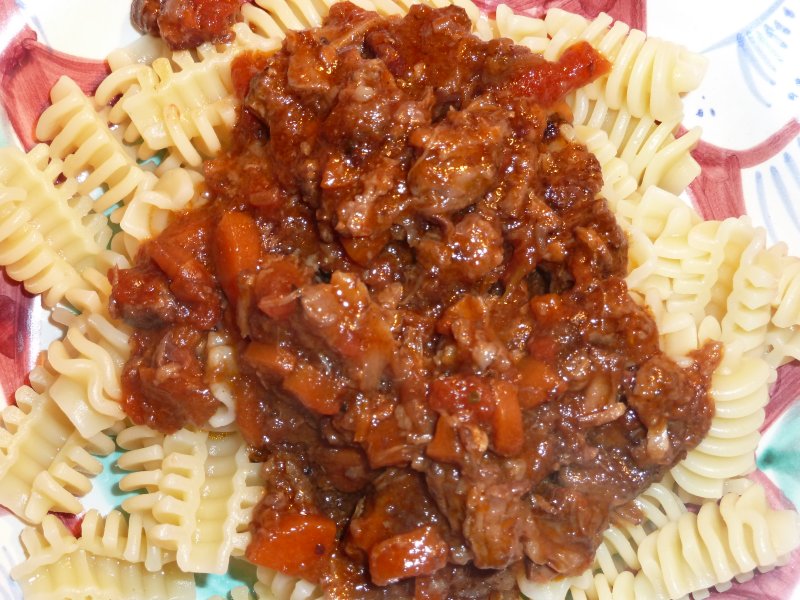
If the meat starts to come away easily, remove the bones to a cutting board, and use the forks to pull all the meat you can off the bone.  Slide that delicious, tender meat back into the pot and discard the bones.  Now what you’ve got is a pot of gold!  You end up with a ragu sauce that’s out of this world; so tender, so flavorful….you’ll want to start eating it out of the pot.  But hold on!  Boil yourself some pasta to al dente to serve as a vehicle for that beautiful sauce.  
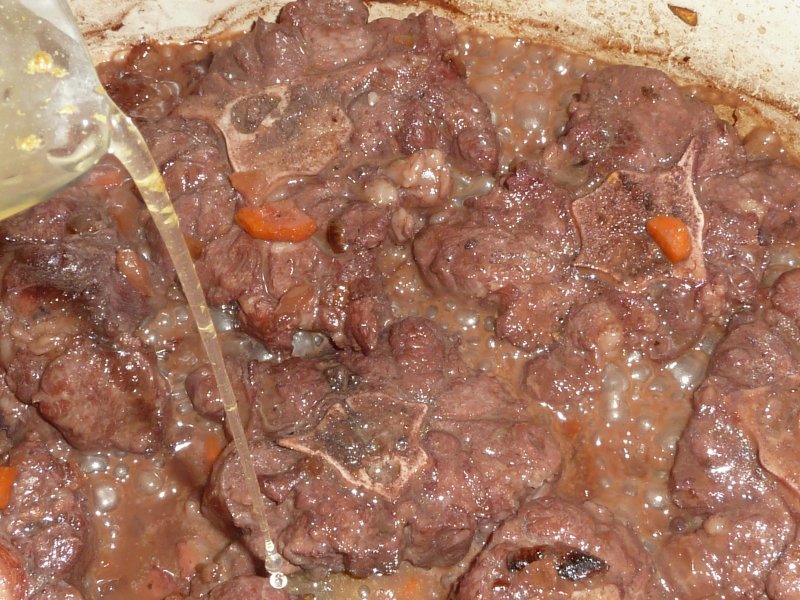
I like to use a craggy pasta that captures the sauce.  Top with a little shredded cheese if you like and enjoy!  Buon appetito!
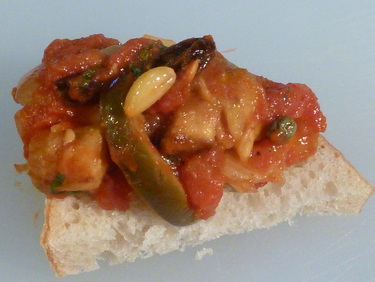
PS:  Serve with some crusty bread; you’ll want to mop up every last bit of sauce.
PPS:  I served this with a hearty red Umbrian Sagrantino; simply the best.

0 Comments

Working With What’s in the Fridge (a.k.a. leftovers)

7/18/2012

0 Comments

 
When we got our apartment in Rome, it appeared to have no refrigerator.  Luckily, it was just a modern, newly-equipped-from-Ikea apartment, and the refrigerator door simply looked like another kitchen cupboard…..a small one…..a really small one. 

It was apparent that my grocery shopping habits would have to change.  There would be no more “stocking up” on anything.  Grocery shopping happened nearly every day, every two days at the most….all done on foot…..to find nothing but super fresh ingredients everywhere.  So, I started cooking fresher and smaller.  Our meals tasted better and rarely did I make more than we could eat as not only was there not much room in the fridge for leftovers, but we also didn’t have a microwave for reheating.

Now, that I’m living in the U.S. again, I find myself slowing reverting to my old ways.  I am continuing to cook with fresh ingredients, but I do find that sometimes, I simply buy too much food.  Last night, when it was time to start cooking dinner at 8:00 pm (We have not reverted to eating early), I wandered over to the fridge to figure out what to make and found I had leftovers that needed using up.  The surprise result was a really delicious chicken/vegetable pasta dish which I shall now call………wait for it……..

“Irene’s Chicken/Vegetable Pasta”.  Sometimes, I am too clever for words.

Here’s your list of ingredients:
Pasta
Olive oil
1 garlic clove, smashed
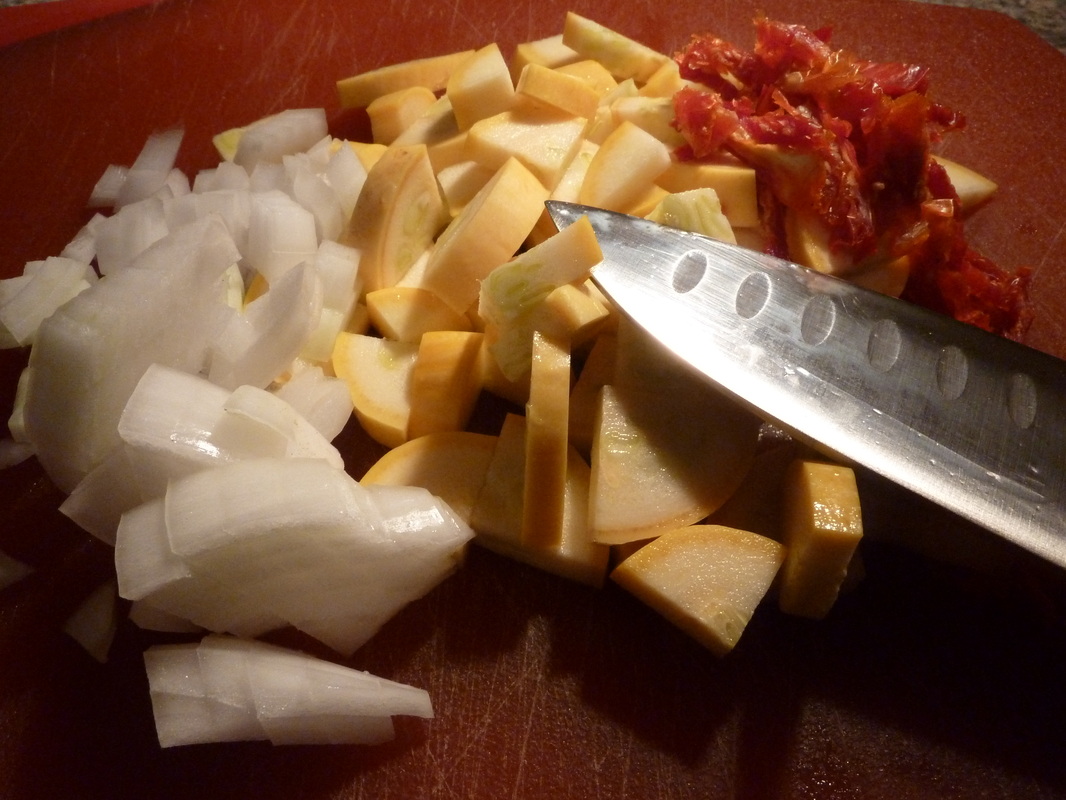
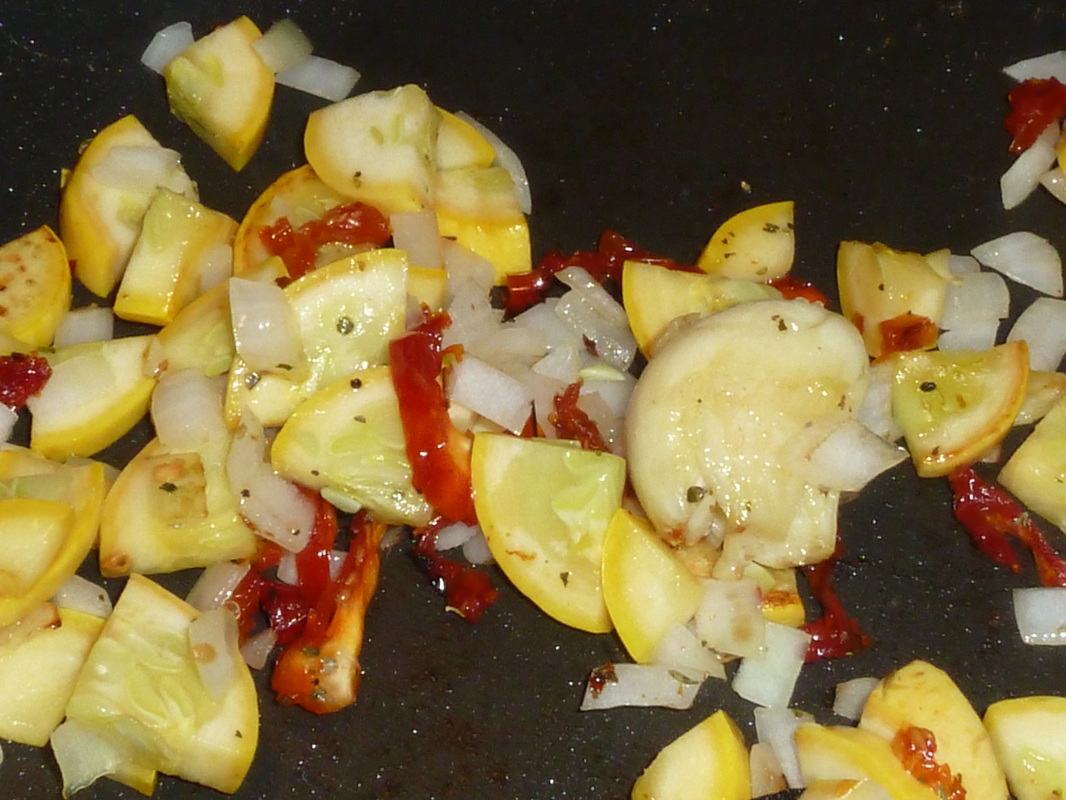
A yellow zucchini, sliced
Onions, chopped (onions and garlic are ALWAYS available in my kitchen)
Sundried tomatoes, cut into slivers (another pantry staple)
Dried Italian herbs
Salt and pepper
A pinch of red pepper flakes
A glug of white wine
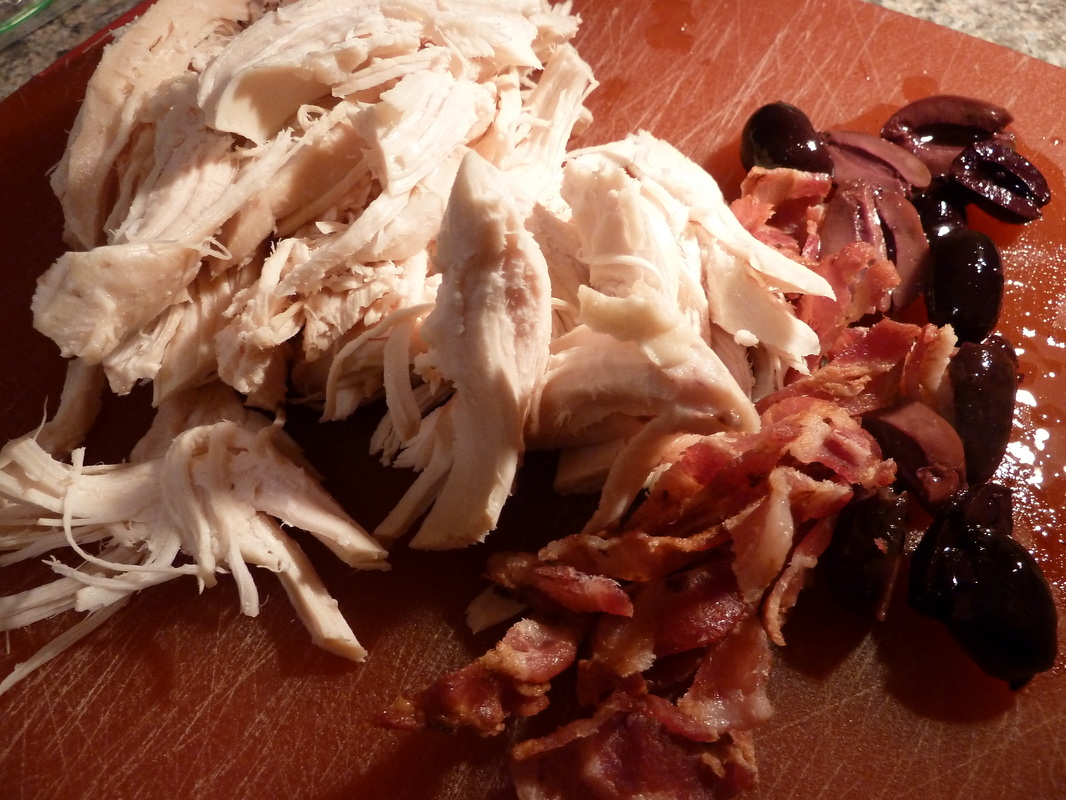
Leftover rotisserie chicken, shredded
Leftover cooked bacon, chopped (because I’d had a craving for BLT’s a few days ago.  If I didn’t have any leftover bacon, I’d use pancetta which I always have in the fridge.)
Some kalamata olives
Feta cheese

Let’s get started:
Put your pasta water on to boil and while you’re waiting, chop up your ingredients.
When the water comes to a boil, toss in a good amount of coarse salt, stir to dissolve, add your pasta and cook to al dente.

In a large sauté pan, drizzle some olive oil, throw in the smashed garlic clove and rub it around. 
When the oil is hot, add the zukes, onions and sundried tomato slivers.  (Add pancetta here if you don’t happen to have leftover cooked bacon.)
Sprinkle over a pinch of dried Italian herbs, salt and pepper and a pinch of red pepper flakes. 
When your vegetables are wilting and just beginning to brown, discard the garlic clove and pour in a glug of white wine.  Let it cook off.
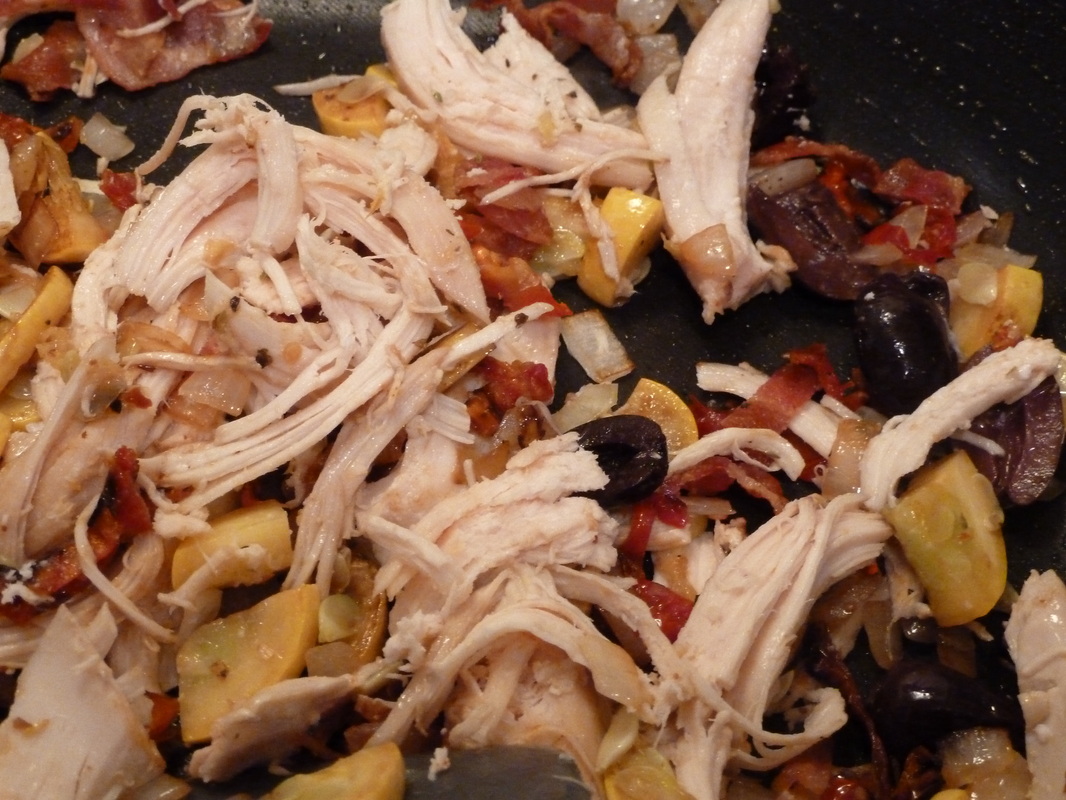
Now toss in your shredded chicken, chopped cooked bacon and kalamata olives.  Stir to mix and add your hot, cooked pasta.  If it all appears too dry, add a spoonful of hot pasta water.  
Picture
Stir again to mix, adjust seasonings and toss with crumbled feta cheese.  Dinner’s ready!  Buon appetito!


0 Comments

Eggplant Parmesan

7/11/2012

4 Comments

 
Picture
I know.  This is my second recipe featuring eggplant.  I told you.  I’m in love with the stuff.  I always thought eggplant parmesan was one of those Americanized Italian foods.  But it’s not!  I ate it quite a few times while living in Italy; and it was always delicious.

My favorite place to eat it is on the beach.  I know that sounds kind of strange, but down in Positano, on our favorite beach, we thank our lucky stars if the owner’s mama decides to make eggplant parmesan on a day we’re there.  I’ve been trying to emulate her recipe ever since. 


Here’s your list of ingredients:

Eggplant
Salt
Olive oil
*Tomato sauce 
Fresh mozzarella cheese
Parmesan, grated 

*A word about the tomato sauce:
I simply drizzle a little olive oil in a saucepot and add a smashed garlic clove.  Rub it around in the oil to flavor it and toss it out when it browns.  Now add a can of good Italian tomato sauce (or chopped tomatoes in puree) to the hot oil and season with a good pinch of dried Italian herbs and a good pinch of salt.  Tomato sauce done.  I use this sauce for everything.
Remember how we had to make our eggplant sweat for the caponata recipe?  We’re going to do the same thing here to keep the eggplant parmesan from getting too watery.  Let’s get started.

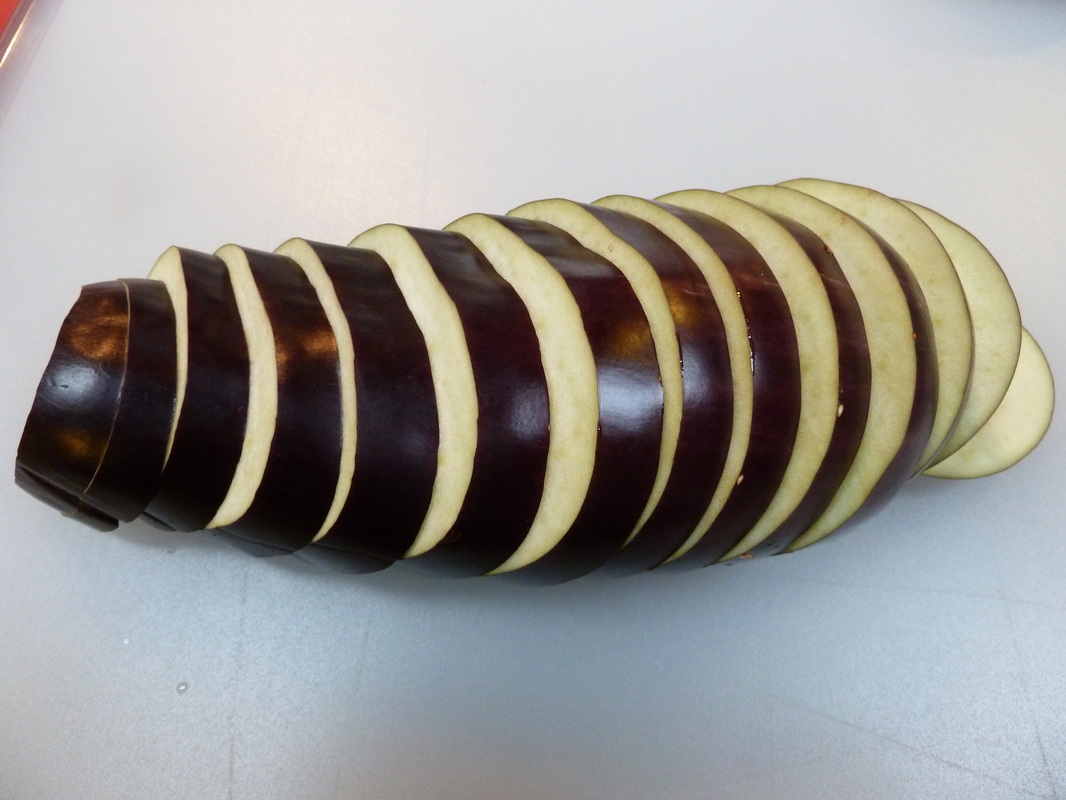
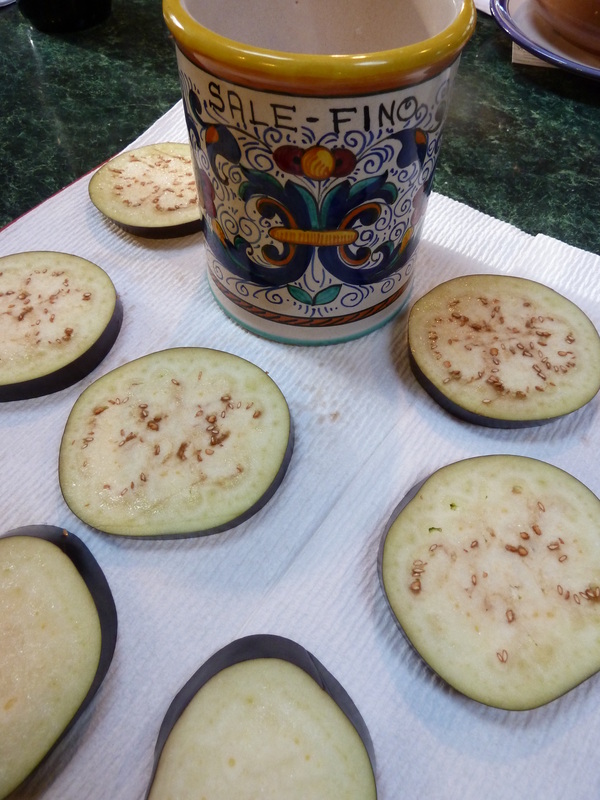
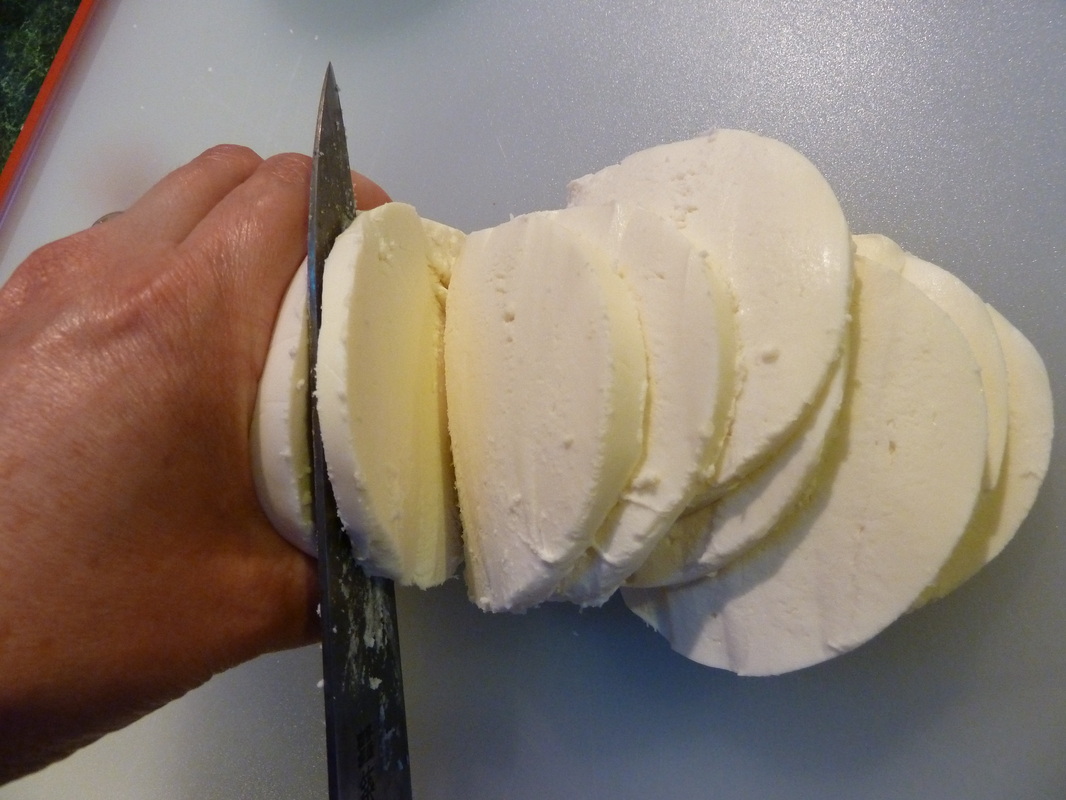
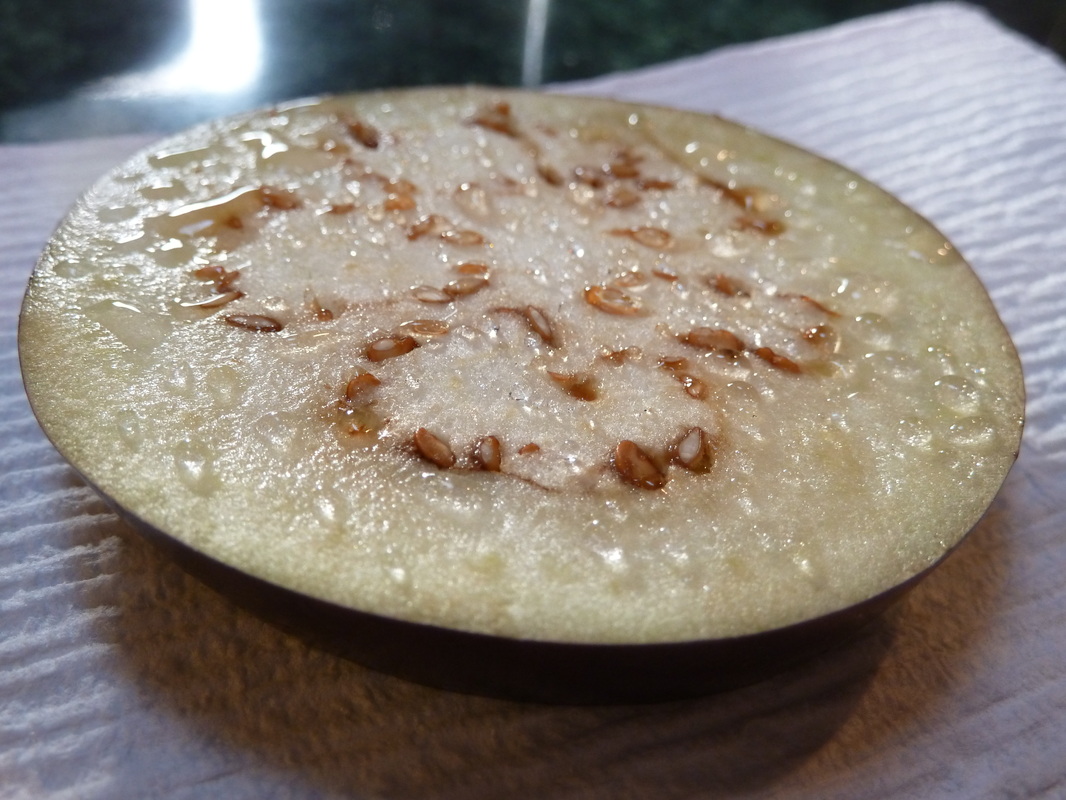
Slice your eggplant into slices about ½ inch thick.  Lay them out on paper towels and sprinkle liberally with salt.  Let them sit there for about 30 minutes. Get the oven going to 400 degrees, and work on slicing your mozzarella.   When you see good beads of sweat forming on the eggplant slices, flip them over quickly so the paper towel absorbs all the sweat beads and some of the salt as well.

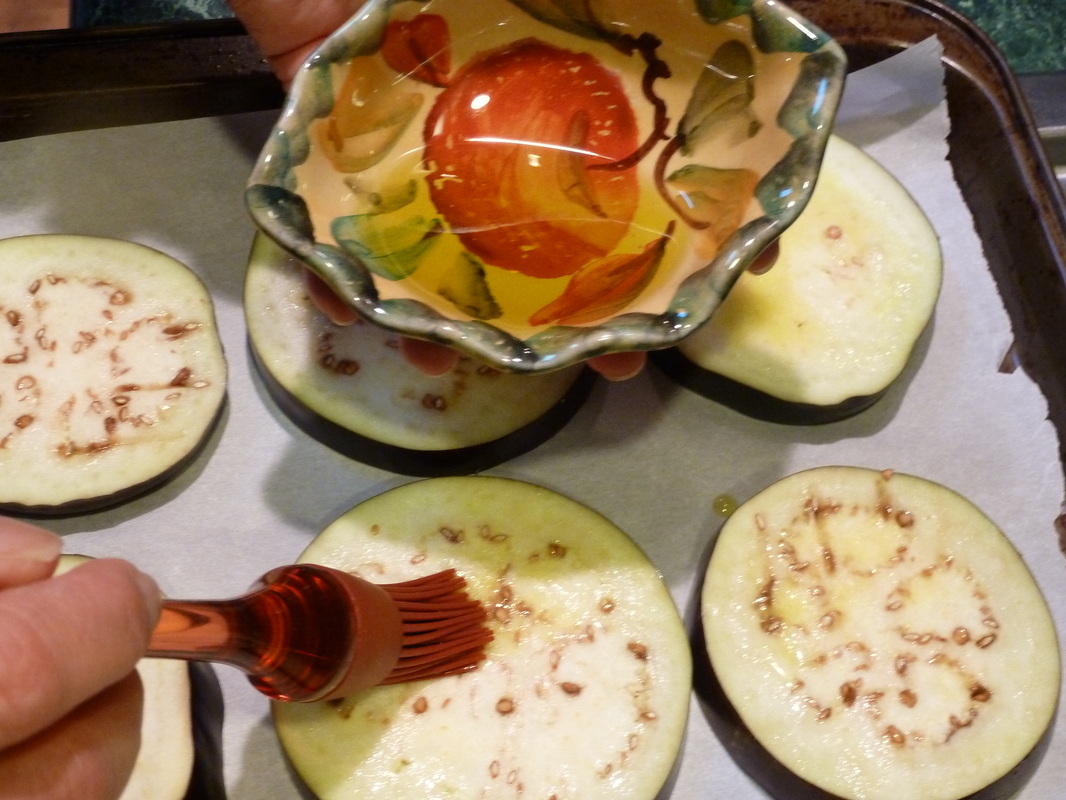
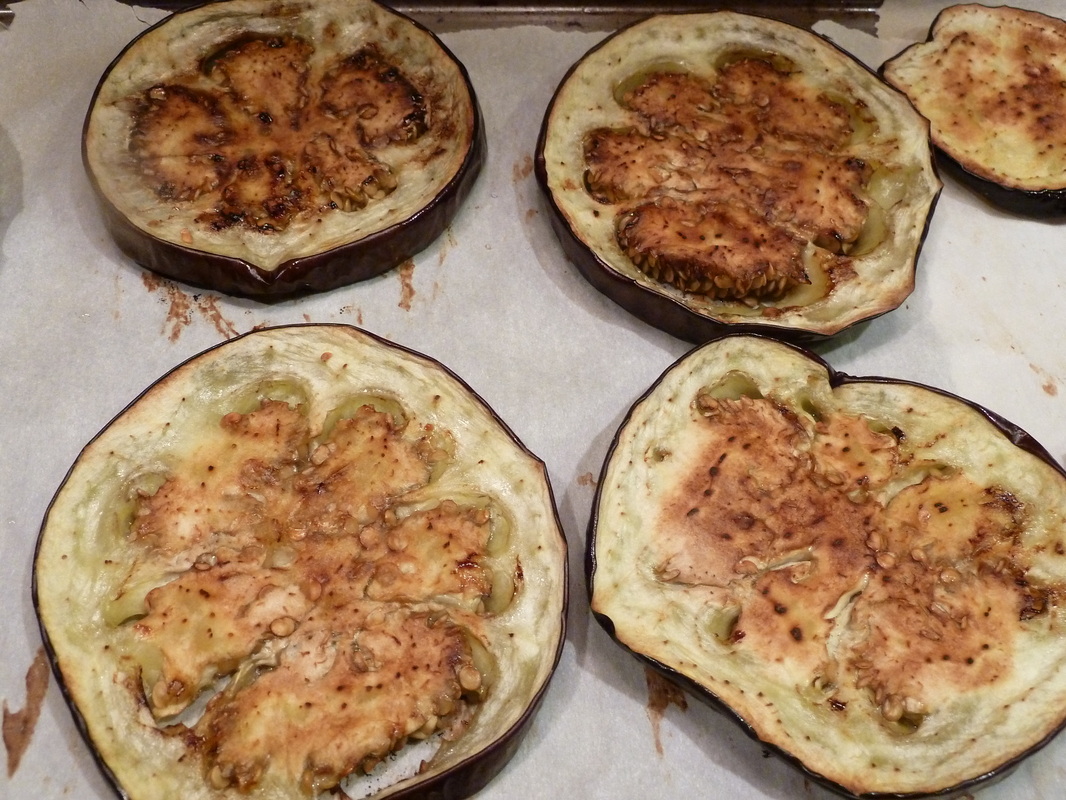
Now transfer the slices to parchment paper covered cookie sheets to roast in the oven.  Brush them lightly with a bit of olive oil. Roast for 15-20 minutes or until they get golden and shriveled looking, flipping them over halfway through the cooking time.  Reduce the oven temperature to 350 and let the layering begin!

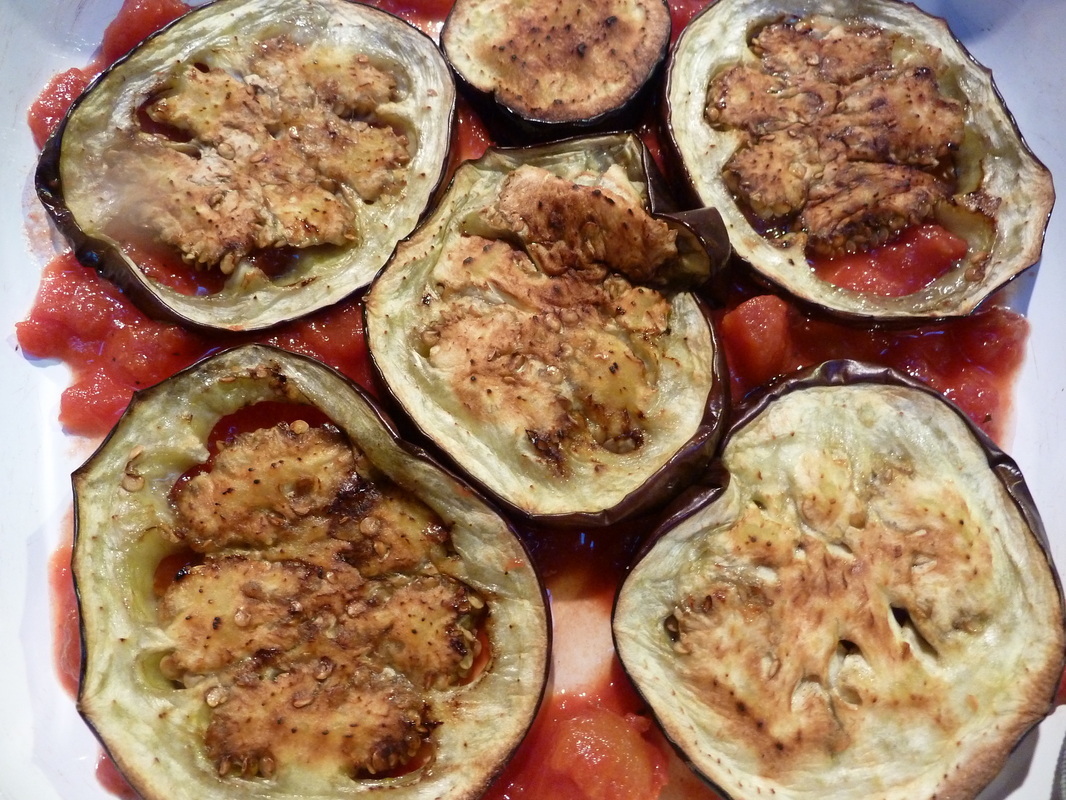
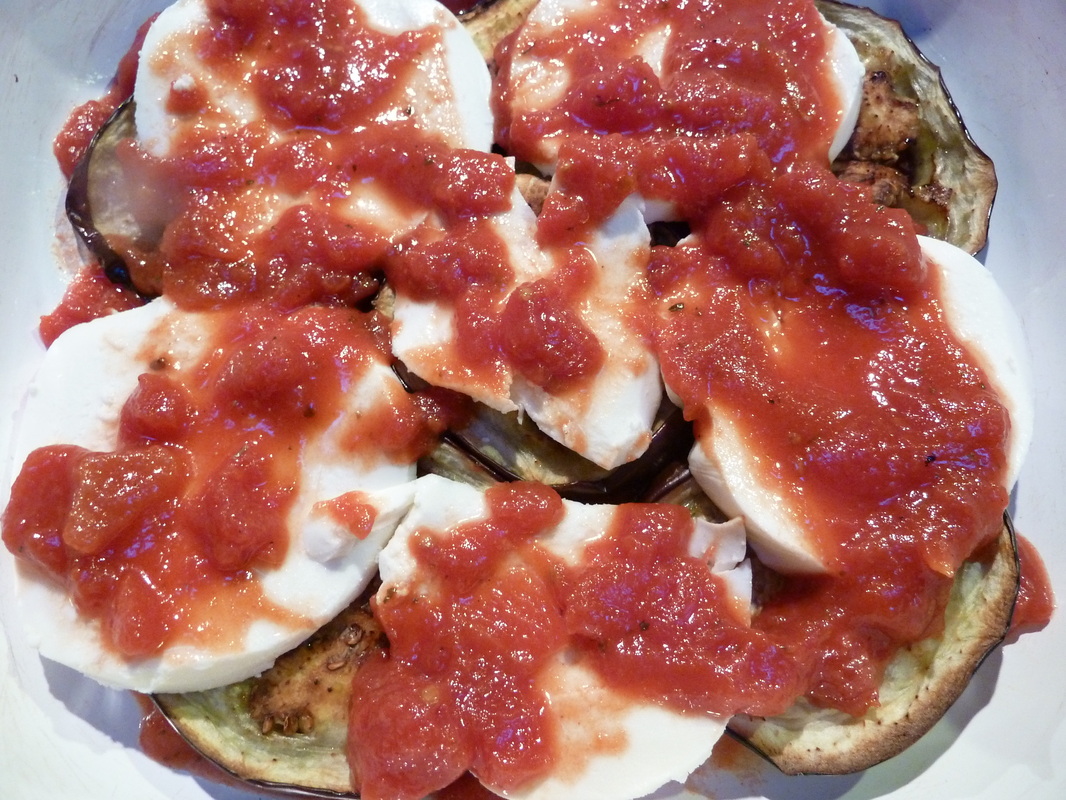
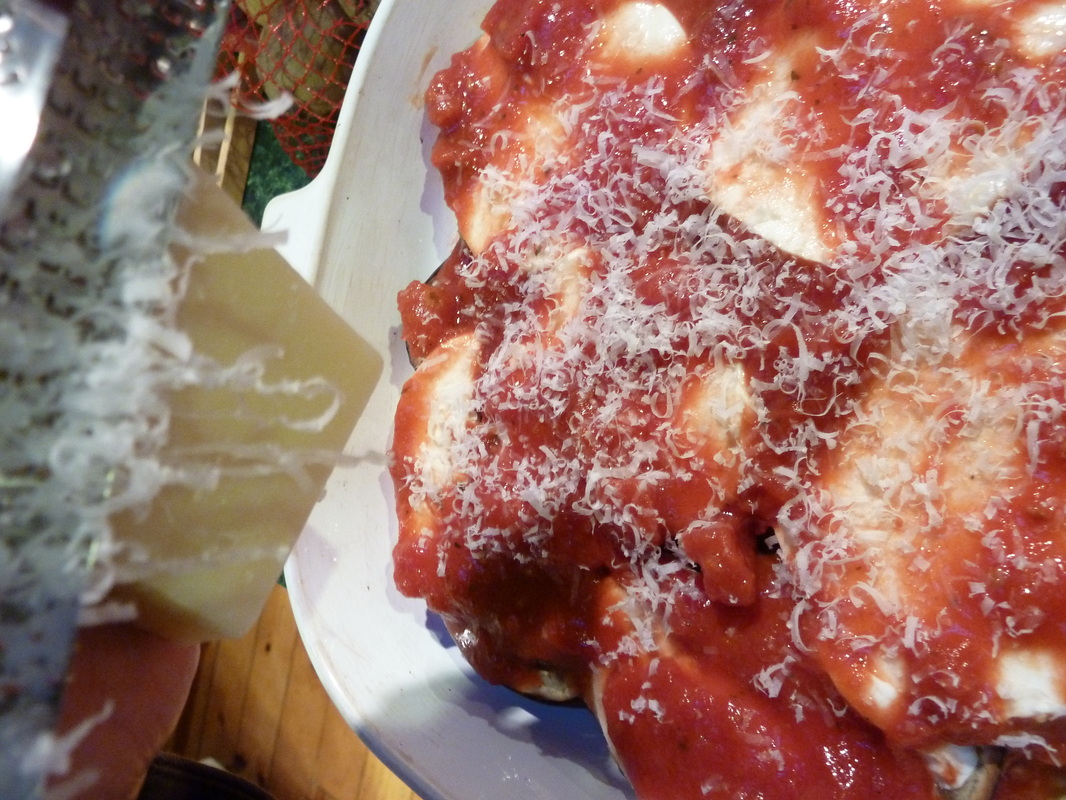
In an oven-proof baking dish, place a spoonful of tomato sauce, just to coat the bottom of the pan.  Add a layer of eggplant followed by a layer of mozzarella cheese slices.  Spoon some tomato sauce over the top and repeat the layers.  I usually make two layers before covering the whole thing with grated parmesan.

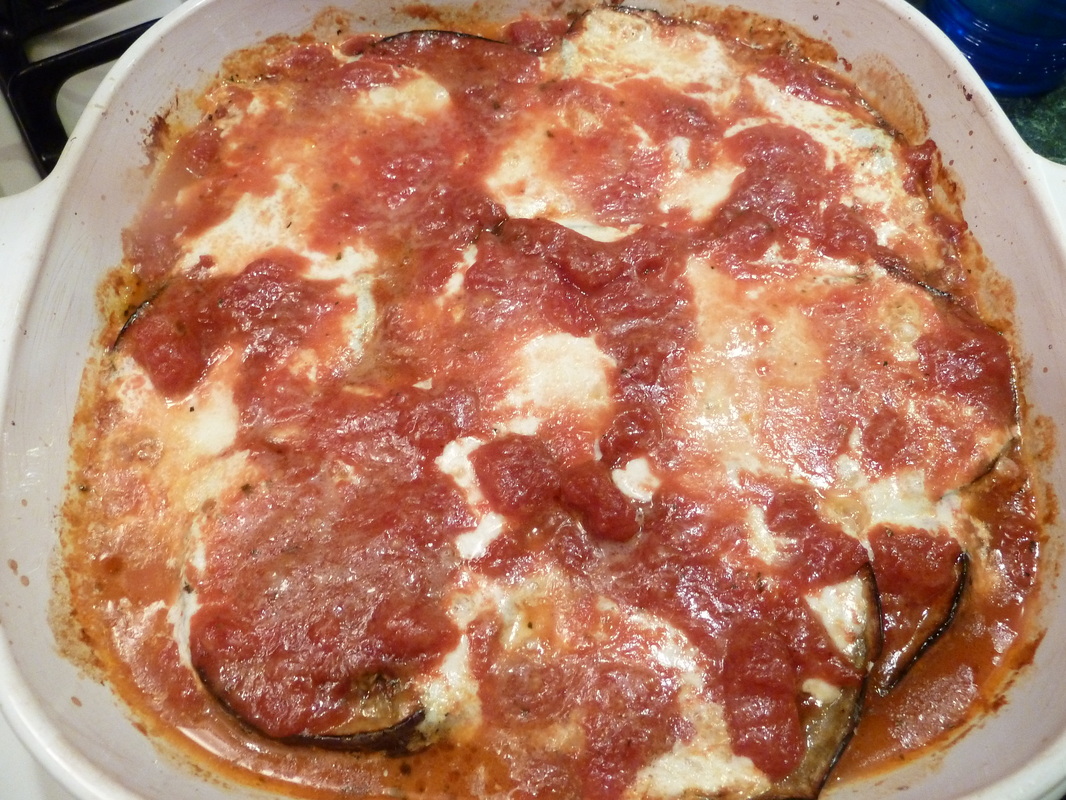
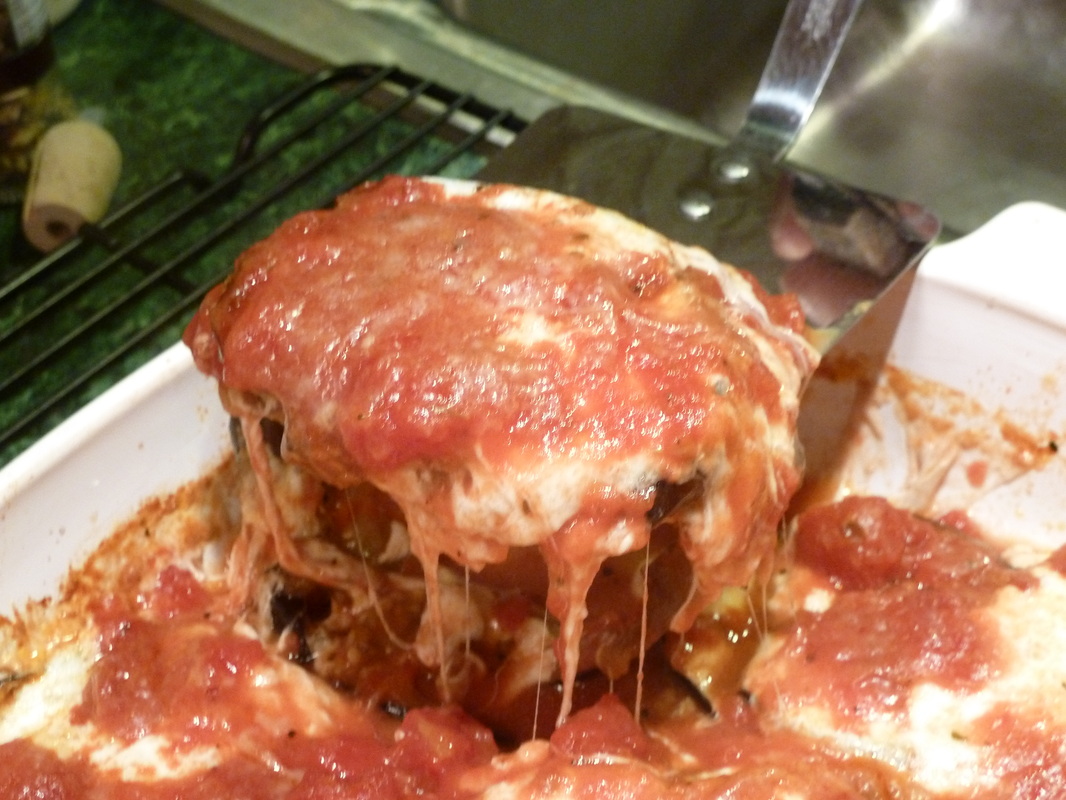
Pop the baking dish into the oven for about 30 minutes.  When it comes out, let it rest for 10 minutes before cutting into it.  Serve up beautiful squares of this ooey-gooey yumminess with a nice loaf of crusty bread for sopping up the sauce. You'll want to perform “la scarpetta” or the little shoe; the act of sopping up a good sauce with bread (to me, this is the ultimate sign that my guests enjoyed their meal!).  Buon Appetito!

4 Comments

Presto……Pesto!

7/3/2012

0 Comments

 
Picture
Put that jar of pesto back on the grocery shelf.  Step away.  There is simply NO reason to buy pesto (unless it’s the dead of winter and you didn’t make enough to last and there is no fresh basil in a fifteen mile radius).  Pesto is so simple to make and store-bought simply cannot hold a candle to homemade.  Get thee to a local farmer’s market right now and buy up those luscious bundles of heavenly smelling basil.   Gather up a few other simple ingredients, and let’s get started.

Here’s what you will need:

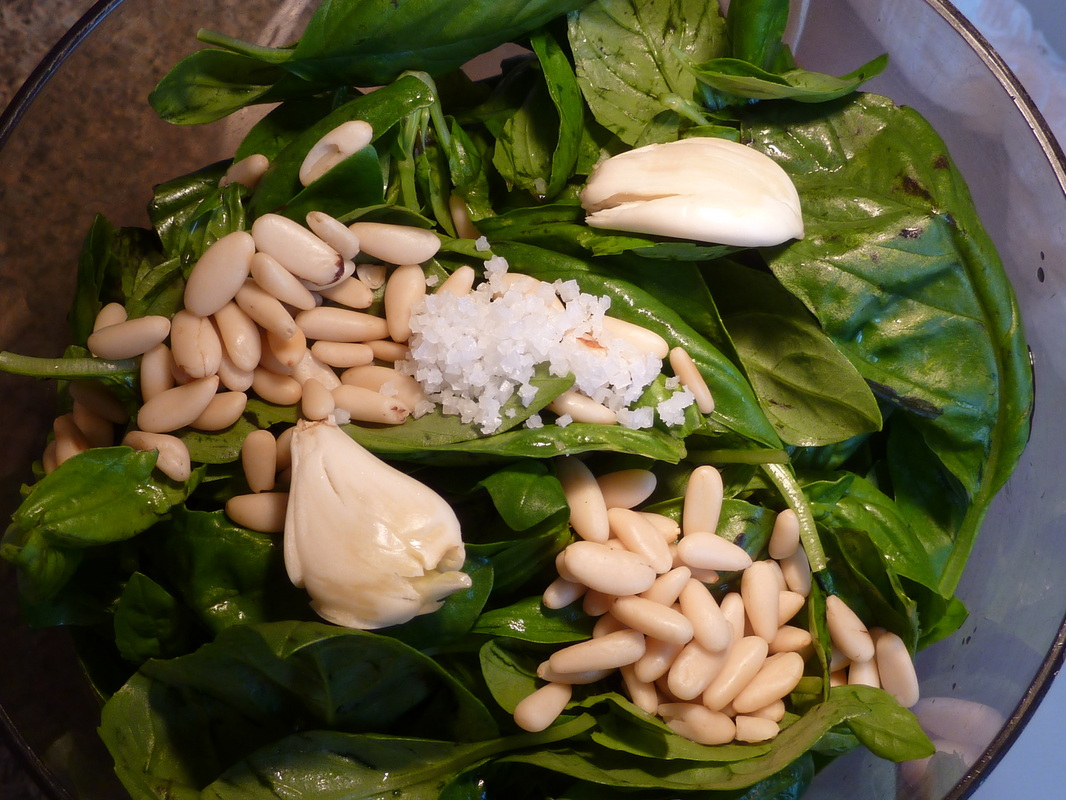
2-3 cups of fresh basil leaves (pluck and use the leaves; toss the stems)
2 T. of pine nuts
2 cloves of garlic
coarse salt
1/3 c. grated parmesan cheese
1/3 c. grated pecorino cheese
Olive oil


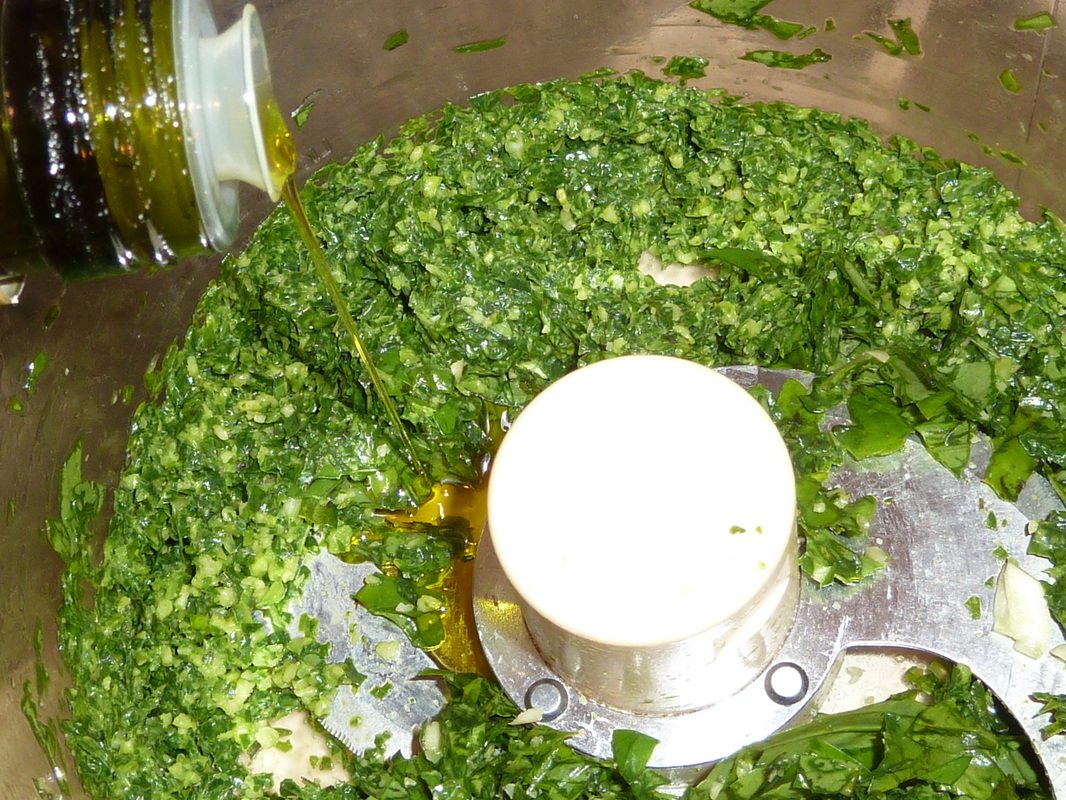
Pesto can be made in a blender, food processor or the old-fashioned way; with a mortar and pestle.  Today, I’m using my food processor.  Drop in your basil leaves, pine nuts, garlic and salt.  Give it all a whirl to combine and mince everything. Scrape down the sides every so often.

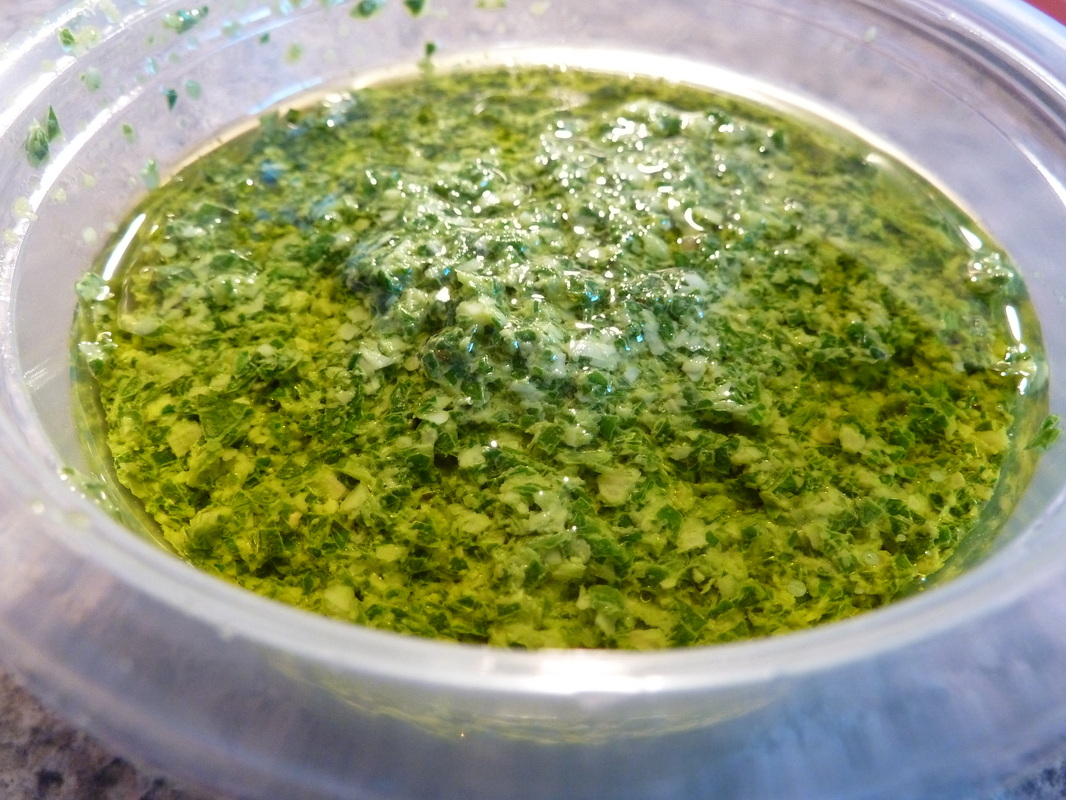
At this point I add a tablespoon or so of olive oil.  Whirl it all again.  Now that it has some oil, it will puree nicely.  When you’ve got a nice paste (leave it a little chunky if you like it that way), scrape it all out into a bowl.

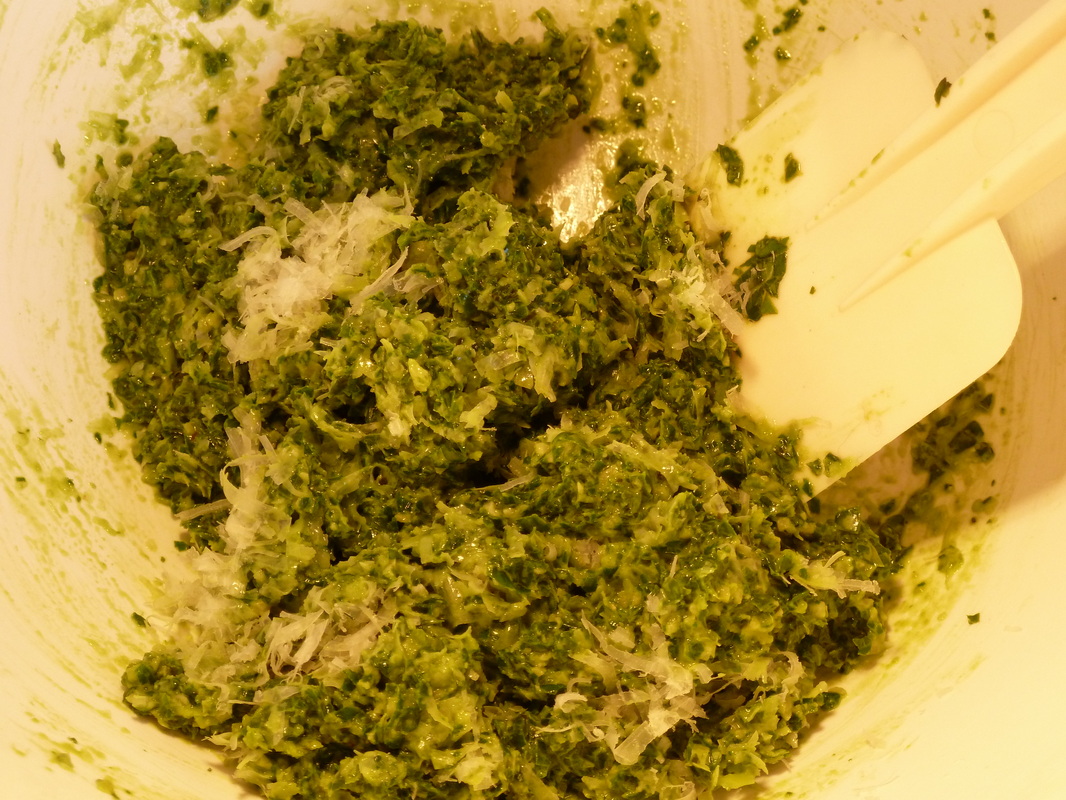
Add in your cheeses and mix with your spatula.  Then drizzle in more oil as you stir to make a thick sauce.  The color will be amazing, and the aroma…you’ll be tempted to dab it behind your ears.   Presto….pesto….you’re done!
What do I do with my pesto, you ask?  Well….let me tell you!  Pesto has many uses beyond mixing it with hot pasta.  Yes, that is its most classic use; simply mix a few tablespoons with freshly cooked spaghetti or linguini and top with a little grated cheese.  Be sure not to overdo it.  A little pesto goes a long way.  It’s very intensely flavored.  If your pesto is a little thick, simply thin it with a little of the starchy water you cooked your pasta in.

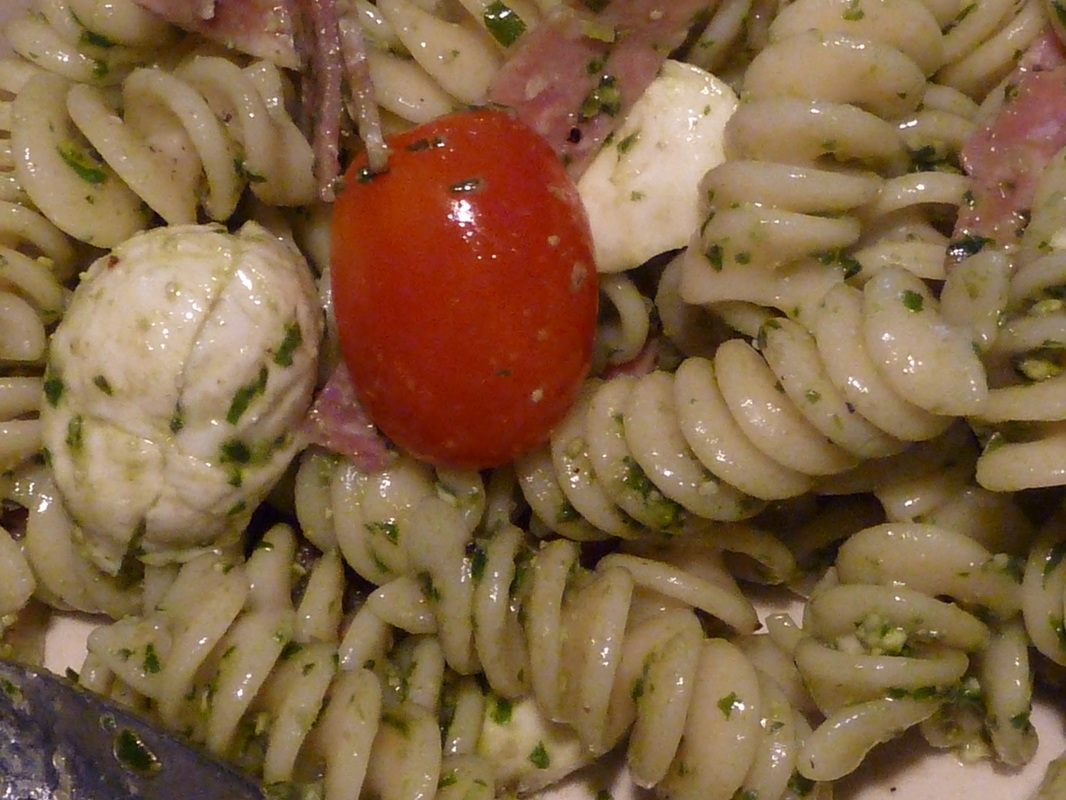
Another way I love to serve it, especially in the summer and for potlucks, is in a cold pasta salad.  I like to use fusilli or some other pasta shape with crevices that grab hold of the pesto.  Simply cook up your fusilli until al dente, drain it, and run cold water over it.  When cold, place in a bowl and add cherry tomatoes, mini fresh mozzarella balls, and slivers of salami.  Toss the whole thing with your freshly made pesto.  Delicious!

But wait!  There’s more….toss some pesto with hot, roasted potatoes.  Yum! Not only are they delicious, but they’re beautiful; all glistening and green.   Drop a dollop onto the top of soups, stews and braised meat dishes as a tasty garnish.  Your pesto will melt into these sauces adding a fresh, earthy hit of flavor.

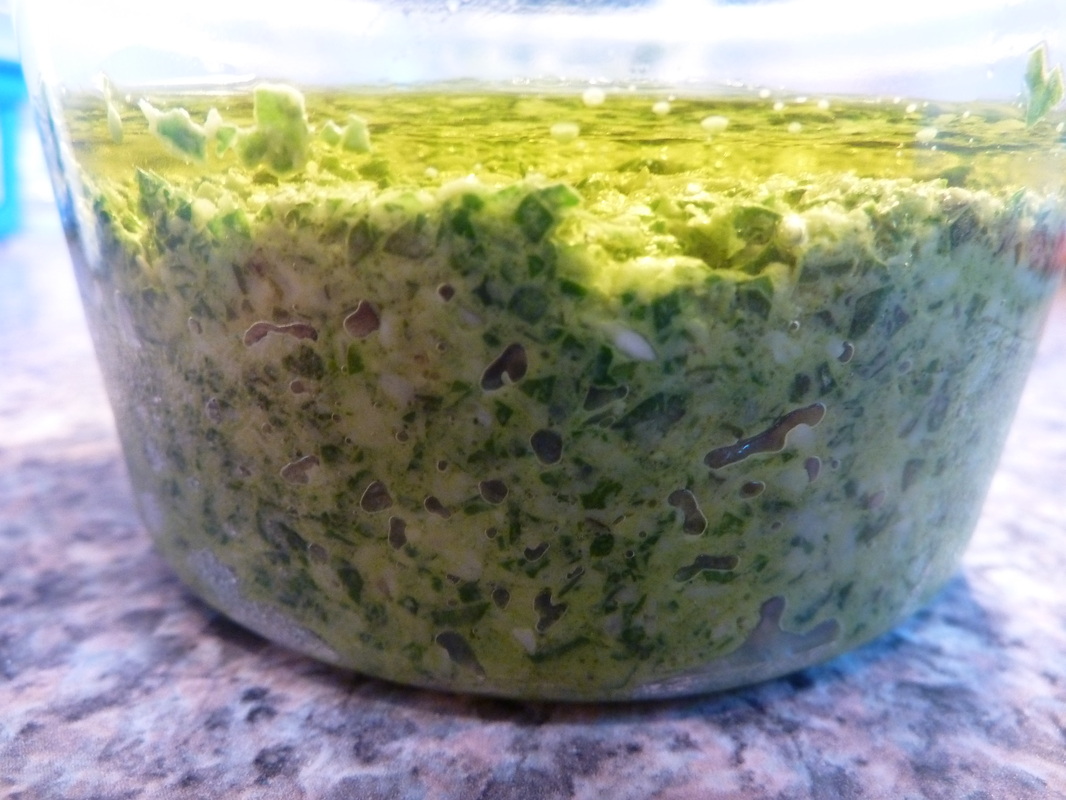
 How do I store my pesto?  Pesto is so easy to make; it’s tempting to just make it each time you need it, and you should.  But as summer winds down and you realize that before long basil supplies will die down as well, you might consider making a couple of batches for the freezer.  Simply store it in small plastic freezer containers with a thin layer of olive oil on the surface.  I defrost a container overnight in the fridge.  If I don’t use all its contents, I cover the remainder with a thin layer of olive oil to keep the beautiful color and seal in the freshness, and put it back in the fridge.

Buon appetito!

0 Comments

Pucker up…..for Lemon Risotto!

6/16/2012

1 Comment

 
Lemon risotto?  I know, I know.  I’d never heard of it either.  But, you’re just going to have to trust me on this one; it’s delicious!  When I lived in Rome, a good friend, Amy Coggins Vestito asked me if I’d ever tried lemon spaghetti.  I was somewhat appalled, and thought, “Really?”  But since I trusted her, I went home and made it just like she told me to.  It was SO delicious, so fresh, so unique, and I’ve made it many times since.  I did see it one time on a menu in Rome and ordered it to see how mine compared.  The bottom line?  I make a pretty mean lemon spaghetti….thanks Amy!

But the title says lemon Risotto.  Okay, so I changed it up a little this time.  I was really in the mood for risotto, and I’d purchased some lovely crab cakes from a local food market, and I thought to myself, “Wouldn’t these crab cakes be great with something lemony?"  Hmmm….and the idea for lemon risotto was born!

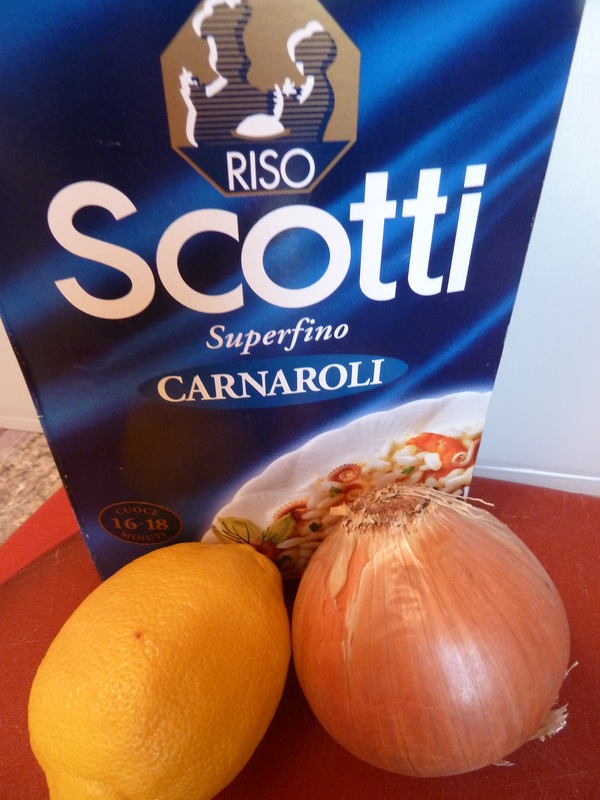
There are many, many varieties of rice in the world.  In most cultures, certain types of rice are used for certain types of dishes.  And so it is in Italy.  It seems in the U.S., I find Arborio rice most often used to make risotto.  In Italy Carnaroli rice is preferred.  This is another reason my suitcases are so heavy when I return from a trip to Italy.
Here’s your list of ingredients:
4 cups of chicken broth
Olive oil
1 garlic clove, smashed
1 cup of Arborio or Carnaroli rice
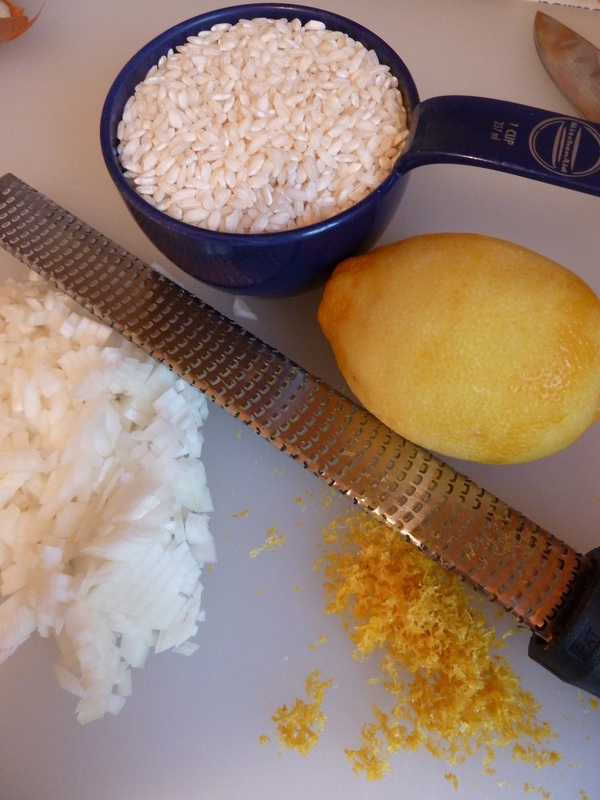
One small onion, finely diced
Zest of one lemon, save a little for garnish
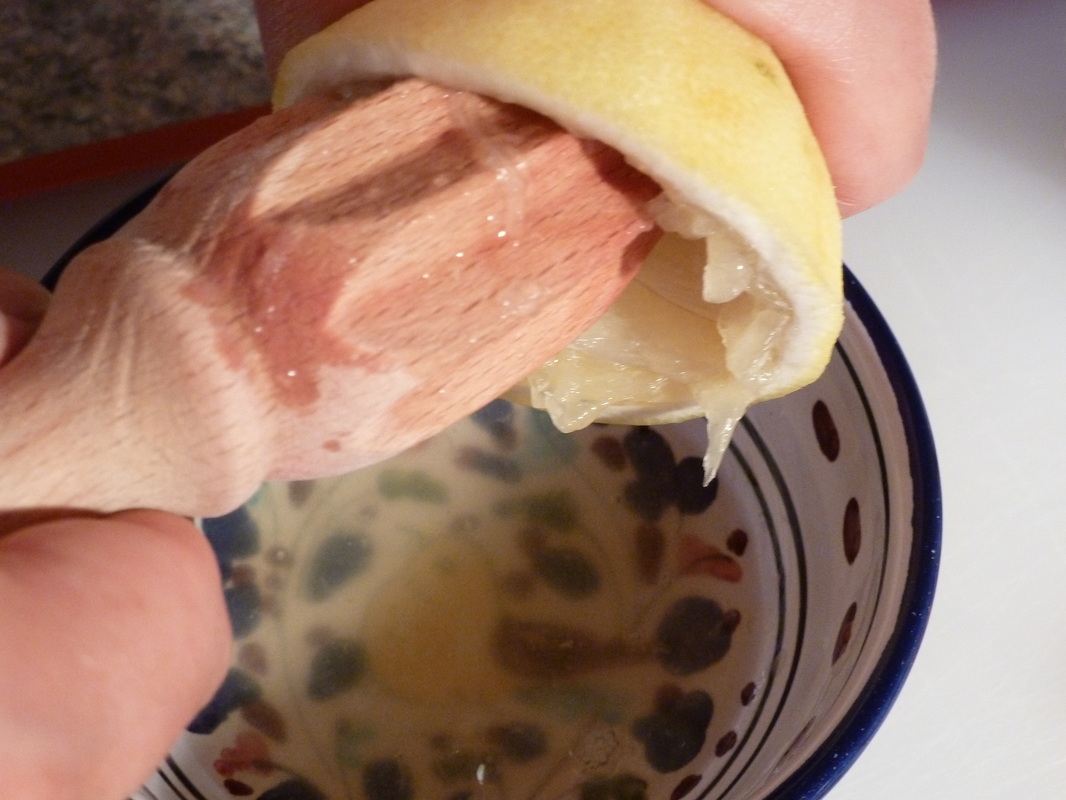
Juice of one lemon
¼ c. of cream
Grated parmesan
Chopped basil for garnish 
Let’s begin:

In a sauce pan, heat up your chicken broth, and keep it on low heat to stay warm.

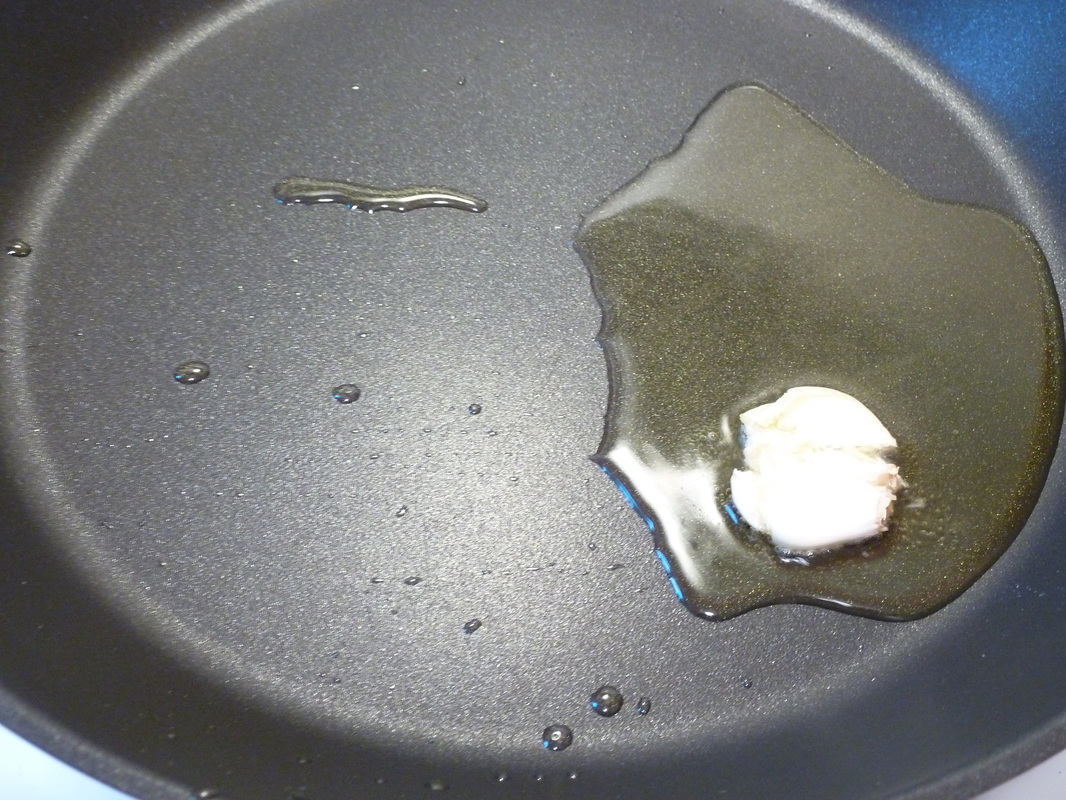
In a large skillet, heat up a good drizzle of olive oil and toss in the smashed garlic clove.  Rub the clove all around until it begins to brown, then discard it.

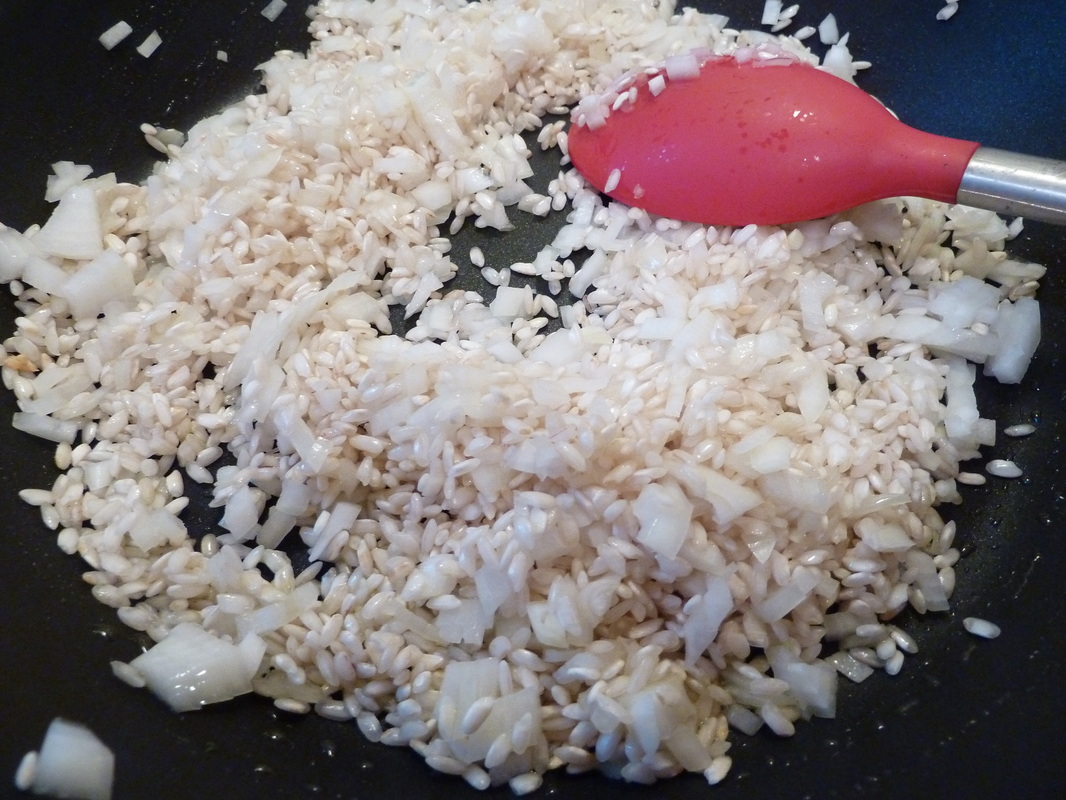
Add your rice and chopped onion to the hot garlic-scented oil. Make sure to coat the grains of rice with oil.  When the onion begins to wilt, add in one ladle of hot broth.  Let it simmer its way into the grains of rice and become absorbed.  Stir.
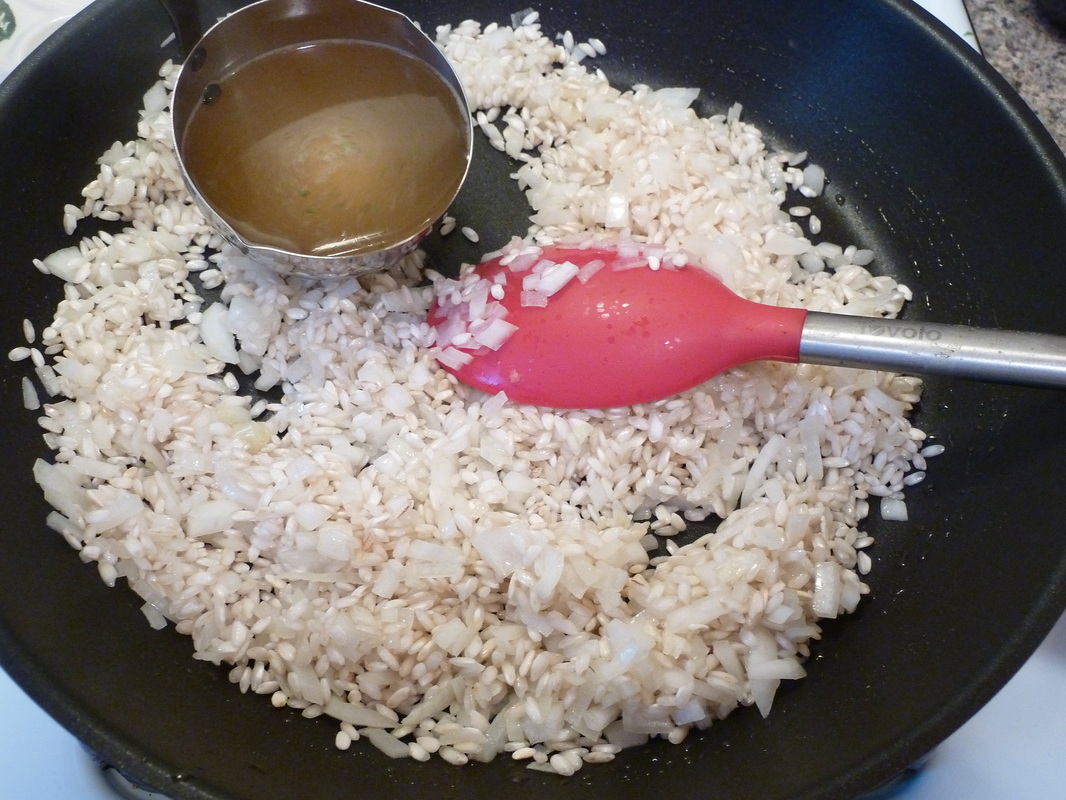
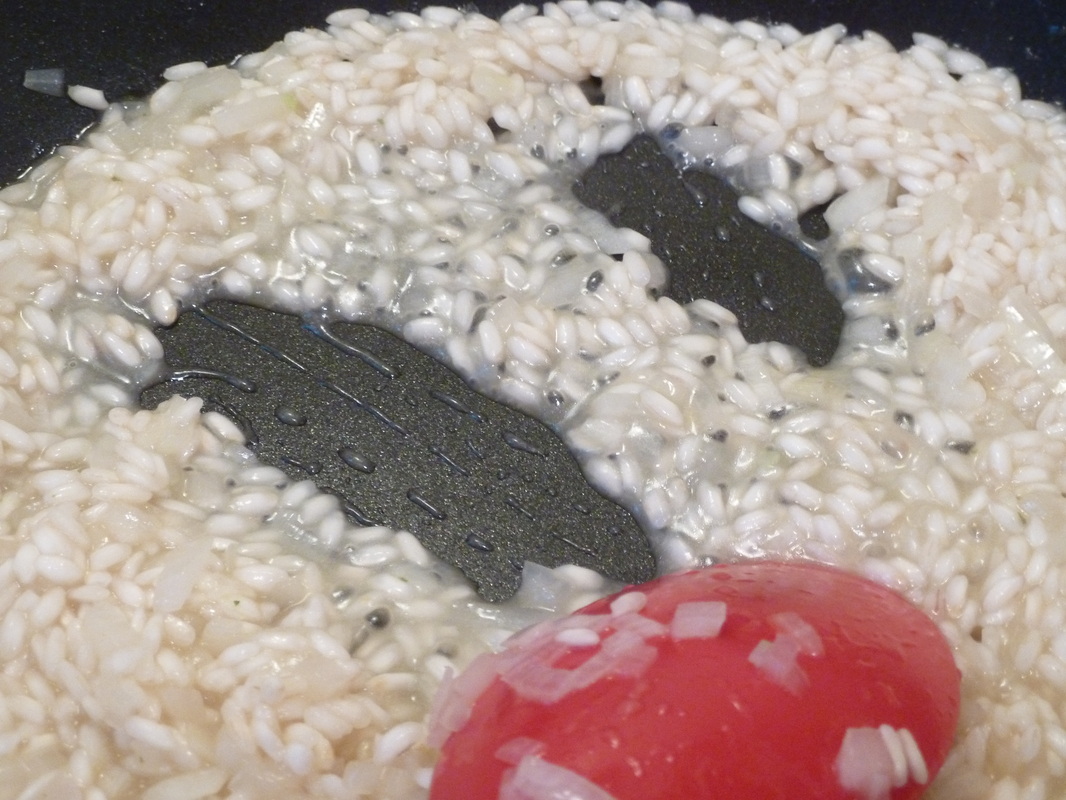
Just as it begins to be all absorbed, add another ladle of broth. Stir frequently.  Continue to do this, letting the rice absorb most of each ladleful before adding the next ladle.  Soon, you will see the risotto begin to get creamy.  If I pull my cooking spoon through the rice, and it leaves a clear path behind, I know it’s time to add another ladle of broth (picture, above left) .  As you get toward the end of your broth supply, you need to begin to taste your risotto, just one grain at a time.  It needs to be cooked of course, but like pasta, it should be al dente and not mushy.  This whole process only takes about 20 minutes.

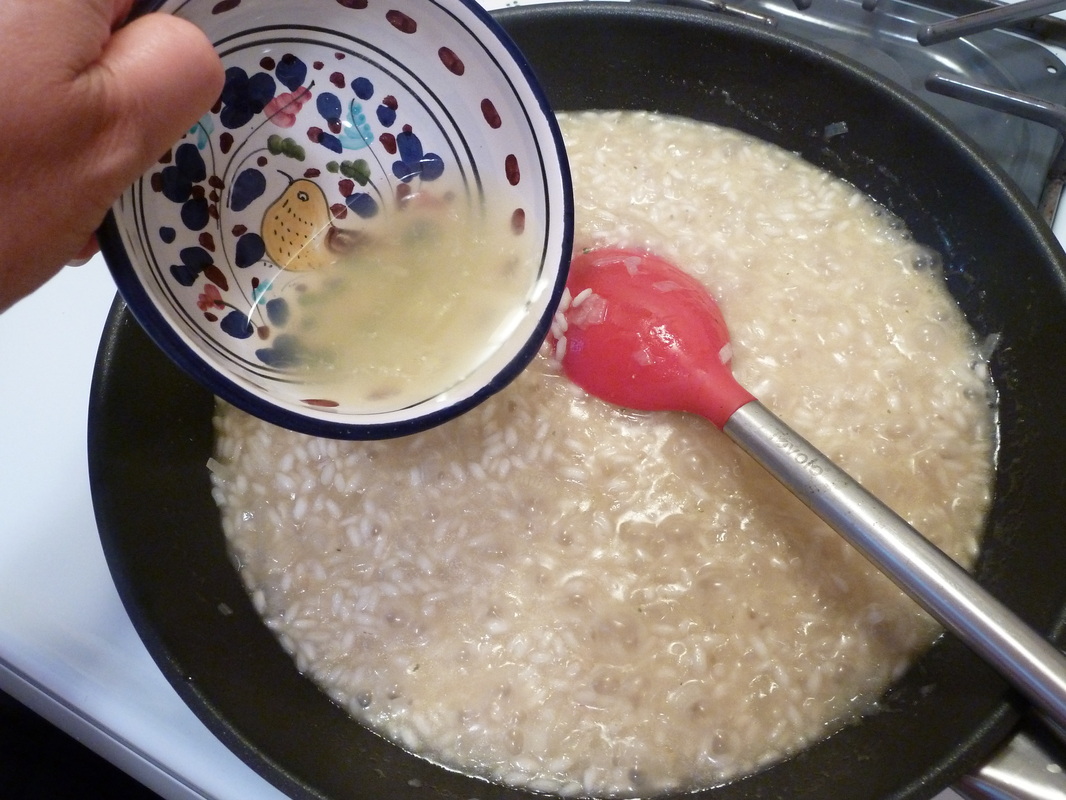
Before you’ve finished using up your broth, add in the juice of one lemon.  Let that liquid begin to absorb as well.  Continue to ladle your broth in one scoop at a time until the rice is al dente.  You may not use all your broth, but I like to heat up plenty, because running short of broth puts me in a panic.

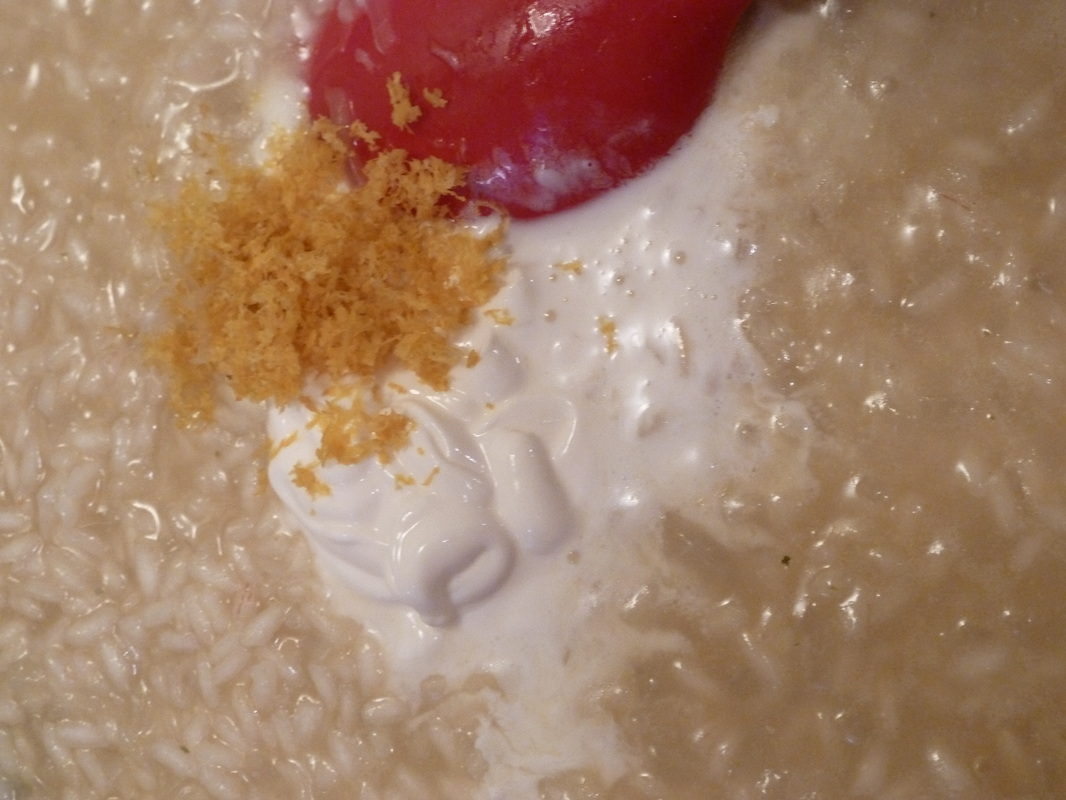
Now that the rice is al dente and nice and creamy, stir in the grated parmesan.  Take it off the heat and quickly stir in the cream and lemon zest.  
Picture
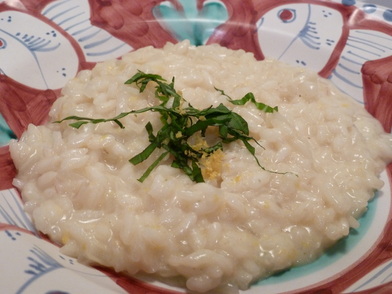
You’re done!  The important thing to remember about risotto is that it begs to be eaten NOW.  If it sits on the stove, it begins to coagulate in a not-so-appealing way.  When you spoon it into a pasta bowl, it should be creamy enough to spread out on its own.  Garnish with basil, lemon zest and more cheese if desired.  Take a bite.  I think you’ll be pleasantly surprised.

I served this risotto with one of my favorite bottles of Pinot Gris from Adelsheim Vineyards in Oregon’s Willamette Valley.

Buon appetito!


1 Comment

Caponata.....Eggplant Love

5/23/2012

0 Comments

 
As a child, I was a somewhat picky eater.  Mostly, it involved picking out the vegetables, and finding discreet ways of discarding them.  Eggplant was one of those foods which meant an extra half hour at the dinner table for me as I had to come up with other ways to get rid of it than feeding it to the dog who was smart enough not to eat it either.  It finally took living in Italy (and maybe growing up) to get me over my eggplant phobia.

It all started with verdure grigliate.  It’s very often a contorni or side dish choice on Italian restaurant menus.  And when you order the mixed grilled vegetables, you usually get eggplant, zucchini and red peppers; a lovely and beautiful combination.  When it’s prepared so simply; grilled, then drizzled with olive oil, it’s quite delicious.  Of course the fact that you’re sitting in a beautiful Italian piazza, across from the one you love with a glass of wine in the other hand doesn’t hurt either.  Back in the U.S., I tried making it this way and something was lost in the translation…..I no longer liked eggplant.

So, back to Italy again.  (No, I don’t go to Italy just to force myself to eat eggplant.  That would be silly….or would it?)  I had an opportunity to go to Sicily with my husband on a business trip.  What an amazing trip!  We ate our way from one end of the island to the other.  We saw some pretty fabulous sights as well and then ate some more.  Oh, and some business happened. But one of the best food things that happened was that I fell in love with eggplant again!  We stopped for lunch at a restaurant that was newly opened.  It was so obvious; fresh paint on the walls, everything brand new, etc.  They were thrilled to have some business and foreigners at that.  The owner kept bringing us things to try and every time he set something on the table he told us that papa made it.  The very first thing he brought us was a bowl of warm caponata with a basket of bread.  Eggplant love.

Here’s your list of ingredients:

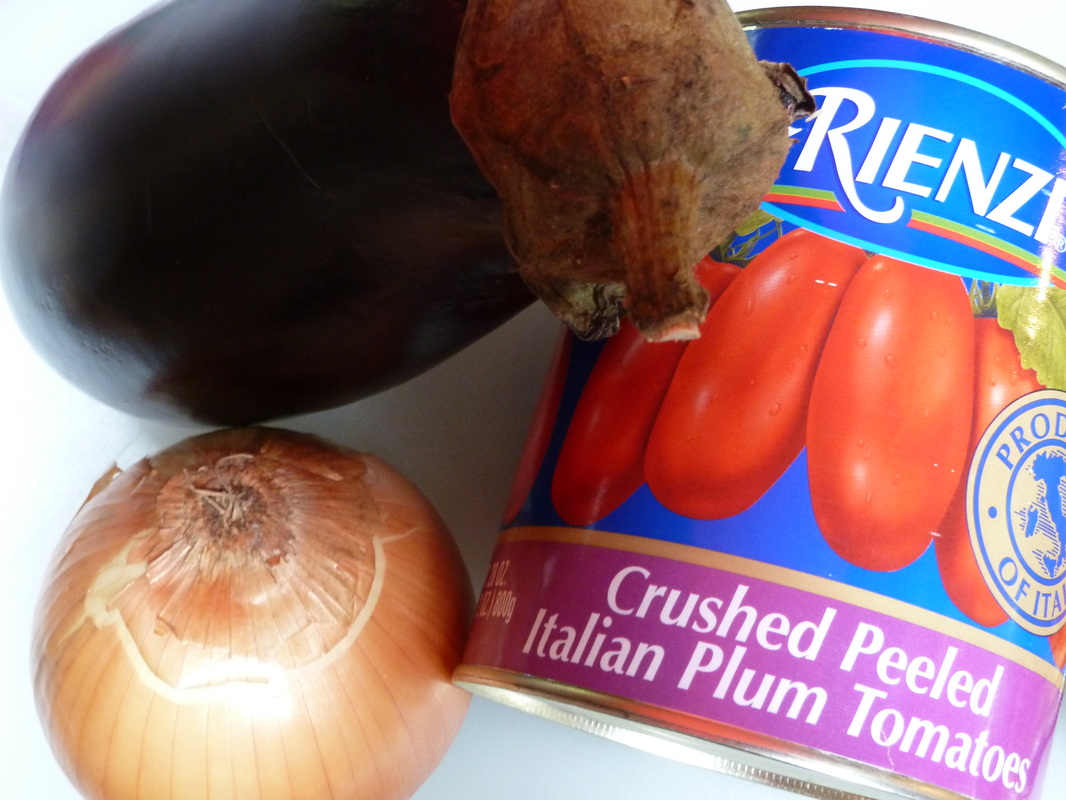
1 large eggplant
Salt
Olive oil
½ of a medium onion, chopped
1 15 oz. can of diced tomatoes in their own sauce (preferably Italian imported)
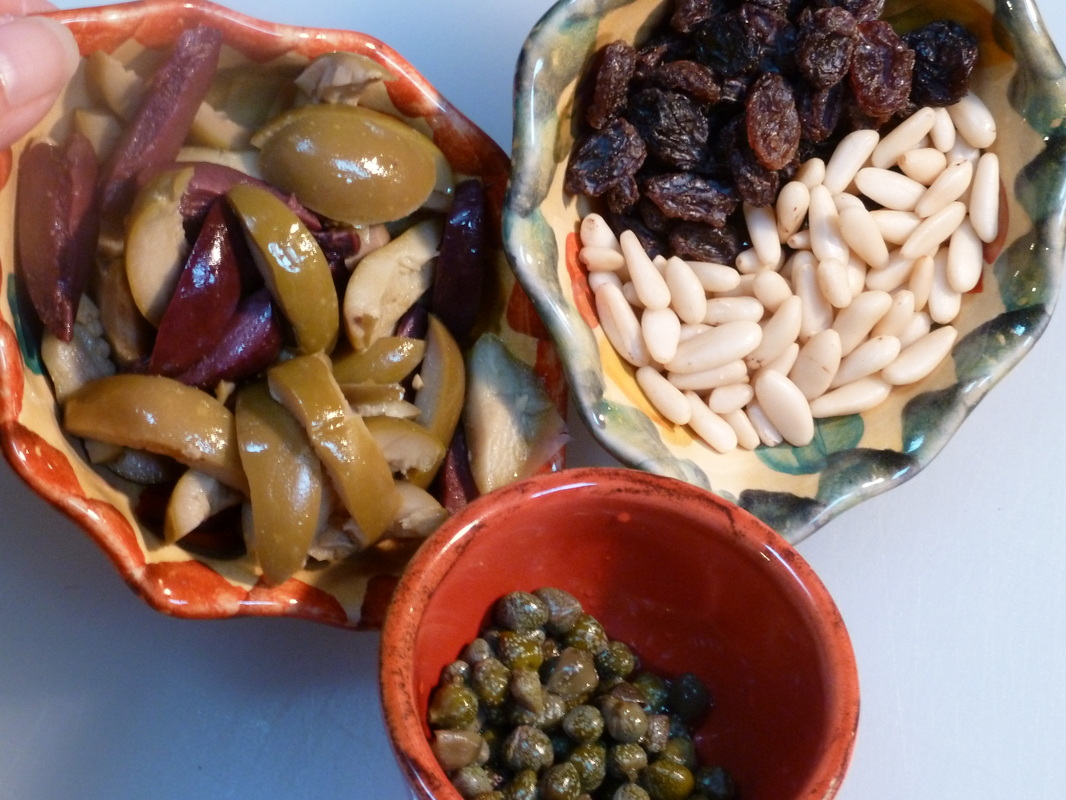
Green olives, pitted and sliced (As many as you like.  I actually used a combo of green and black.)
2 T. capers, rinsed
2 T. pine nuts, toasted
2 T. raisins
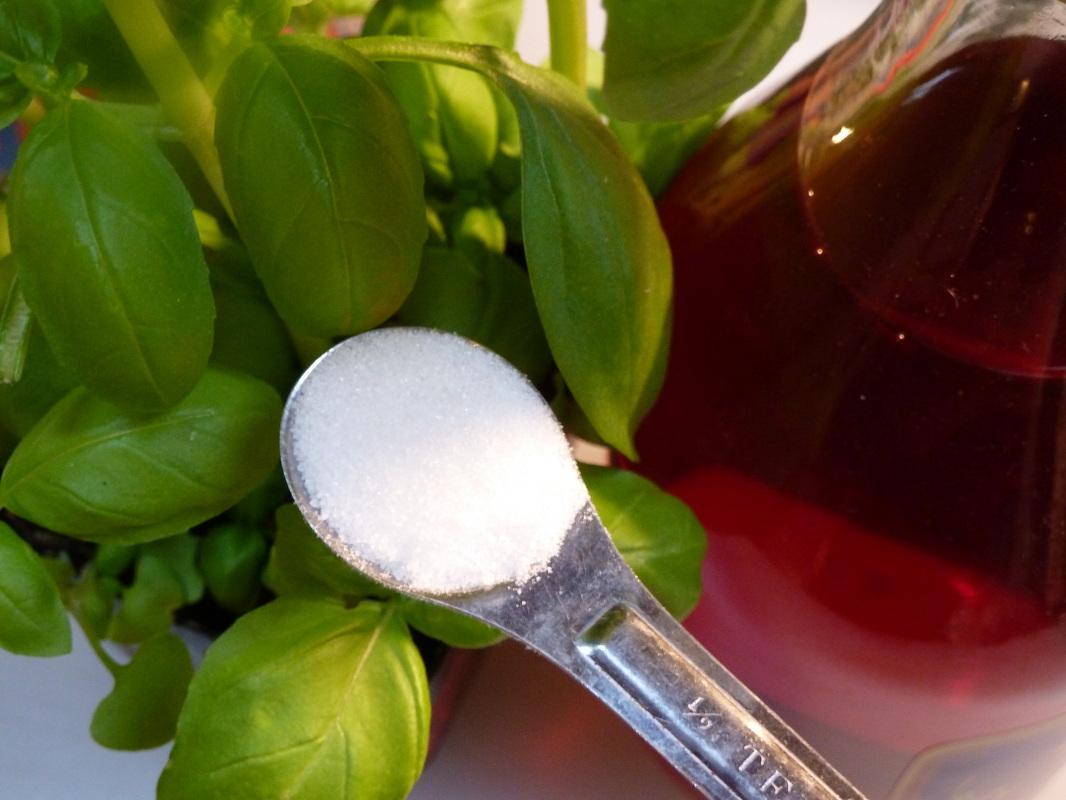
Fresh basil, chopped
1 tsp of red wine vinegar mixed in a small bowl with 1 tsp of sugar to dissolve

Most recipes for caponata start with peeling and cubing the eggplant and deep frying it.  I’m not so keen on deep frying.  Not only is it not good for you, it’s just so darn messy.  So we’re still going to peel and cube our eggplant, but then, we’re going to drizzle it with salt, let it sweat out its excess moisture, then drizzle it with olive oil and roast it.  I really wanted my caponata to taste like its ingredients, so sweating the eggplant keeps it from getting watery.  Roasting really brings out the earthy flavor of so many vegetables and it’s generally my favorite way to serve them.  So preheat your oven to 400 degrees and let’s get started.

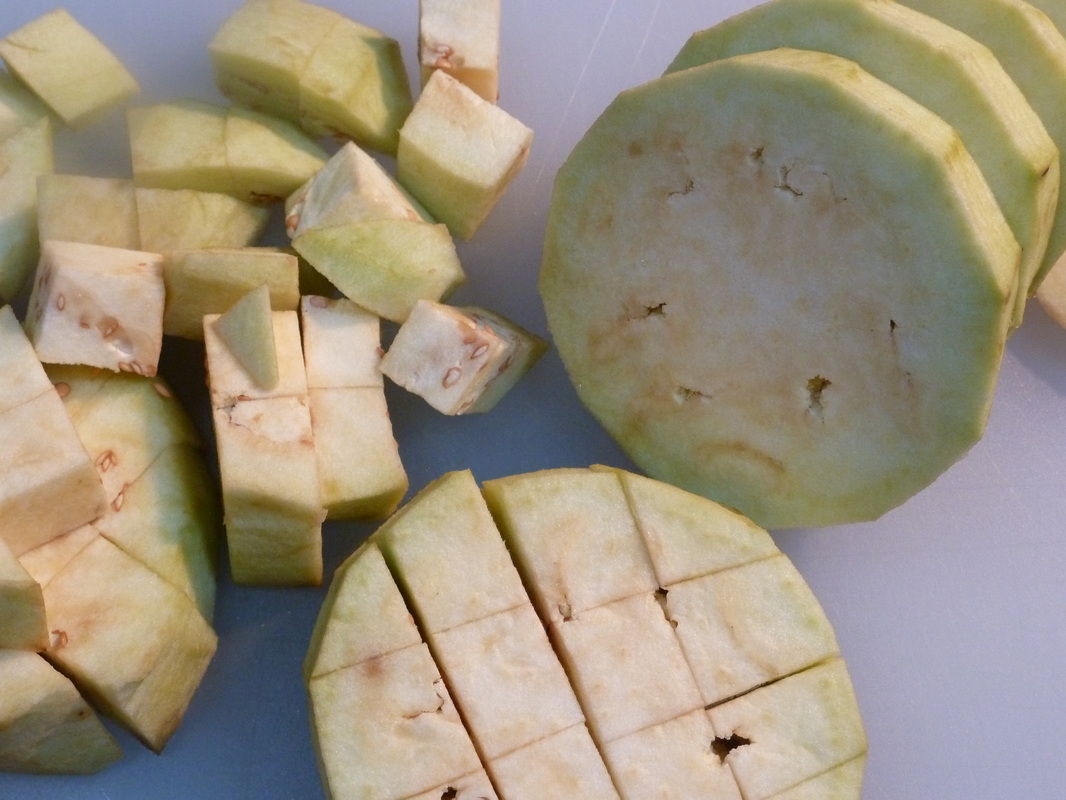
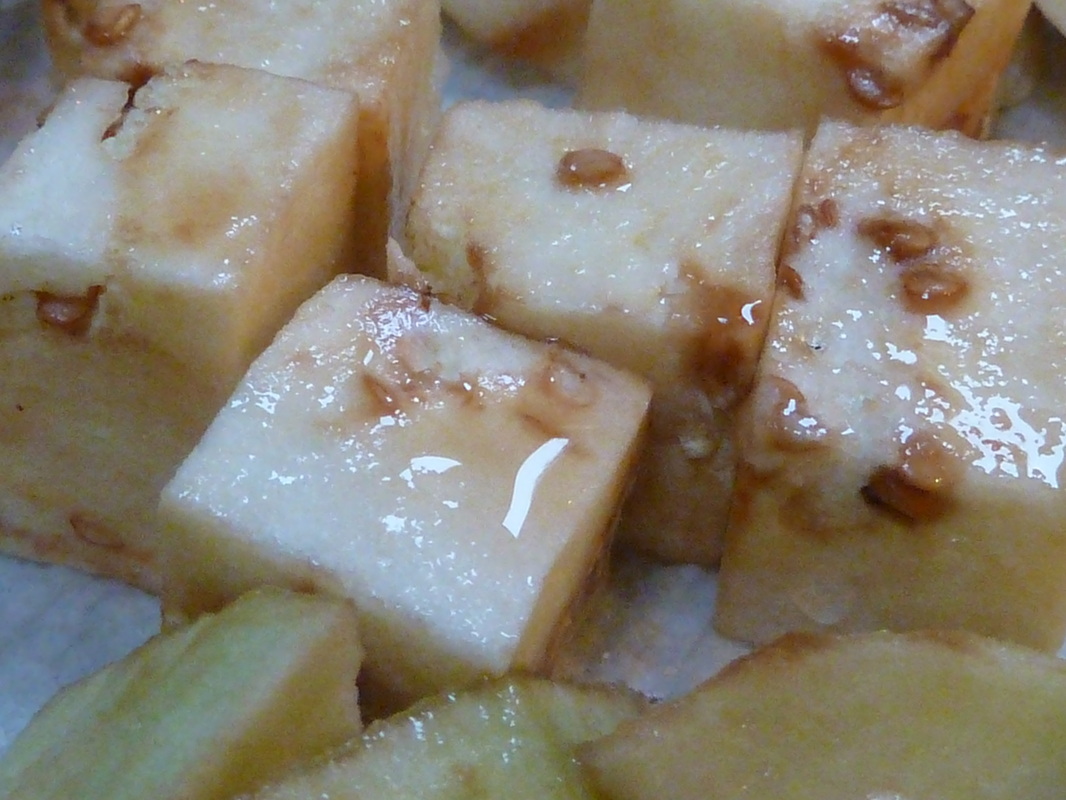
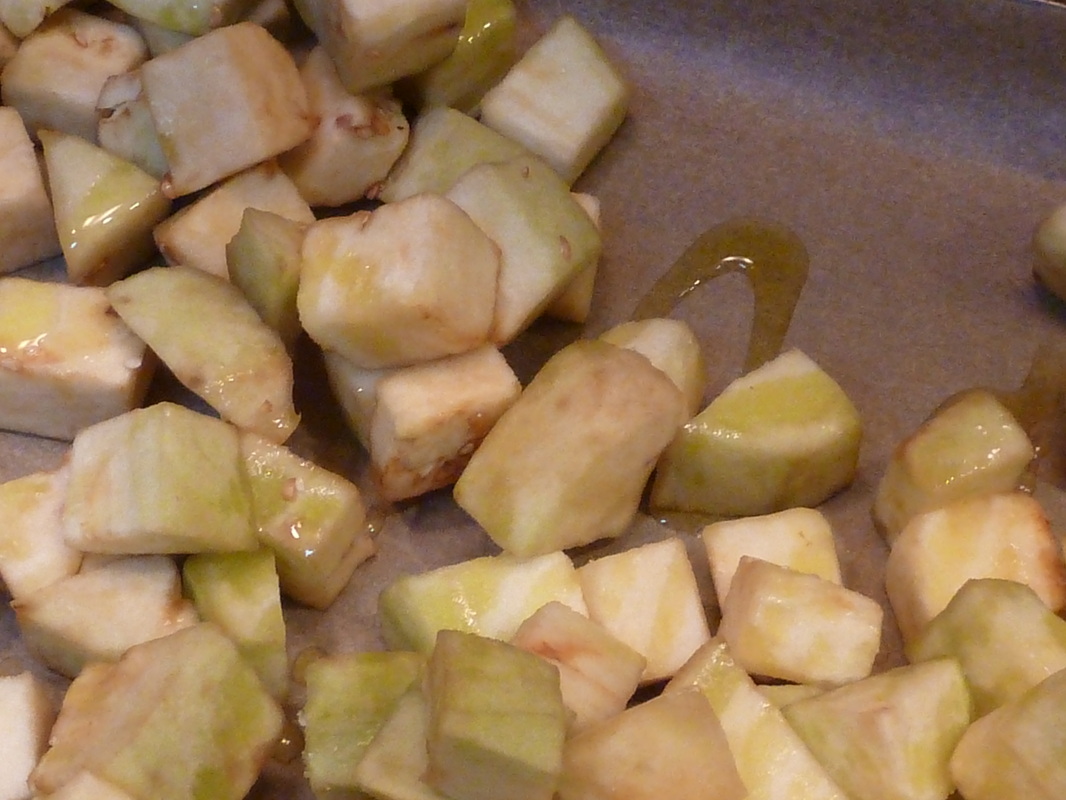
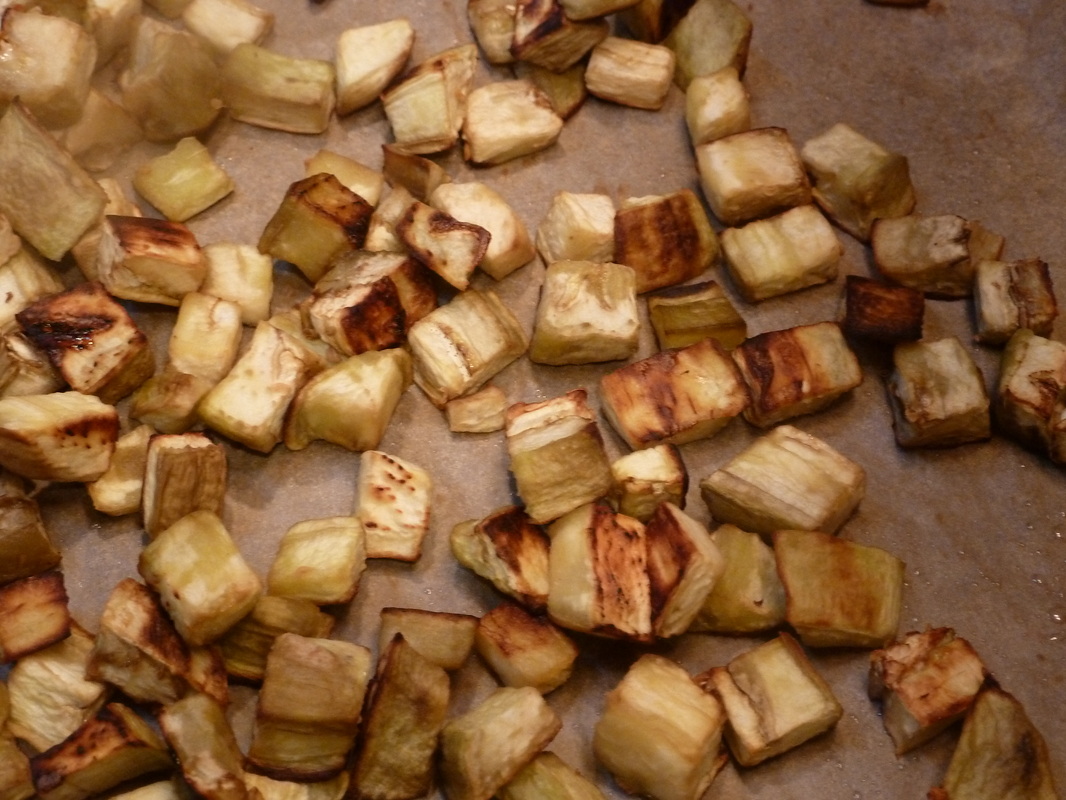
Peel and cube your eggplant.  Spread the cubes out over a layer of paper towels.  Sprinkle liberally with salt and let them sweat while you chop up some other ingredients.  They need about 30 minutes to sweat.  Very soon, you’ll see them release their little beads of perspiration.  After about 30 minutes, gather them up in the paper towels to absorb the excess moisture, and toss them back out onto a parchment lined baking sheet.  Drizzle them with a bit of olive oil, rub them all around a bit and put the pan in your hot oven for about 15-20 minutes.  When they come out they’re beautiful little golden spongy cubes ready to absorb all the yummy flavors you’re about to add to the caponata.

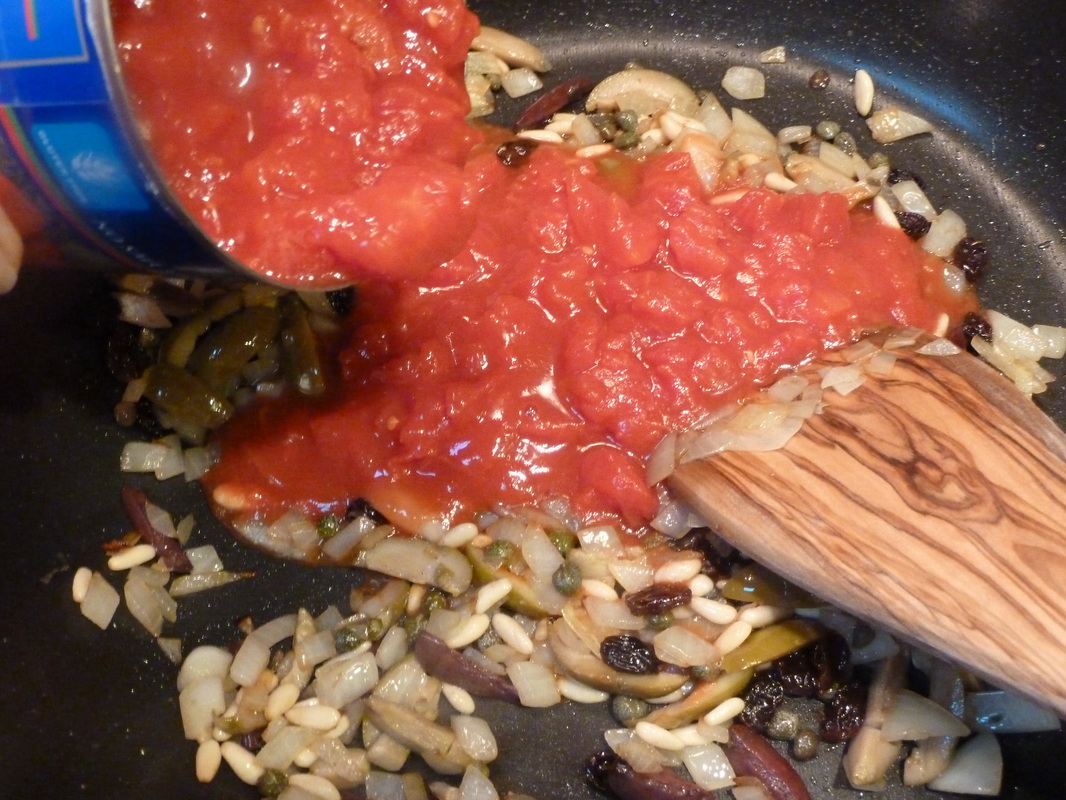
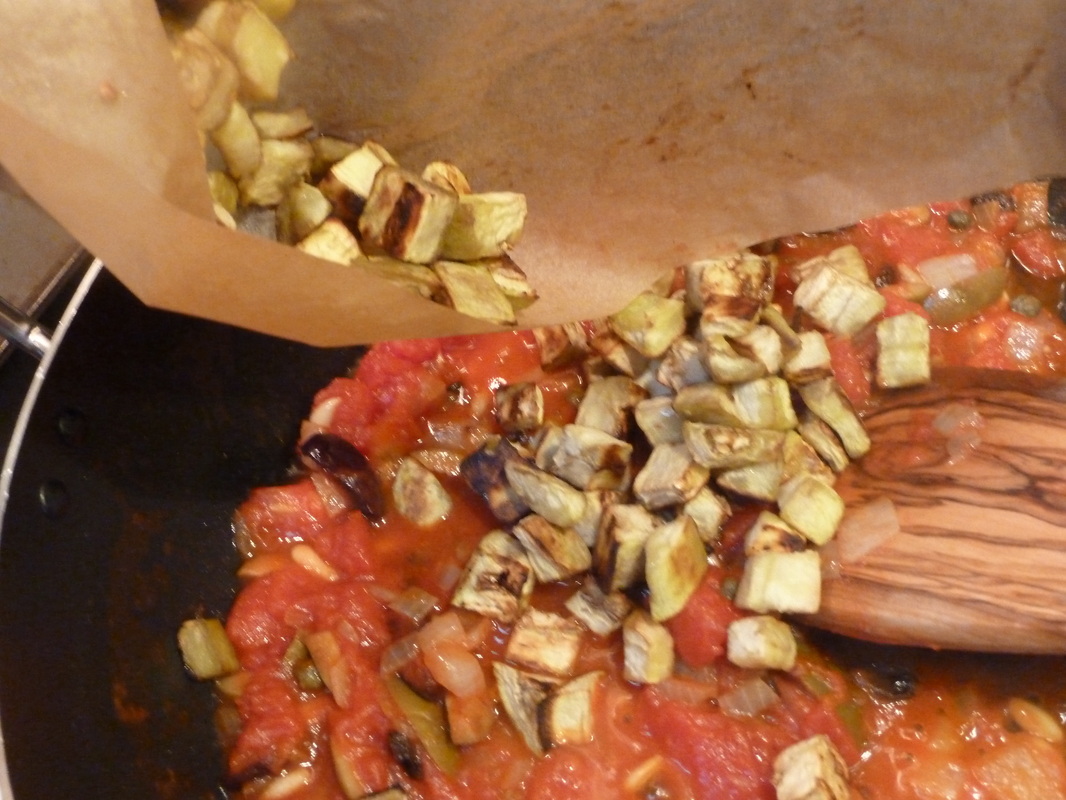
Next up; a large skillet.  Drizzle some olive oil in there and when it gets hot, toss in your chopped onions.  Saute until they are nice and wilted then add the combo of capers, pine nuts, raisins and olives.  When it’s all nicely mixed, add in your tomatoes.  Simmer for about 5 minutes to let all the flavors meld, then add your cubes of roasted eggplant.

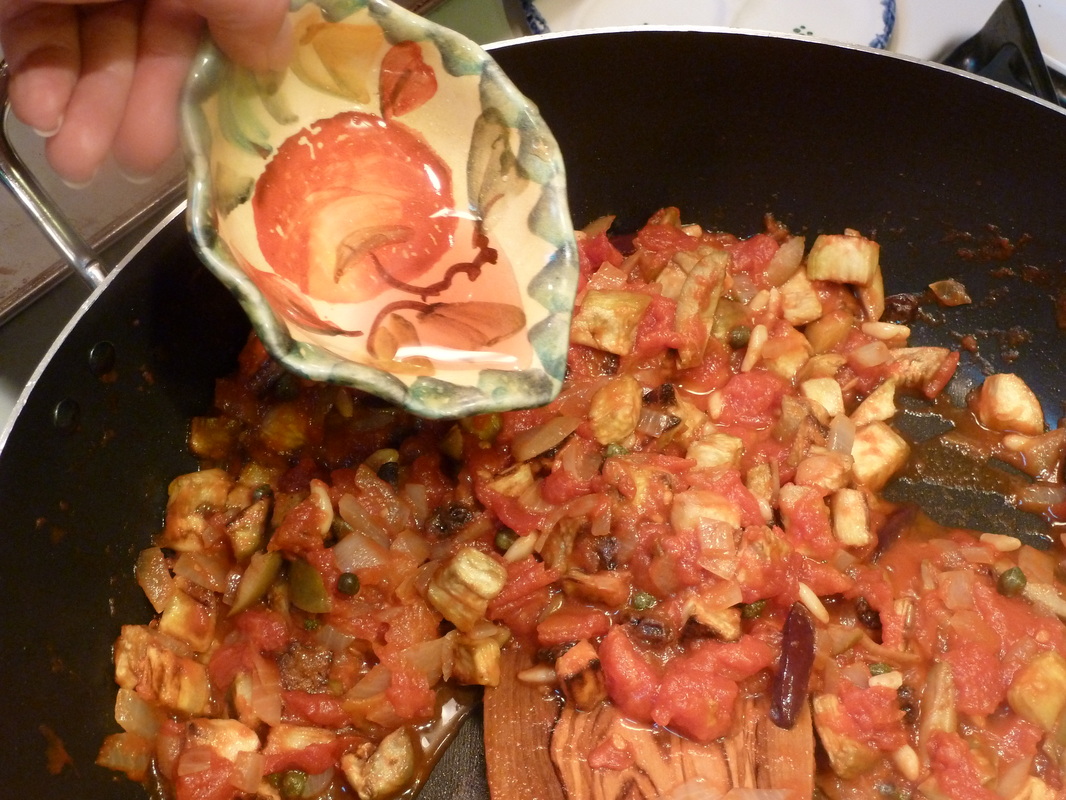
Simmer for another 10 minutes or so to thicken it up.  Then add the vinegar/sugar mixture to the pan.  Increase the heat a bit for just a moment to really get everything all mixed together.  Add your chopped fresh basil and remove the pan from the heat and let it sit for about 30 minutes before serving.  You're done!

Picture
Caponata can be served warm, cold or at room temperature.  It’s served as an appetizer with bread or as a relish accompaniment to meats.  It really has everything to offer; soft eggplant and crunchy pine nuts; salty hits of olive with sweet hits of raisin, but it has that vinegar/sugar flavor going on in the background.  Best of all, it’s one of those things that seems to taste even better the next day, so make a big batch.  I hope you too experience....Eggplant Love.


Buon Appetito!

0 Comments

Giovanna's Pasta e Fagioli.....an Italian Classic

5/15/2012

1 Comment

 
My last blog post recipe was about making wine braised short ribs; an Italian comfort food.  I must be in need of comforting, because here’s another classic Italian comfort food recipe; this time for Pasta e Fagioli (Pasta with Beans).  I’d always heard about this dish, but rarely ever saw it on an Italian menu as it's one of those classic home cooking recipes. And I must admit, I always thought the combination of pasta and beans to be a little heavy in the starch department, so when I did see it, I picked something else.  Mistake, mistake, mistake.  Live and learn.

This recipe comes direct from an Italian friend, Giovanna Caprara.  Giovanna cooks from scratch for her family all the time.  Lucky them.  When she makes this recipe, she makes the pasta from scratch and uses dry beans that she’s soaked the night before.  I've taken the liberty of making a few shortcuts.  This recipe is so delicious even with my little cheats; it must be truly amazing the way she makes it.

You’ll need three pots for this dish.  Please don’t let the number of dirty pots deter you from making it; it’s still a simple recipe.  Plus, hopefully you have a dishwasher husband like I do.  Thank you dear.  

Let's get started.  Here are the basic ingredients:
broken flat pasta, two handfuls
1 small onion
1 carrot
2 ribs of celery
olive oil 
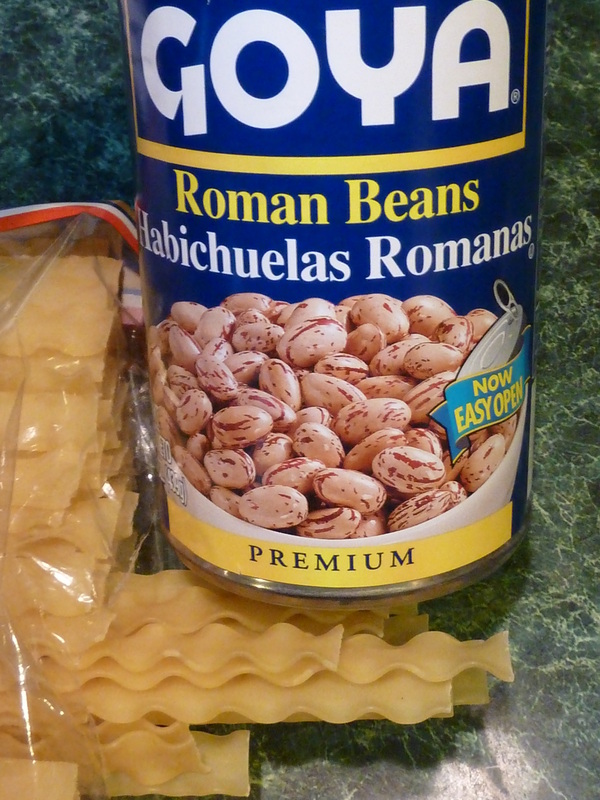
a can of beans 
1 clove of garlic
1 package of cubed pancetta
a lovely tomato or a can of diced tomatoes
fresh rosemary
a pinch of red pepper flakes
1 quart of vegetable broth
Pot #1:  Get your water on to boil for the pasta.  I will be using dry pasta.  Giovanna says we must use something flat, like broken fettucine.  I found pasta that looks like the long edges of lasagna, flat with a bumpy edge.  Once your water is boiling, add in your coarse salt, break your pasta up into it, and cook until it is al dente, then drain.  On to the next pot.

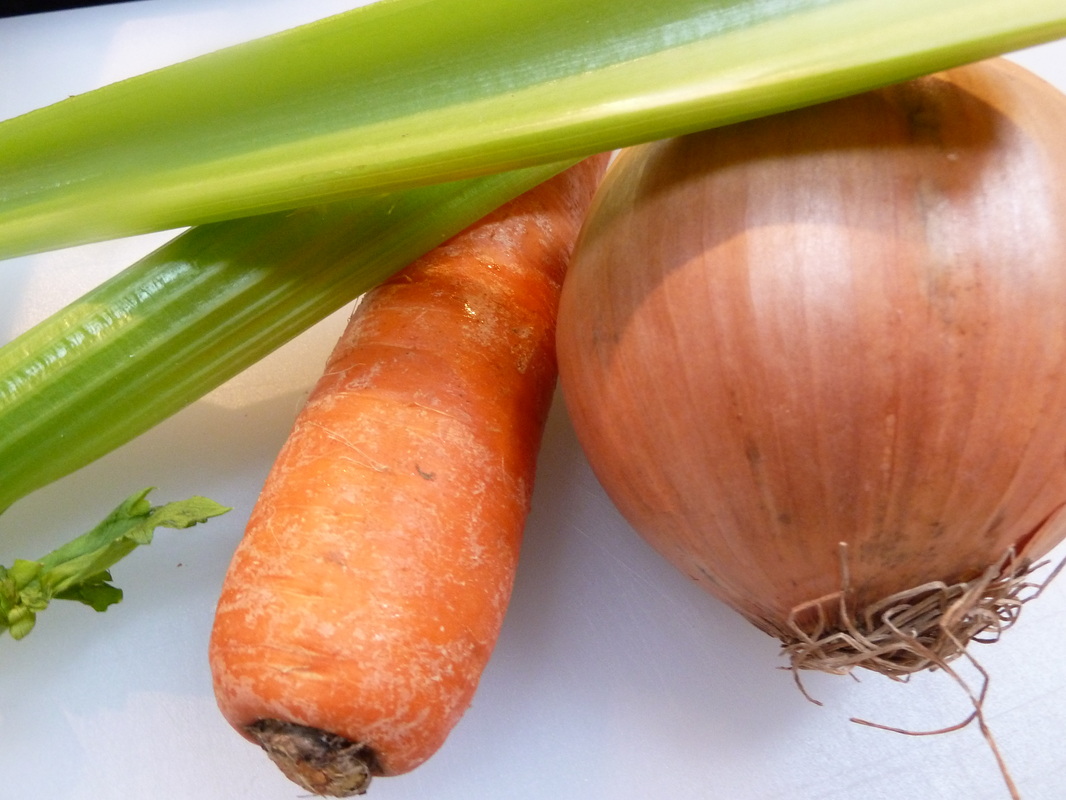
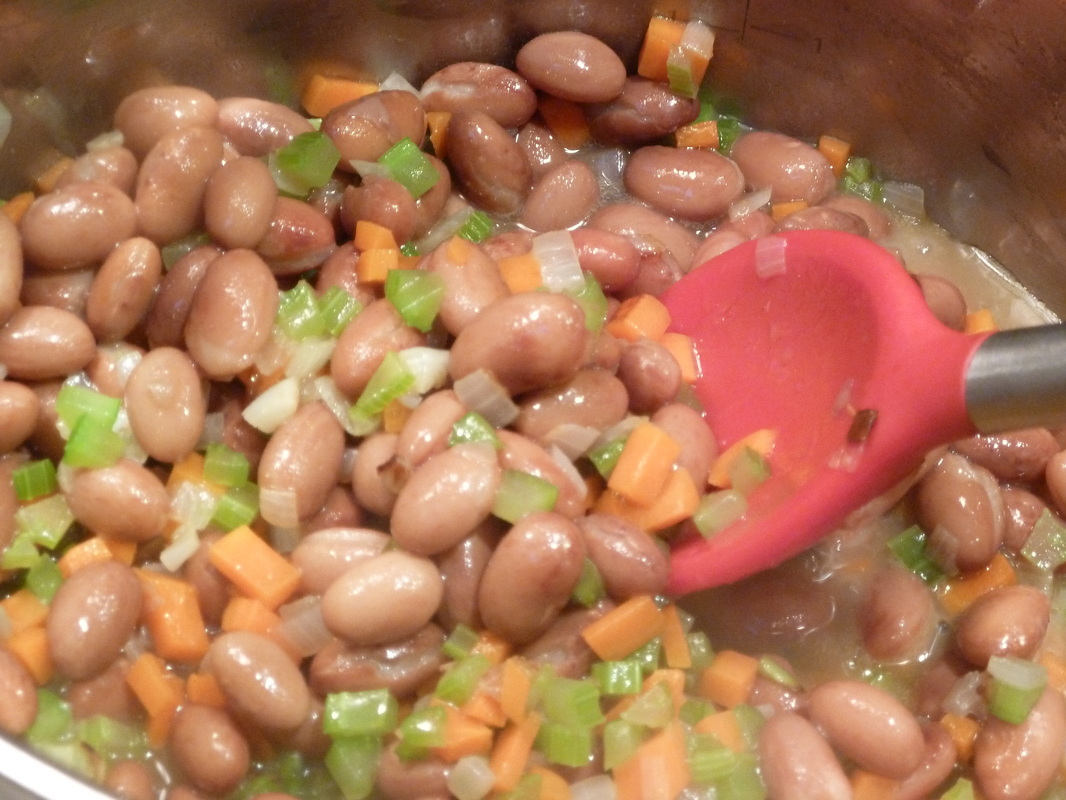
Pot #2:  This should be a larger pot, as everything will end up in this one.  Once again we start with our Holy Trinity of vegetables; chopped onions, carrots and celery.  Saute these in some olive oil for a few minutes until wilted, and then add your can of beans.  Stir to mix, then take off the heat and set aside.  On to the next pot.

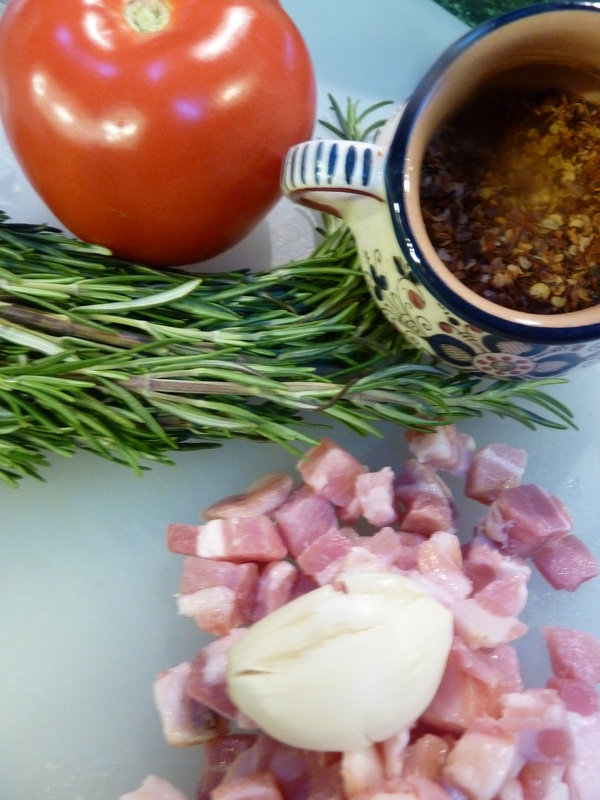
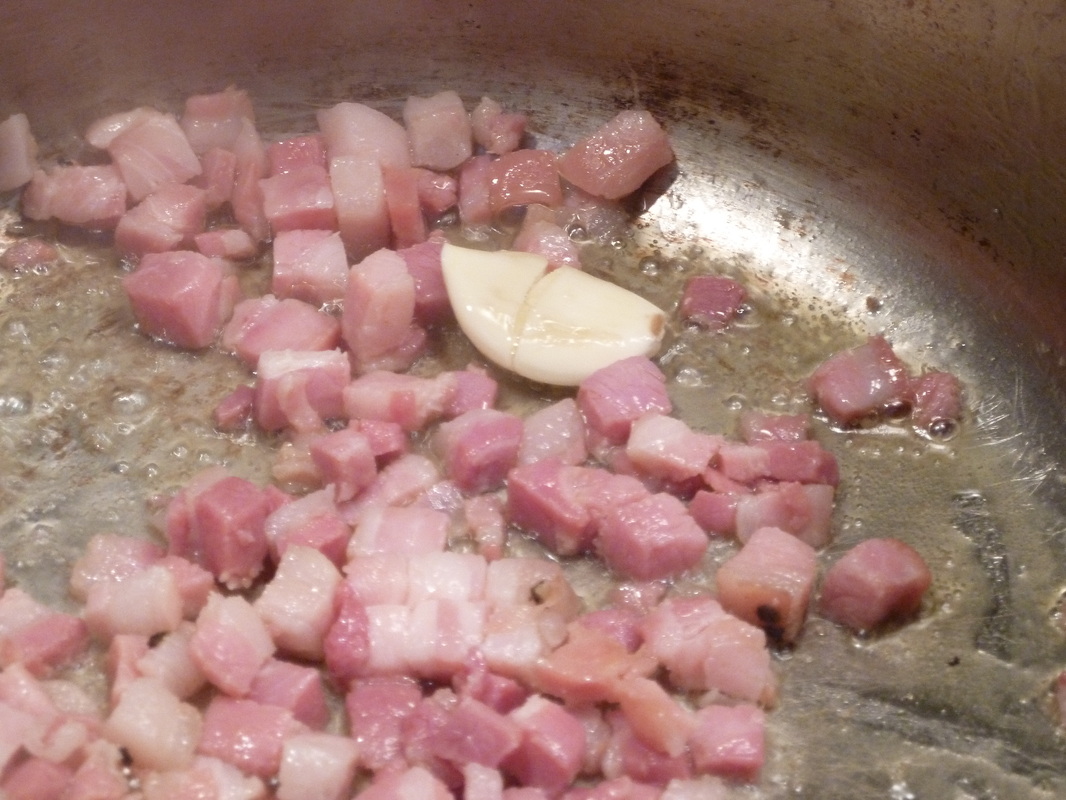
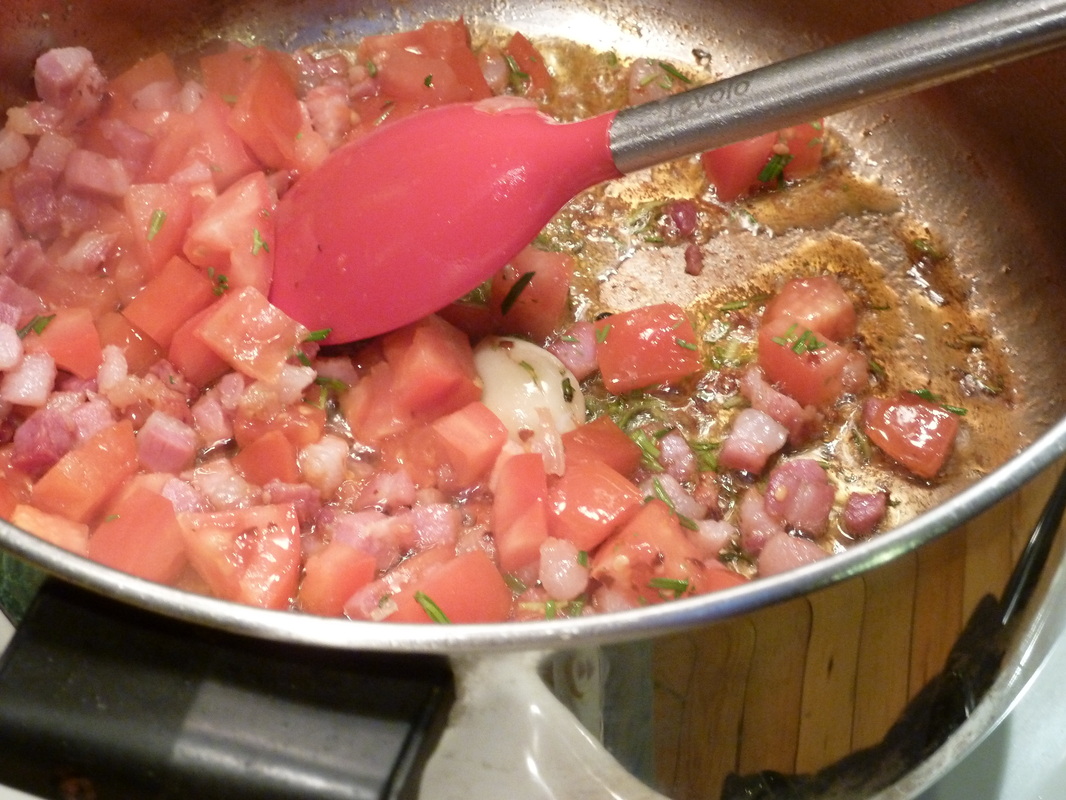
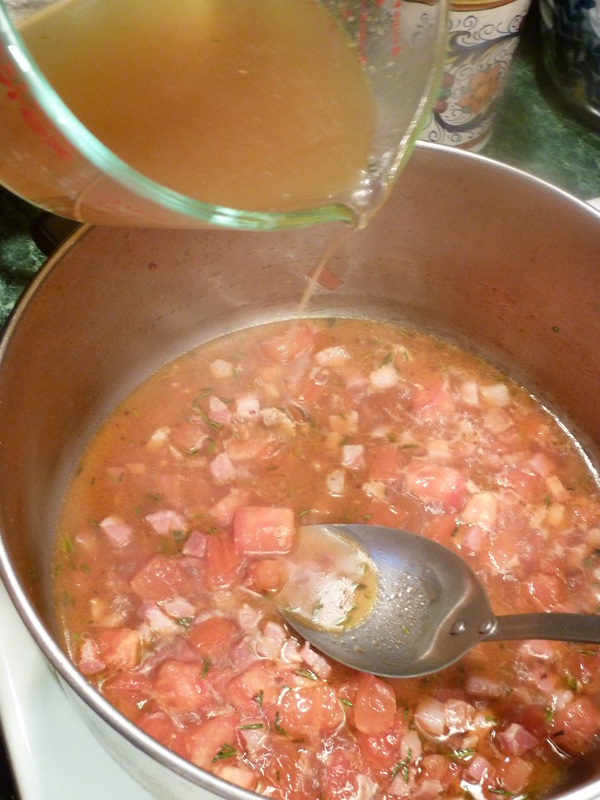
Pot #3:  This should a medium saucepot.  Drizzle pan with olive oil, and heat.  Add pancetta cubes, a good pinch of red pepper flakes, and the smashed garlic clove.  Saute for a bit and add chopped fresh rosemary, and a 15 ounce tin of diced tomatoes (or fresh if you have nice ones available).  Cook for about 3 minutes, then add 1 cup of hot vegetable broth.  Let that simmer for about 10 minutes, then discard the garlic clove, and remove from heat.

Picture
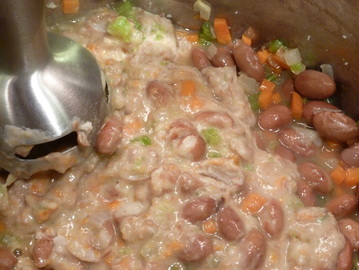
Let’s go back to Pot #2 now.  With an immersion stick blender (one of my best friends), puree about one third of the veggie/bean mixture.  We want to thicken up our dish, but still leave lots of texture.


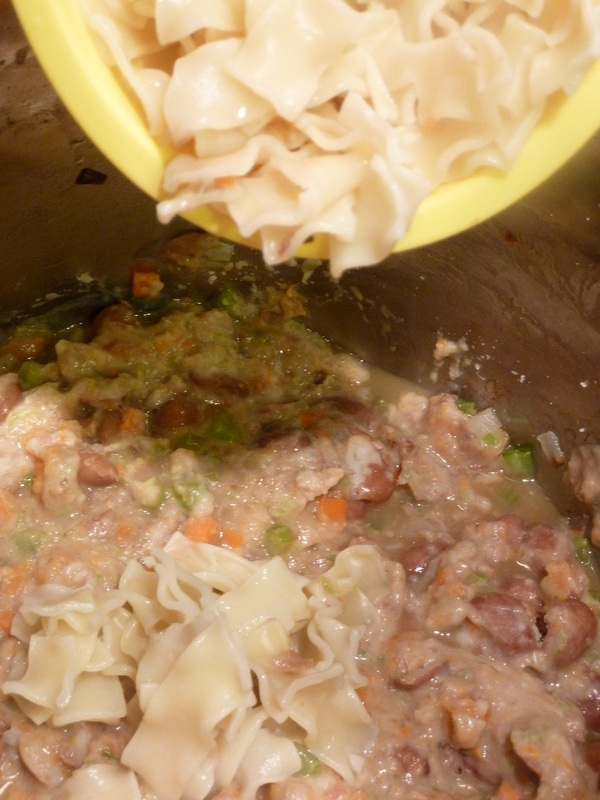
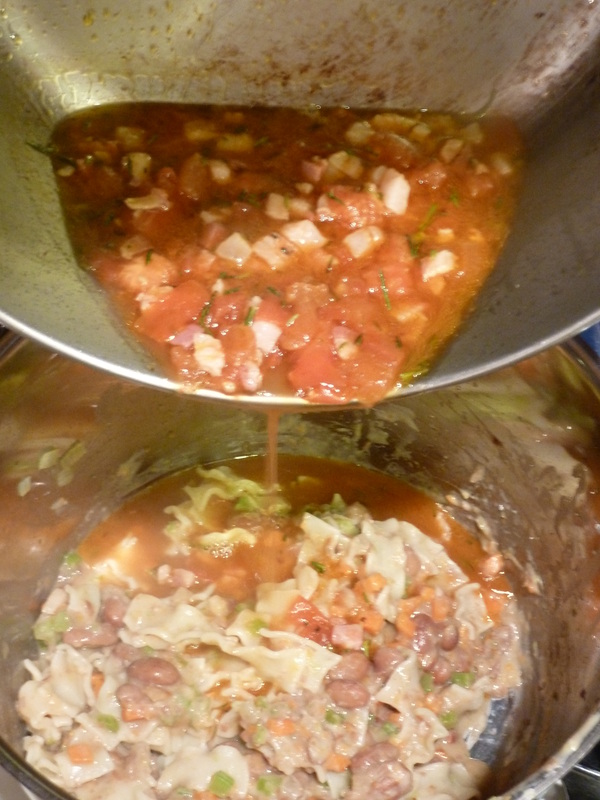
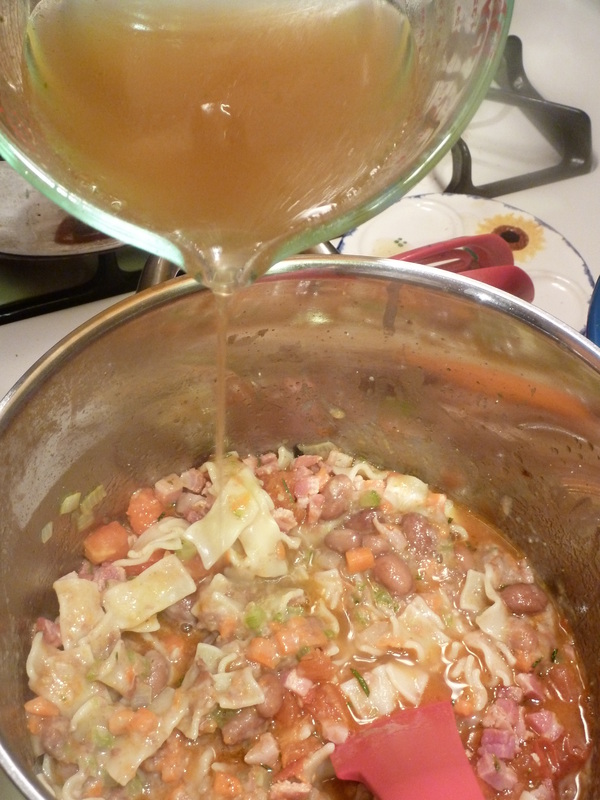
Now it is time to combine the contents of all three pots into pot #2.  First, add your drained, cooked pasta to your partially pureed bean/vegie pot.  Then, scrape the contents of Pot #3 (the pancetta/tomato mixture) into Pot #2 with the vegies and beans and pasta.  Oh my gosh, it smells so good, doesn’t it?  Put your filled pot back on the heat and add more hot broth to it.  Basically, you can add as much broth as you like, to adjust how thick you would like your dish to be.  Traditionally, it’s not a soup really, so don’t thin it out too much.  It should be the consistency of a stew.  


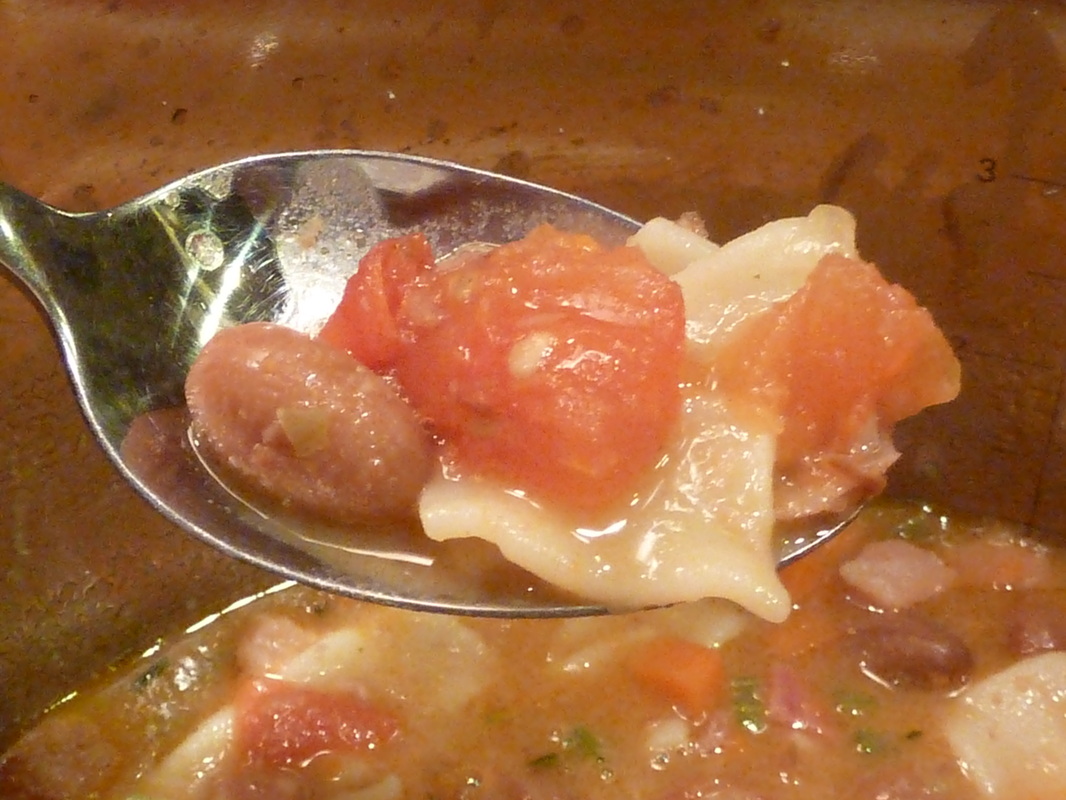
Well, by now the kitchen must smell heavenly.  You're starving, aren't you?  Ladle the pasta e fagioli  into pasta bowls, top with grated parmesan or pecorino and serve.

Buon Appetito e grazie a Giovanna!
1 Comment
<<Previous
Forward>>
    Instagram

    RSS Feed

    Follow Me on Pinterest

    Italophile......
    are  you one?

    According to Webster's, if you are "friendly to or favoring what is Italian", you are one! Interested in Italy?  Me too! Follow my ramblings and recipes if so inclined.  I'll try to visually capture memories of Italy and share some of my favorite recipes.  Want the real flavor of Italy though?   Then.....let me take you there.

    Archives

    January 2018
    November 2016
    July 2016
    May 2016
    November 2015
    October 2015
    April 2015
    March 2015
    December 2014
    November 2014
    October 2014
    September 2014
    May 2014
    April 2014
    March 2014
    February 2014
    January 2014
    December 2013
    November 2013
    October 2013
    September 2013
    July 2013
    June 2013
    May 2013
    April 2013
    March 2013
    February 2013
    January 2013
    December 2012
    November 2012
    October 2012
    September 2012
    August 2012
    July 2012
    June 2012
    May 2012
    April 2012
    March 2012
    February 2012
    January 2012

    Categories

    All
    Amalfi Coast
    Art
    Assisi
    Bagnoregio
    Bevagna
    Bomarzo
    Capri
    Carnevale
    Chocolate
    Coffee
    Culture
    Deruta
    Drink
    Florence
    Food
    Girlfriends On The Go!
    Gubbio
    Lazio
    Lecce
    Markets
    Montalcino
    Montefalco
    Naples
    October 2013
    Olive Oil
    Orvieto
    Perugia
    Pienza
    Pompei
    Positano
    Praiano
    Puglia
    Recipes
    Rome
    Semproniano
    Shopping
    Sicily
    Spello
    Spoleto
    Spring 2013
    Todi
    Tuscany
    Umbria
    Walla Walla
    Washington State
    Wine
    Wine Tour October 2012
    Wine Tour October 2014